Can tortoises kept in a vivarium brumate?
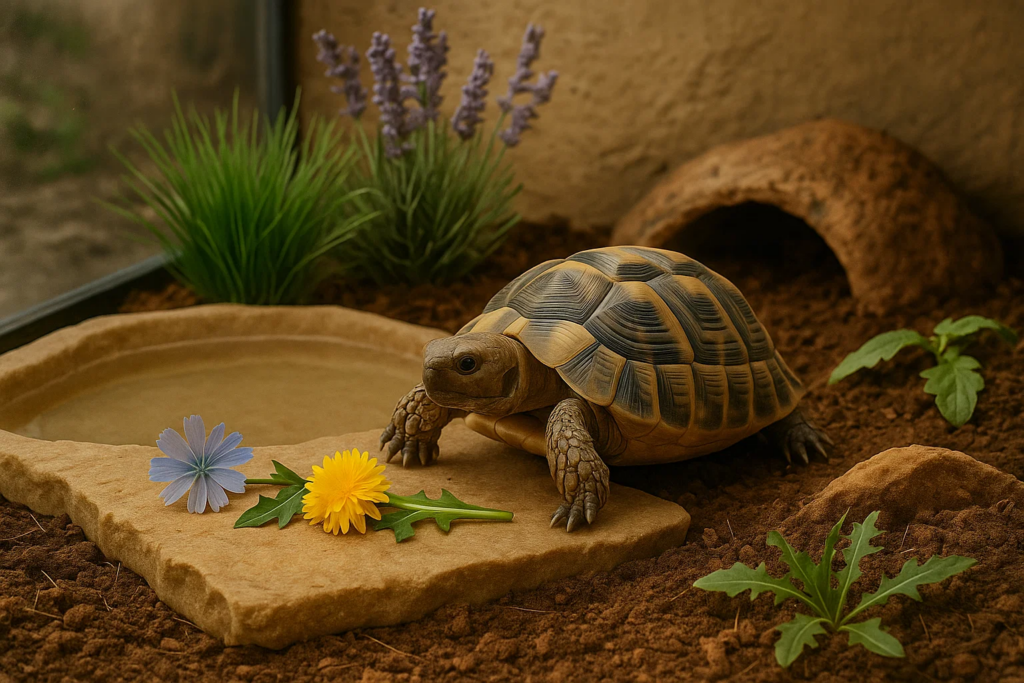
Permanent vivarium housing (in German) is unsuitable for European tortoises – yet sadly, many tortoises are still kept in vivaria or indoors on tortoise tables.
European tortoises do not belong in a vivarium: for healthy development, they need an outdoor enclosure with natural environmental influences such as sun, wind, rain, and changing temperatures. They also need a heated cold frame with a UV lamp and heating.
In a vivarium, key metabolic processes, digestion, and natural brumation cannot function properly. Overheating, as well as unnatural growth and disease, are also common.
This raises the question: may these tortoises at least brumate?
The answer is: only under certain conditions – and always after clearance from a reptile vet.
1. Veterinary examination before brumation
Before European tortoises kept in a vivarium may brumate, a thorough examination by an experienced reptile vet is essential.
Key points of the examination
- Blood test: tortoises kept in vivaria often have markedly abnormal blood values. In that case, they must not brumate at first, but must be stabilised with medication.
- X-ray: condition of the shell, skeleton, and organs.
- Faecal examination: because of the confined living space, tortoises kept in vivaria often carry a heavy parasite burden.
- Hydration: many tortoises kept in vivaria are dehydrated and often receive fluids at the vet’s. On the reptile vet’s advice, regular baths in a shallow water dish can help to solve the problem.
2. Improving vivarium housing
– if a move to a heated cold frame is not possible in the short term
If a switch to a heated cold frame with an outdoor enclosure cannot be made soon, the vivarium must be improved to give the tortoises at least a reasonably suitable preparation for brumation.
Essential improvements
- UV lighting: ideally high-quality metal halide (HID) lamps (in German) controlled by timers, together with good background lighting from special reptile LEDs (in German).
- Suitable substrate: tortoise soil or sieved topsoil, with limestone gravel for firm footing on walkways; replace weekly.
- High humidity: spray several times a day.
- Natural diet: wild plants only.
- Prevent heat build-up:
- remove the lid
- take out the glass panes and replace them with mesh
- Humid hides: plenty of low-growing plants and humid retreats, plus a “wet box” with sphagnum moss.
- Provide calcium: cuttlefish bone and calcified seaweed available at all times.
- At night: always lower the temperature considerably and raise the humidity.
3. When the vet gives the go-ahead for brumation
Once the animal is medically ready for brumation, the biggest problem remains:
how can suitable temperatures be reached?
Lowering the temperature
- A room is needed in which the window can stay open permanently.
- Target: consistently below 8 °C.
- Alternatively: use a balcony from about mid-October for controlled cooling in the vivarium.
- Then: controlled brumation in a separate brumation refrigerator.
Lingering at temperatures that are too warm, above 8 °C, is life-threatening – the metabolism keeps running while the animals neither eat nor drink enough: dehydration and starvation are the result.
4. Responsibility after brumation
The winter should be used to plan natural housing for the time after brumation – or to rehome the tortoise with someone who can provide it.
Because one thing is clear:
permanent vivarium housing is not suitable for European tortoises if their health is to be maintained.
How to set up an outdoor enclosure with a heated cold frame is explained in Outdoor enclosure, cold frame and brumation pit. The complete guide to safe refrigerator brumation is the Refrigerator Brumation Handbook.