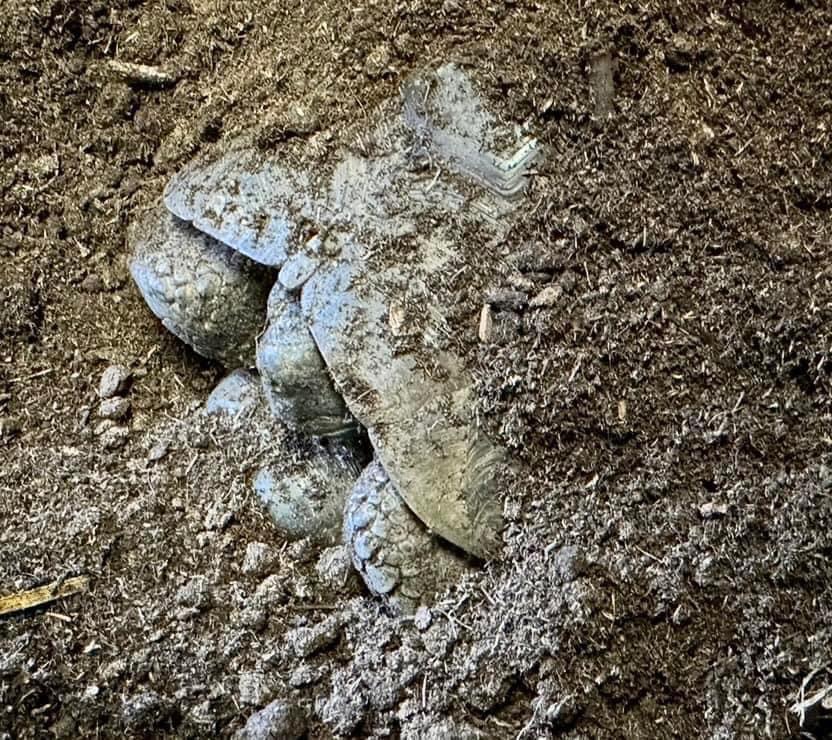
Whether a tortoise can safely enter brumation is decided in late summer, not just before winter.
Expert recommendations point out that tortoises must already show adequate body condition and stable health by the end of August, as there is usually no meaningful improvement in condition in the weeks that follow (Highfield 2024). Before brumation itself, a pre-brumation health check by a reptile vet is also recommended, assessing body weight, nutritional condition, possible parasite burdens, and clinical signs of disease (Divers & Stahl 2019; McArthur et al. 2004; Chitty & Raftery 2013). Only clinically healthy animals with sufficient energy reserves enter brumation.
The available guidelines show a clear consensus:
- The tortoise’s body condition must already be adequate in late summer (August).
- A health check by a reptile vet in early autumn (usually September) is recommended to rule out disease, parasites, or problems with condition before brumation.

1. Assessment in late summer (August)
Tortoise Trust
Safer Hibernation & Your Tortoise (Highfield 2024)
https://www.tortoisetrust.com/post/safer-hibernation-your-tortoise
Summary
The article sets out basic safety rules for tortoise brumation. A central argument is that body condition must already be adequate in late summer, as animals can hardly build up reserves after that. Underweight or weakened tortoises therefore do not brumate but are kept active through the winter.
Andy C. Highfield
Practical Encyclopedia of Keeping and Breeding Tortoises and Freshwater Turtles (1996)
Summary
Highfield describes the preparation of Mediterranean tortoises for brumation and stresses that animals should only brumate if they are in good body condition and have been carefully health-checked. Weight checks, observation of the animal’s state of health, and, where necessary, veterinary examinations are presented as key requirements for safe brumation.
Ark Veterinary Centre
Hibernation advice for tortoises
https://www.arkvetsheffield.co.uk/pet-advice/exotic-caresheets/hibernation-tortoise
Summary
This veterinary care sheet describes the seasonal course of preparation for brumation. As early as August and September, falling outdoor temperatures and shorter days trigger physiological changes as tortoises prepare for dormancy. The animal’s state of health is assessed during this phase, before brumation itself begins.
Tree of Life Exotic Veterinary Center
Hibernation recommendations for tortoises
https://treeoflifeexotics.vet/education-resource-center/for-clients/tortoises/hibernation-recommendations
Summary
These veterinary recommendations stress that successful brumation requires sufficient fat and water reserves. Before preparation begins, it must therefore be checked whether the animals are healthy and in adequate condition. Underweight or sick tortoises must not brumate.
2. Veterinary health check before brumation
Royal Veterinary College
Tortoise Pre-Hibernation Health Checks
https://www.rvc.ac.uk/small-animal-vet/general-practice/practice-services/exotic-vet-service/reptile-vet/tortoise-pre-hibernation-checks
Summary
The Royal Veterinary College recommends a pre-brumation health check by a reptile vet. This involves a full clinical examination to rule out diseases that could become life-threatening during brumation. Parasitological tests or diagnostic imaging may also be carried out.
Royal Veterinary College – Hibernation Guidelines
Tortoise hibernation guidelines
https://www.rvc.ac.uk/Media/Default/small-animal/documents/Tortoise-hibernation-guidelines%202016-1.pdf
Summary
The guidelines describe the preparation for brumation and expressly recommend annual veterinary health checks in autumn to rule out underlying disease. Faecal examinations for parasites are also recommended, as a heavy parasite burden can become dangerous during brumation.
Veterinary Guide – Preparing tortoises for hibernation
https://www.veterinaireduphoenix-lecannet.com/en/post/tortoise-hibernation-guide-vet-le-cannet
Summary
The article describes the vet’s role in deciding on brumation. The pre-brumation check includes assessing nutritional condition, looking for common diseases such as respiratory infections or parasites, and, where necessary, further diagnostic tests. The aim is to establish whether an animal can brumate safely.
3. Special case: newly adopted tortoises from less than ideal previous care
Many keepers take on tortoises from suboptimal husbandry or with an unknown history in late summer or autumn. For these animals, the assessment in August is missing, and the health check in September has often not taken place. Uncertainty about whether their state of health allows brumation is correspondingly high. This is reflected in the many worried enquiries we receive every October.
In these cases, we recommend exceptionally seeking the advice of a reptile vet even while the temperature reduction is already under way. The pre-brumation check-up can still be carried out for newly adopted tortoises and raises the level of safety during brumation as far as possible. If the examination reveals underweight, a parasite burden, or other abnormalities, the tortoise does not brumate this winter but is kept active and warm (Highfield 2024). The Tortoise Protection Group also advises against brumation whenever there is doubt about a tortoise’s health and recommends overwintering it warm instead (Tortoise Protection Group 2008). After treatment for parasites, the temperature reduction begins no earlier than six weeks after the last dose of medication.
A further advantage: if problems do arise during brumation, the reptile vet has already seen the tortoise and knows its baseline condition. The vet can then assess the situation much better.
Conclusion
The decision on brumation is not left until just before winter. By late summer, it is usually clear whether a tortoise has built up sufficient condition and stable health. Animals that are underweight or show health problems at this point will generally not develop sufficient reserves in the remaining weeks before brumation.
An additional safety factor is a pre-brumation health check by a reptile vet in early autumn. It can detect disease, parasite infestation, or problems with condition that would pose a considerable risk during brumation.
Only animals in good body condition and with an unremarkable health status finally enter brumation.

An early assessment in late summer and a check by a reptile vet before brumation make a decisive contribution to safe brumation for tortoises.
The complete, step-by-step guide to safe refrigerator brumation is the Refrigerator Brumation Handbook. All steps at a glance: the Refrigerator Brumation Checklist.
Further reading
- Pre-Brumation Check-Up with a Reptile Vet
- Technology for the species-appropriate keeping of European tortoises (warmth and light)
- Forced bathing – former husbandry practice
- Temperature Reduction Weeks 1–6: A Step-by-Step Guide to Brumation Preparation
- Refrigerator Brumation Handbook
- English Resources
- International Editions & Upcoming English Releases
References
Ark Veterinary Centre: Hibernation advice for tortoises.
https://www.arkvetsheffield.co.uk/pet-advice/exotic-caresheets/hibernation-tortoise
Chitty, J. & Raftery, A. (2013): Essentials of Tortoise Medicine and Surgery. Wiley-Blackwell, Oxford, 256 pp.
Divers, S. J. & Stahl, S. J. (eds.) (2019): Mader’s Reptile and Amphibian Medicine and Surgery. 3rd edition. Elsevier, St. Louis, 1536 pp.
Highfield, A. C. (1996): Practical Encyclopedia of Keeping and Breeding Tortoises and Freshwater Turtles. Carapace Press, London, 295 pp.
Highfield, A. C. (2024; updated 2025): Safer Hibernation & Your Tortoise. Tortoise Trust, published 31 August 2024, updated 11 December 2025.
https://www.tortoisetrust.com/post/safer-hibernation-your-tortoise
McArthur, S., Wilkinson, R. & Meyer, J. (2004): Medicine and Surgery of Tortoises and Turtles. Blackwell Publishing, Oxford, 578 pp.
Royal Veterinary College (2016): Tortoise hibernation guidelines. Royal Veterinary College, London.
https://www.rvc.ac.uk/Media/Default/small-animal/documents/Tortoise-hibernation-guidelines%202016-1.pdf
Royal Veterinary College: Tortoise pre-hibernation health checks. Royal Veterinary College, London.
https://www.rvc.ac.uk/small-animal-vet/general-practice/practice-services/exotic-vet-service/reptile-vet/tortoise-pre-hibernation-checks
Tortoise Protection Group (2008): Preparation Guide for Tortoise Hibernation (Wind down procedure).
https://www.tortoise-protection-group.org.uk/site/files/Winddownprocedure.pdf
Tree of Life Exotic Veterinary Center: Hibernation recommendations for tortoises.
https://treeoflifeexotics.vet/education-resource-center/for-clients/tortoises/hibernation-recommendations
Vétérinaire du Phoenix, Le Cannet (2025): Preparing your tortoise for hibernation: Essential steps for a safe winter. Published 29 October 2025.
https://www.veterinaireduphoenix-lecannet.com/en/post/tortoise-hibernation-guide-vet-le-cannet