🌼 Common dandelion
(𝘛𝘢𝘳𝘢𝘹𝘢𝘤𝘶𝘮 𝘰𝘧𝘧𝘪𝘤𝘪𝘯𝘢𝘭𝘦 agg.)
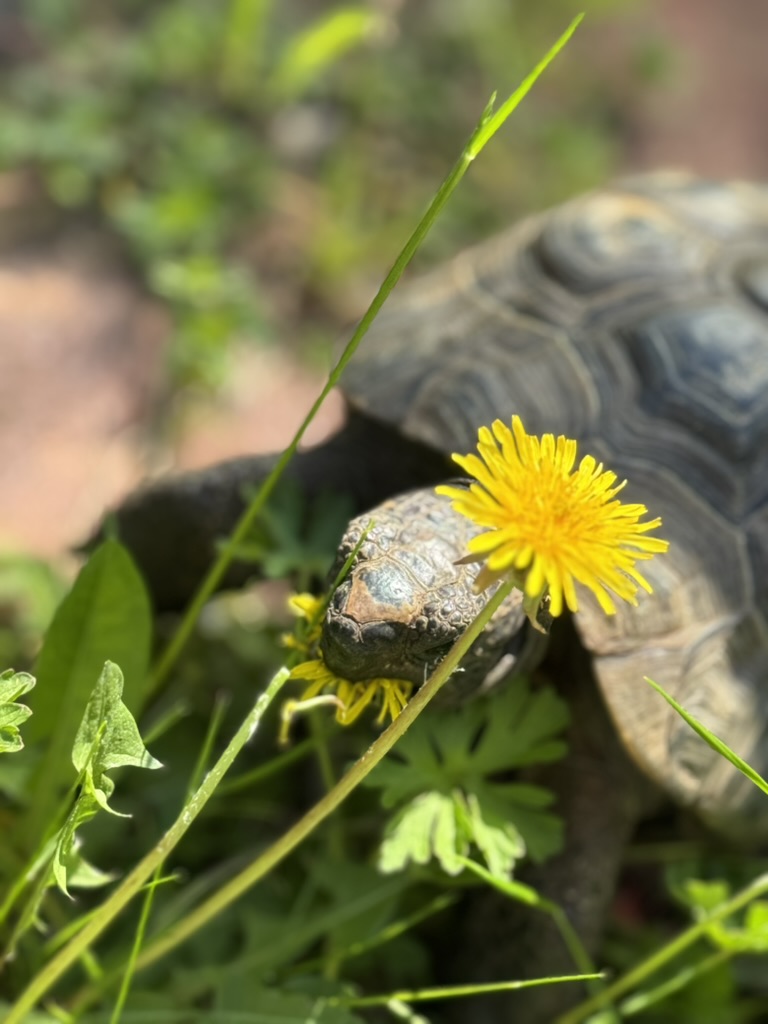
The common dandelion grows across almost the entire northern hemisphere. It belongs to the daisy family (Asteraceae) and is everywhere here – on verges, in meadows, and in gardens. The plant reaches a height of about 10 to 30 cm.
Dandelion is one of the most important food plants for tortoises. Most tortoises eat the leaves, flowers, and stems with great appetite. Dandelion also grows regularly in the natural habitats of European tortoises.
🌼 Growth & characteristics
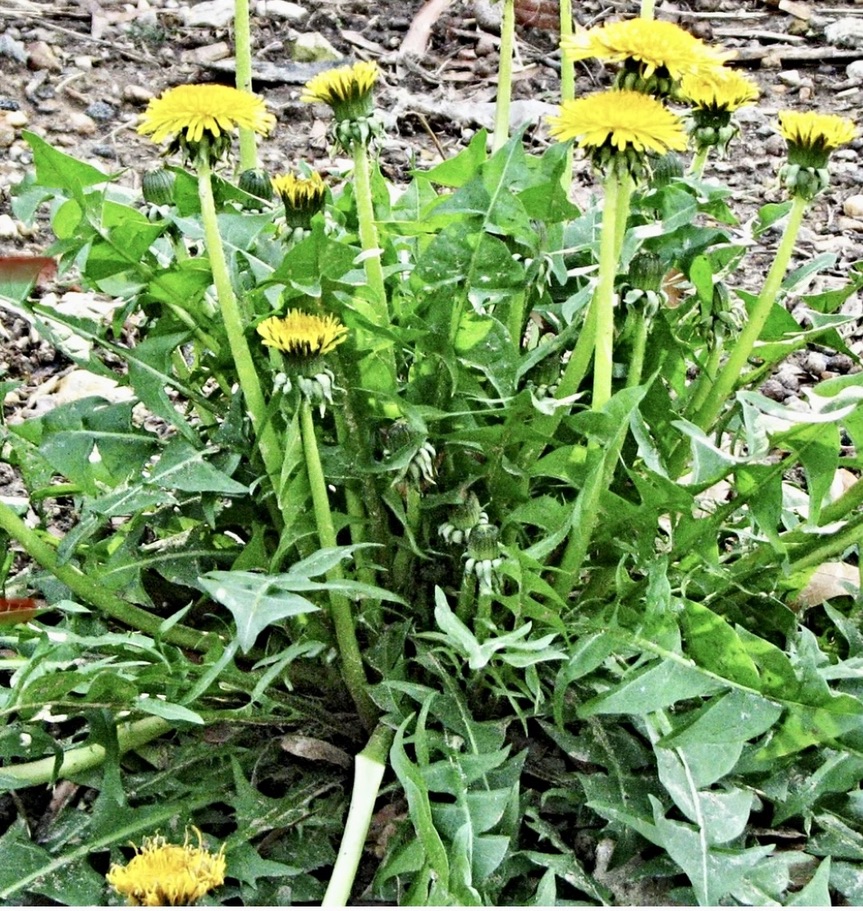
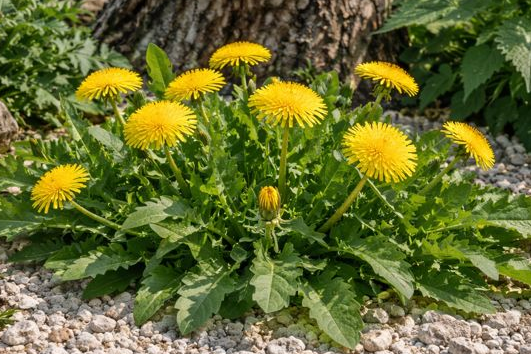
Dandelion forms robust leaf rosettes with a deep taproot. This makes the plant particularly resistant to trampling and drought, so it holds its own well in a tortoise enclosure. A single plant can produce a great many seeds, ensuring stable vegetation in the long term.
🌱 Sowing correctly
Dandelion seeds are very small and sensitive to light: they are light germinators (in German). Dandelion can still germinate if the seeds are lightly covered with soil, which is why it is sometimes described as a variable germinator. Physiologically, however, it still belongs to the light germinator group.
- Scatter the seeds
- Only press them in – do not cover them with soil
- When sowing in a propagator: keep warm and moist
Germination usually takes place within about two to four weeks at around 15–18 °C. Sowing directly outdoors is easy from spring onwards.
🐢 Rating for tortoises
✔ excellent food plant
✔ regrows well
✔ resistant to trampling
✔ self-seeds very readily
Feeding: varied, not one-sided
Valuable as dandelion is, the rule for all food plants applies: variety is key.
Dandelion contains comparatively high levels of protein. In the long term, a one-sided diet that is too high in protein can lead to kidney problems and gout in tortoises.
👉 The ideal is therefore a combination of dandelion and other wild plants, such as plantain, thistles, mallows, or chicory.
🌿 Important constituents (selection)
Dandelion is rich in secondary plant compounds, vitamins, and minerals:
- Bitter substances (including sesquiterpene lactones such as tetrahydroiridentin B, ainslioside, and taraxacin)
- Triterpenes (e.g. taraxasterol)
- Sterols, flavonoids, and coumarins
- Vitamins: A, B1, B2, B6, C, D, choline
- Minerals: especially potassium
- Calcium: about 168 mg per 100 g of plant
🌼 Why bitter substances matter so much
The bitter substances in dandelion are particularly valuable for tortoises. They:
- aid digestion
- stimulate the appetite
- support the liver and gall bladder
- have a mild antimicrobial effect
Many of these bitter substances occur only in small amounts in other food plants.
🌿 Dandelion as a medicinal plant
Dandelion has long been regarded as a classic digestive herb – in modern herbal medicine too. Its constituents:
- aid digestion
- relieve flatulence
- have a mild anti-inflammatory effect
In pets such as tortoises, rabbits, and guinea pigs, dandelion has also proved its worth for digestive and gall bladder problems.
🍂 Dried dandelion
Dandelion dries well and can be fed all year round.
Drying increases the crude fibre content, making it particularly valuable for gut health.
Tip: hang whole bunches in a warm, airy place and let them dry out completely.
✅ In short
Dandelion is a good food plant for tortoises: nutritious, rich in bitter substances, easy to find, and natural 🌿🐢
But: only in combination with other wild plants does it form the perfect basis for a healthy, natural diet.
Dandelion clocks
Hardly any plant is as well known as the dandelion with its much-loved “clocks”. What many people do not know: the fluffy balls consist of numerous seeds hanging from tiny parachutes. These are spread by the wind – or by blowing hard. Besides this natural spread, dandelions can easily be sown deliberately.
Dandelion seeds – appearance and characteristics
Once the yellow dandelion flowers have faded, the petals drop. The outer bracts first close to protect the developing seeds. As soon as these are fully ripe, the bracts open again and reveal the familiar clocks. Each seed has a fine parachute that often lets the wind carry it a long way. After landing, a small point on the seed helps it anchor itself firmly in the soil.
Even in calm weather, the seeds still spread, as the slightest touch can release them and send them flying.
A single dandelion can produce several thousand seeds a year. Not all of them germinate, however, as some are not viable or are eaten by insects. The seeds can survive in the soil for many years, and some remain viable for up to a decade.
When dandelions flower
The main flowering season usually begins in April and lasts into early summer. In favourable conditions, there can be a second flush of flowers in summer.
When dandelion seeds ripen
The seeds are usually fully developed about ten days after flowering begins. To prevent uncontrolled spread, collect faded flower heads as early as possible, as the seeds can come loose at the slightest touch. Stored in a dry, dark place, the harvested seeds can later be sown again.