Plantain (Plantago spp.) – a key plant in the diet of tortoises
The genus Plantago comprises around 200 species worldwide and, nutritionally, is one of the most important wild plants for keeping European and Mediterranean tortoises. Plantains are perennial, extraordinarily tolerant of different sites, and highly adaptable ecologically – qualities that make them indispensable both in the wild and in the enclosure.
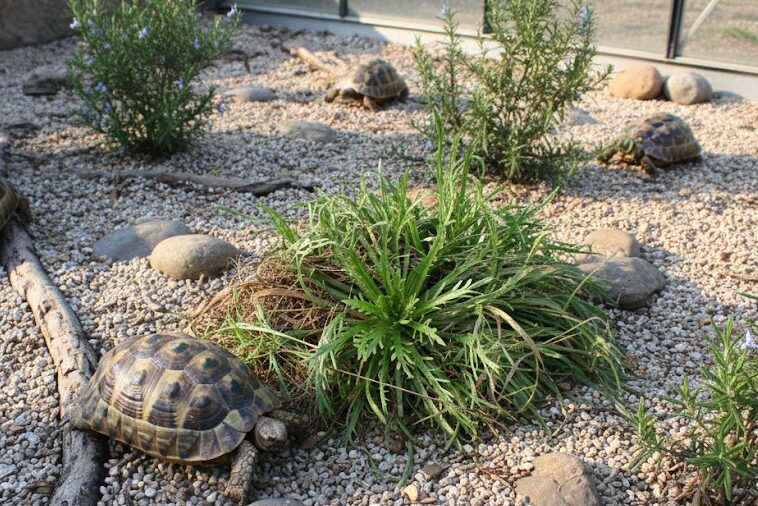
A further decisive advantage: plantain is extremely drought-resistant and tolerates lime. This makes it ideal for naturally structured tortoise enclosures, especially those with a mineral substrate or limestone gravel (in German), as is typical of Mediterranean habitats.
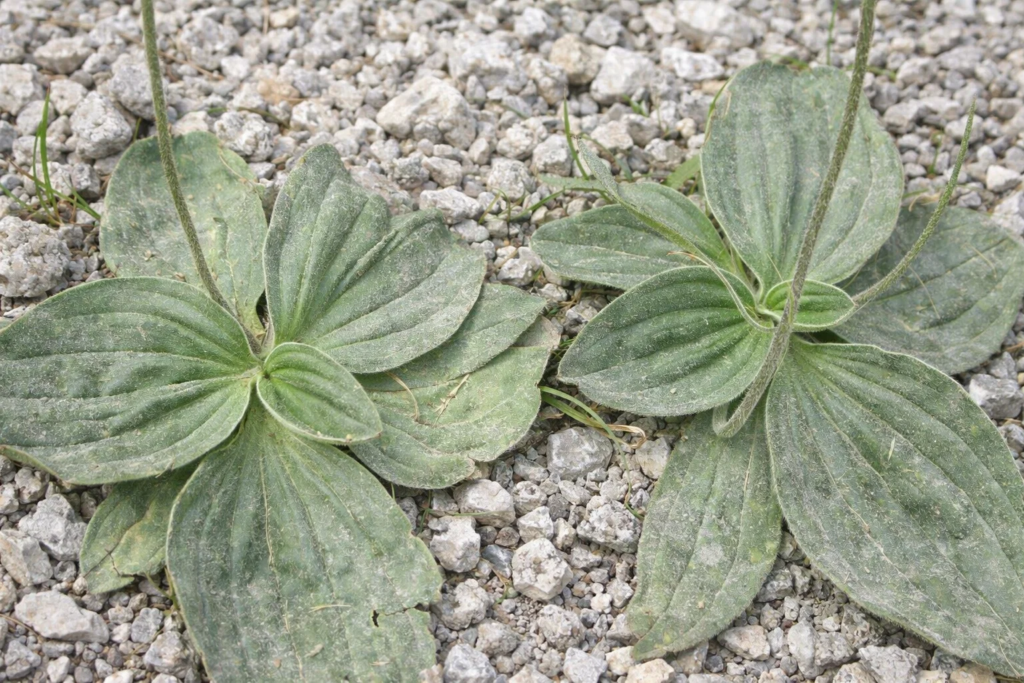
Plantain species relevant to the tortoise diet
- Ribwort plantain (Plantago lanceolata)
- Greater plantain (Plantago major)
- Hoary plantain (Plantago media)
- Buck’s-horn plantain (Plantago coronopus)
- Asian plantain (Plantago asiatica)
- Mediterranean plantain / psyllium (Plantago afra / P. psyllium)
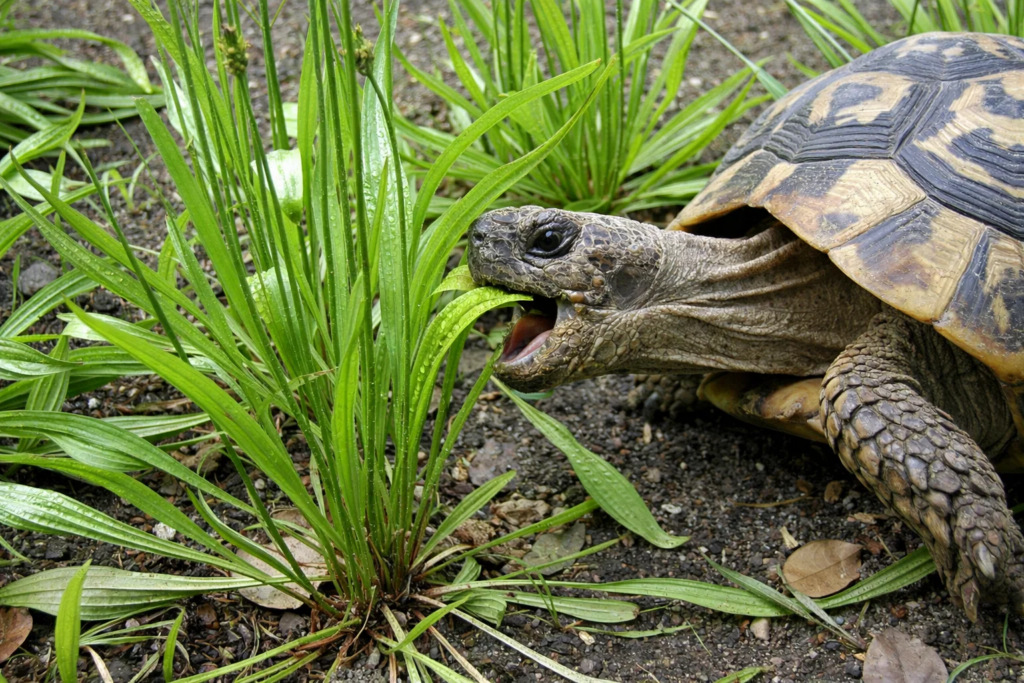
Greater plantain is considered extremely resistant to trampling and stress, and colonises even heavily compacted sites such as verges, car parks, or urban wasteland. This toughness makes it particularly suitable for busy areas of the enclosure.
Hoary plantain is rarer, but interesting both ecologically and nutritionally. With its textured leaves and favourable nutrient profile, it is a valuable addition to the range of food plants.
Buck’s-horn plantain is typical of warm, dry coastal sites and even tolerates saline soils. Its natural distribution in the Mediterranean makes it ideal for Mediterranean-style enclosures.
Asian plantain is known from East Asian herbal medicine and impresses with its adaptability to different climate zones, including cooler Central European conditions.
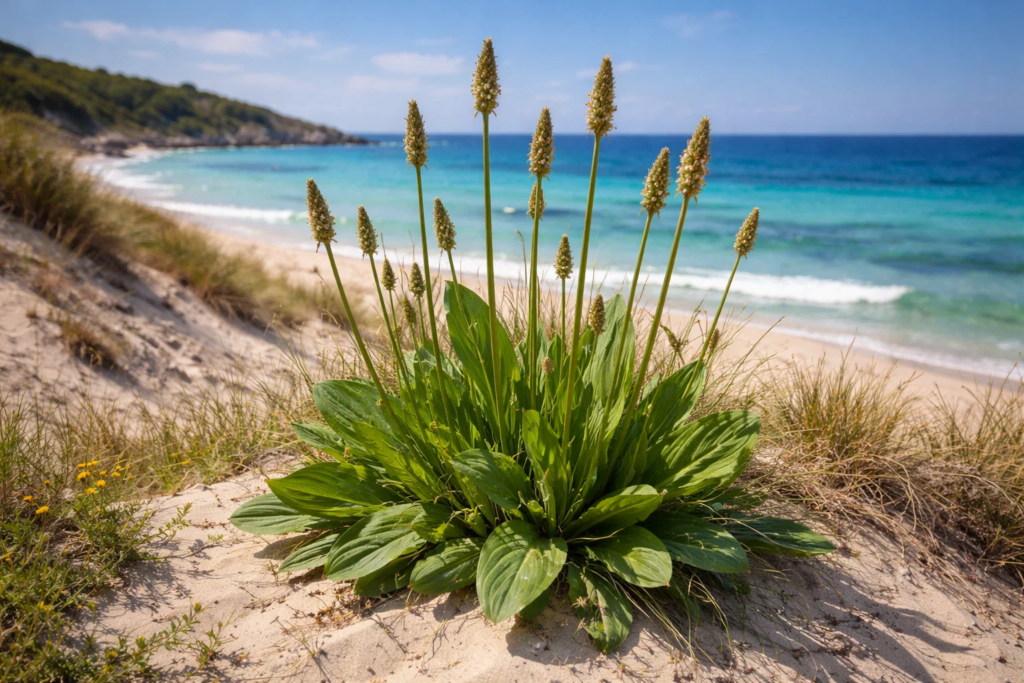
Mediterranean plantain (Plantago afra / psyllium) comes from arid to semi-arid regions. Besides its high-fibre leaves, its seeds in particular are known for their high mucilage content, which can be relevant to digestion in very small amounts. Mediterranean plantain tolerates salt and also grows in dunes right by the sea.
Nutritional importance
All plantain species are characterised by
✔ a high crude fibre content
✔ a significant calcium content
✔ a calcium-to-phosphorus ratio (in German) (Ca:P) of 3.54, which is very favourable for tortoises
They support gut motility, encourage natural wear of the beak, and make an important contribution to stable shell and bone development. Tortoises reliably eat plantain fresh, wilted, or dried.
Cultivation & site
- Perennial, up to about 60 cm tall depending on the species
- Sunny to partially shaded sites
- Drought-resistant and lime-loving
- Particularly suitable for limestone gravel, marl, and mineral substrates
- Normal germinator, easy to sow
- Sowing period: spring to autumn, ideally April–October
- Sow in trays at 20 °C from February, then plant out from mid-May. Or sow directly in the enclosure from April to September. After germination, thin out to 20–30 cm apart.
Conclusion
Plantain species combine robustness with high nutritional value. Their drought resistance, tolerance of lime, and textured, nutritious leaves make them a key plant in modern, science-based tortoise husbandry – especially in naturalistic, Mediterranean-style enclosures.
Other food plants include dandelion, chicory, lamb’s lettuce (in German), evening primrose, and willow (in German).