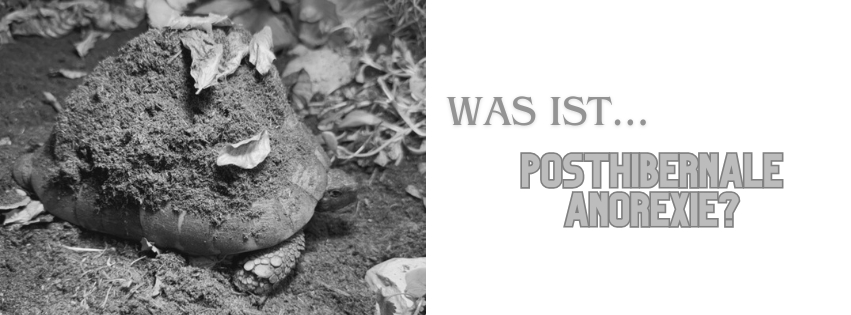
Description
After brumation, some tortoises eat straight away, while others usually take a few days before they start feeding again. If a tortoise refuses food for weeks, however, this is called post-brumation anorexia (PHA) – known in veterinary literature as post-hibernation anorexia. It is not a single disease but a disease complex that can be triggered by various factors before, during, or after brumation.
Origin of the term:
post (after) – hibernation (brumation) – anorexia (disturbed food intake)
Symptoms
The problems appear immediately after brumation and persist despite rising temperatures:
- Persistent refusal of food
- Reluctance to move, lethargy
- No drinking (adipsia)
- Little or no urine
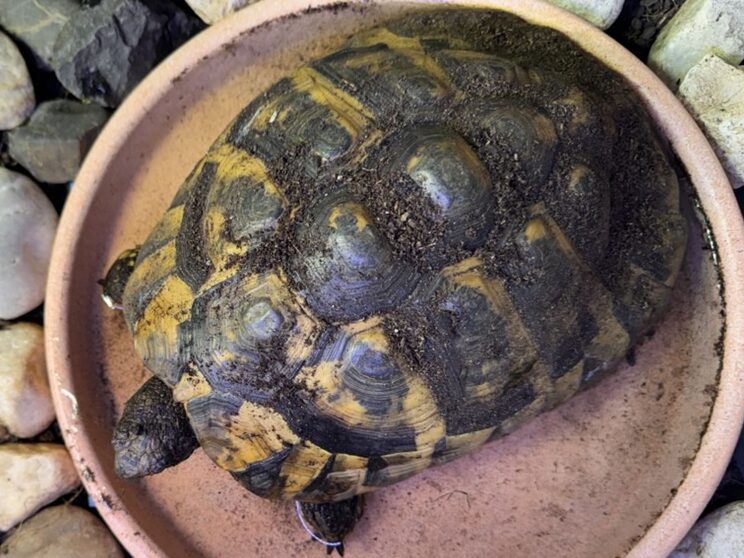
- Repeatedly burying itself again
- Sunken eyes, wrinkled skin (dehydration)
- Reddening of the plastron (a sign of sepsis)
Causes
As a rule, several factors interact:
- Brumation that is too warm (> 8 °C)
- Brumation that is too dry (dehydration)
- Brumation that lasts too long
- Undernourishment before brumation
- Pre-existing disease or a weakened immune system
- Unsuitable husbandry during the active season
- Insufficient fluid intake before brumation
During brumation, waste products normally excreted in the urine build up in the blood, as there is no active excretion. At the same time, the tortoise loses fluid through its skin and breathing. Under unfavourable conditions, this leads to metabolic disorders, dehydration, and increased susceptibility to infection.
The waste products that have not been broken down can cause poisoning and overload the liver and kidneys.
Diagnosis
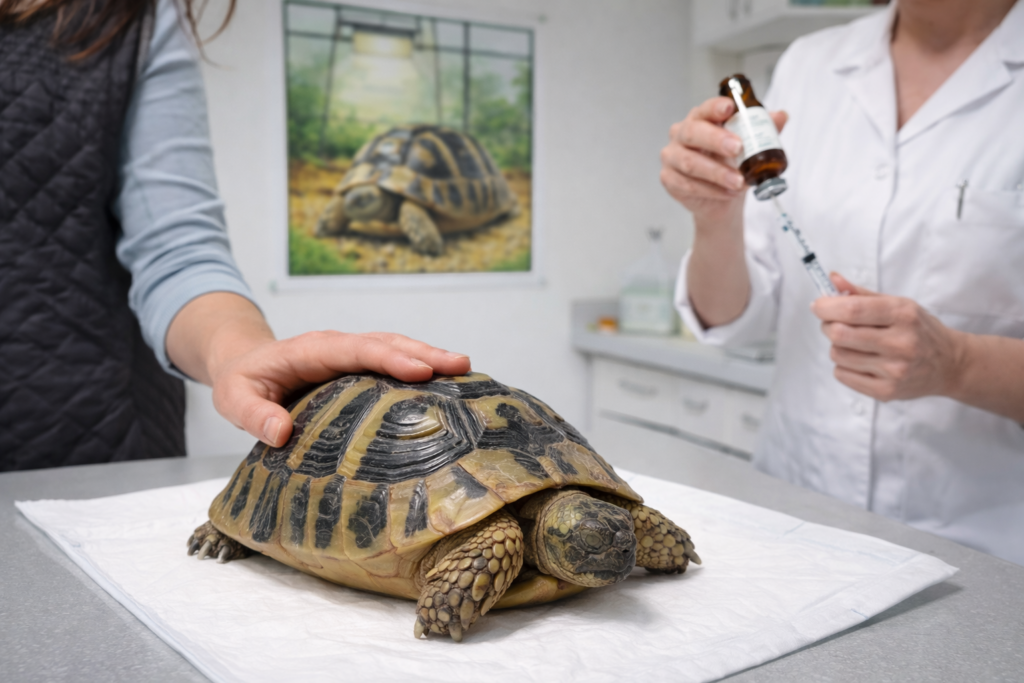
If PHA is suspected, a reptile-experienced vet should carry out a blood test and an organ screening. More about vets’ qualifications is given further down this page.
Typical findings are:
- Raised uric acid / urate values (a sign of dehydration or kidney strain)
- Raised liver values
Treatment
Early, intensive treatment by a reptile vet, followed by continued care at home according to the vet’s instructions, is crucial.
Basic principles:
- Fluid replacement (e.g. Ringer’s or saline solution)
- Lukewarm baths for rehydration
- If necessary, assisted feeding via a stomach tube
- Glucose to stabilise blood sugar
- Vitamin supplementation (especially A, D, E, and B complex)
- Treatment of accompanying infections
- Severe cases must be treated as in-patients at a reptile vet’s
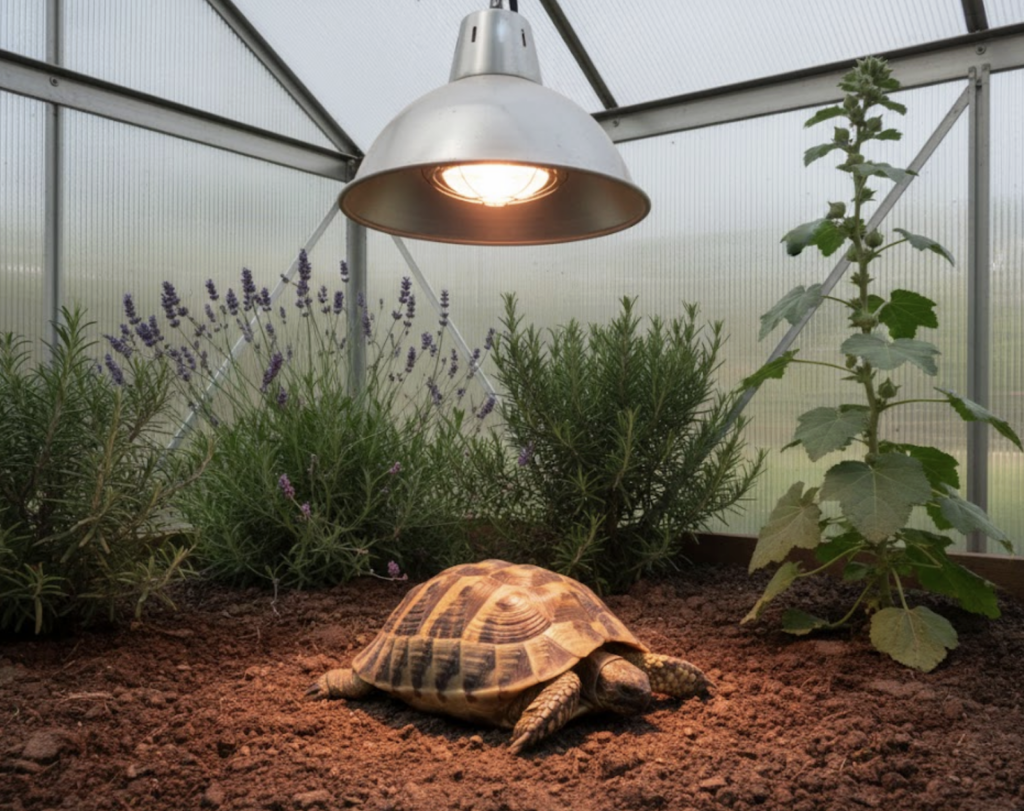
In general, extra warmth (about 25 °C ambient, not below 20 °C at the cool end, 38 °C at the basking spot) and intensive light and UV provision are important supportive measures.
A high-quality UV lamp stimulates the appetite; good results have often been achieved when nursing tortoises with an Osram Ultra-Vitalux lamp. As this lamp is very powerful, it should hang at least 100 cm from the tortoise. The exposure time is gradually increased to 2 × 15 minutes a day.
Complications
Untreated, PHA can lead to severe organ damage:
- Kidney damage up to uraemia
- Liver dysfunction
- Hypoglycaemic shock
- Increase in parasites
- Septic infections
Prognosis
With early diagnosis and moderate changes in blood values, the prognosis is good. Markedly raised organ values considerably worsen the chances of recovery. Even so, it is important not to give up too quickly – convalescence in tortoises usually takes quite a long time.
Prevention
The most important measure is optimal husbandry and careful preparation for brumation:
- Only allow healthy tortoises to brumate that were already in good health in August (Tortoise Trust).
- Gradual temperature reduction from the end of October.
- A timely examination by a reptile vet (late summer).
- A constant brumation temperature of 5–6 °C.
- Keep the substrate sufficiently moist but not wet.
- Keep brumation to no more than about 3 (at most 4) months in total.
- Monitor weight loss (up to 1 % per month of brumation is generally harmless, according to Tortoise Trust).
- Use a cold frame with equipment for the best possible preparation for brumation and for emergence.
- No vivarium housing for European tortoises.
The decision on brumation should already be prepared in late summer. Only tortoises that are healthy and in good body condition at that point can brumate safely. An additional health check by a reptile-experienced vet in early autumn helps to detect disease or parasite infestation in time. Only completely healthy tortoises should finally brumate.
Even though tortoises do not need to build up winter fat like the “hibernators” bear and hedgehog, they still need to be fit to come through brumation well.
Conclusion
Post-brumation anorexia is a common problem in veterinary practice. It usually results from a combination of metabolic strain, dehydration, and a weakened immune system. With careful brumation, natural husbandry, and prompt intervention by a reptile vet, many cases can be treated successfully – and ideally avoided altogether.
Further warning signs after emergence:
Going to a reptile vet
In Germany, there are official further qualifications and titles for vets specialising in reptiles, awarded by the veterinary chambers:
• Fachtierarzt/-tierärztin für Reptilien (specialist vet for reptiles) – the highest specialisation in reptile medicine. Training usually takes 4–5 years and ends with an examination.
• Zusatzbezeichnung Reptilien/Amphibien (additional qualification in reptiles/amphibians) – a recognised additional qualification for treating reptiles, e.g. as pets, in zoos, or in research institutions. Training usually takes about 2–3 years.
• Weiterbildung „Reptilien“ (further training in reptiles) – structured training or practical specialisation of about 24 months.
The exact requirements may differ slightly between federal states and veterinary chambers. In Germany, reptile vets organised in the DGHT are listed by the AGARK. In the UK, the RCVS Find a Vet service helps to locate practices with exotic and reptile experience.
Transporting a tortoise safely
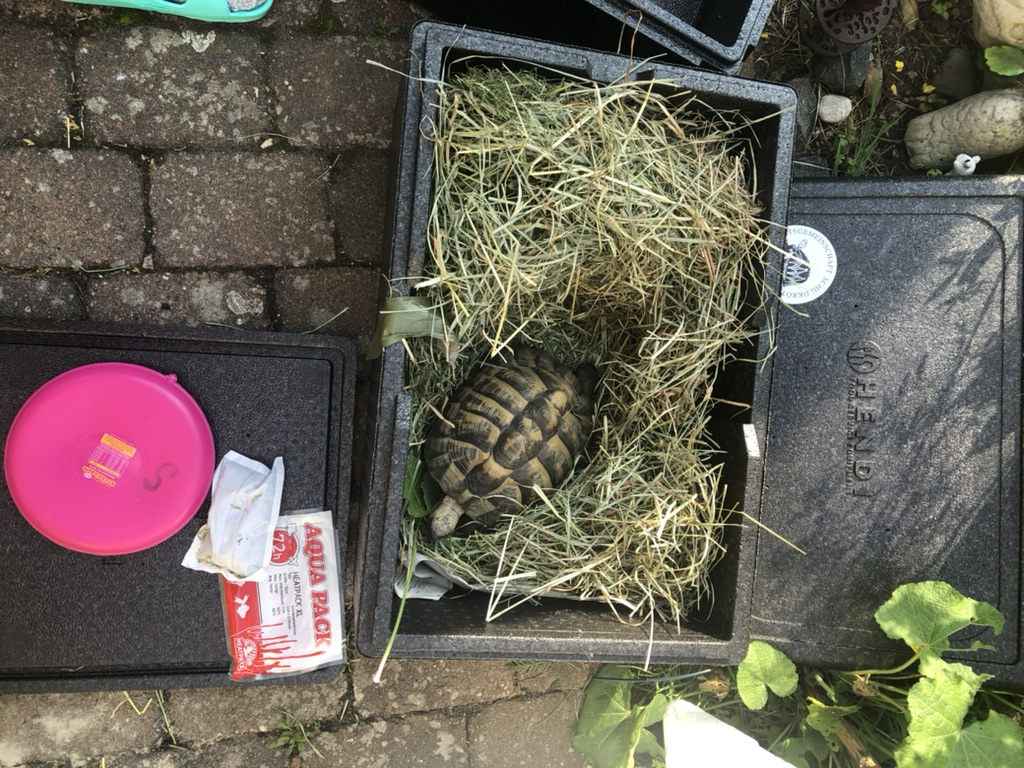
Taking a tortoise to the reptile vet safely and warmly requires some precautions. How to transport a tortoise as safely and with as little stress as possible is explained under transport (in German).
Literature on post-brumation anorexia
Vet Times. Solving common hibernation complications in tortoises.
The article explains which health problems can occur in tortoises during or after brumation and how vets diagnose and treat them. It also describes a recommended procedure for safe brumation – including a health check beforehand, suitable temperatures (about 4–7 °C), and correct preparation – to avoid complications such as dehydration, kidney problems, or stomatitis.
https://www.vettimes.com/clinical/exotics/solving-common-hibernation-complications-in-tortoises-cpdreptiles
Christen, C. (2025). Die posthibernale Anorexie – ein häufig gesehenes Problem in der Tierarztpraxis. SIGS.ch, 2025, Universität Zürich, Zoo-, Heim- und Wildtierabteilung, Winterthurerstrasse 260, CH-8057 Zürich.
The article describes post-hibernation anorexia in tortoises as a common problem after brumation and explains possible causes such as dehydration, metabolic disorders, or subclinical disease. It also sets out diagnostic steps and therapeutic measures in veterinary practice to stabilise affected tortoises and get them eating again.
Mader, D. R. (ed.) (2006). Reptile Medicine and Surgery (2nd ed.). Ames, Iowa: Blackwell Publishing.
This standard work of reptile medicine gives a comprehensive overview of reptile anatomy, physiology, diagnostics, and treatment, including basic information on husbandry, disease patterns, and clinical treatment strategies relevant to the veterinary care of tortoises.
McArthur, S., Wilkinson, R., Meyer, J., Innis, C., & Hernandez-Divers, S. (2004). Medicine and Surgery of Tortoises and Turtles. Oxford, UK / Ames, Iowa: Blackwell Publishing.
A specialist veterinary reference on chelonians, covering anatomy, physiology, diseases, and surgical and medical treatment options in detail, with a particular focus on typical health problems of tortoises and turtles and their diagnosis and treatment in practice.
Wilkinson, R., & Hernandez-Divers, S. (eds.) (2015). BSAVA Manual of Reptiles (2nd ed.). Gloucester: British Small Animal Veterinary Association.
This practical manual for vets gives a concise introduction to the diagnosis, treatment, and husbandry of reptiles, with structured guidance on common diseases, clinical examinations, and treatment approaches, including specific aspects of chelonian medicine.