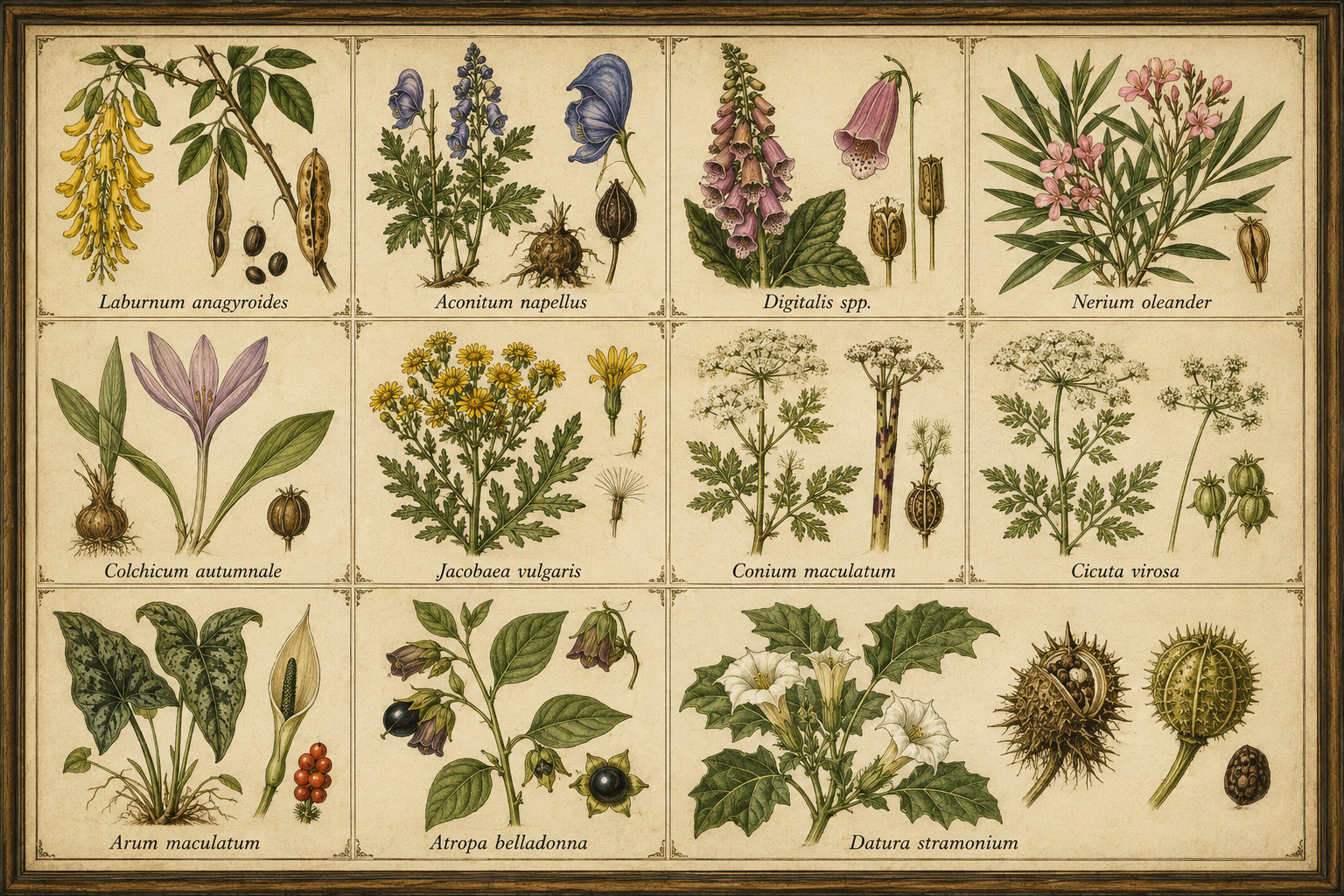
Recognise poisonous plants before gathering food
Anyone who wants to gather wild plants for tortoises is best advised not to start with the longest possible list of food plants. The safer route begins with the most important poisonous plants.
Once the typical high-risk plants are known, they can be ruled out straight away when gathering. Only then is knowledge of suitable food plants built up step by step. This order raises the level of safety considerably: unsuitable or dangerous plants are recognised more quickly, while the number of reliably identified food plants grows with experience.
The most important principle is therefore:
Only plants that have been reliably identified and are known to be suitable are fed. If in doubt, leave the plant where it is.
As there are few robust data on the toxicity of individual plants specifically for tortoises, many risks are assessed as a precaution on the basis of veterinary findings in other animal species. As always at TASCHENDINOS, the principle of maximum safety applies: where robust data specific to tortoises are lacking, potential risks are ruled out to be on the safe side.
The following overview shows some of the most important poisonous plants that may play a role in the garden, around the tortoise enclosure, or when gathering food. Many poisonous plants can also establish themselves by self-seeding in a self-sufficient enclosure, so the enclosure should be checked regularly.
Because there are so many poisonous plants, this overview is not complete and does not replace a detailed identification guide.
Particularly important poisonous plants in the garden
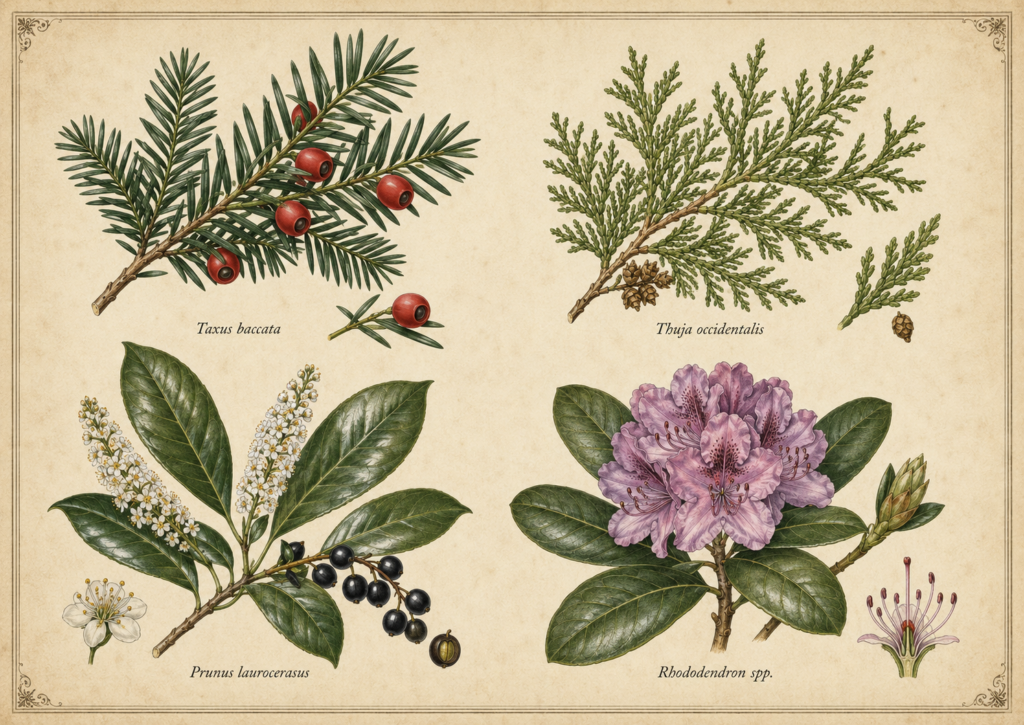
Yew – Taxus baccata
Yew is one of the most dangerous woody plants around a tortoise enclosure. Needles, seeds, fallen leaves, and clippings can end up in the enclosure or be blown in. Dried plant parts also remain highly toxic. The red arils are particularly treacherous: the red flesh surrounds a seed that is still dangerous.
Northern white cedar (thuja) – Thuja occidentalis
Thuja is often used as a hedging plant. The scale-like shoots contain essential oils and thujone. Hedge clippings and broken-off twigs in particular must not get into the tortoise enclosure.
Cherry laurel – Prunus laurocerasus
In many gardens, cherry laurel grows right along the boundary. When chewed, the leaves can release hydrogen cyanide; the berries, and especially their stones, are also problematic. Fallen leaves and clippings from neighbouring hedges should be removed consistently.
Rhododendron and azalea – Rhododendron spp.
The leaves and flowers contain grayanotoxins. As many varieties are evergreen, leaves can fall all year round and be blown into the enclosure. Rhododendrons and azaleas should therefore not grow directly next to a tortoise enclosure.
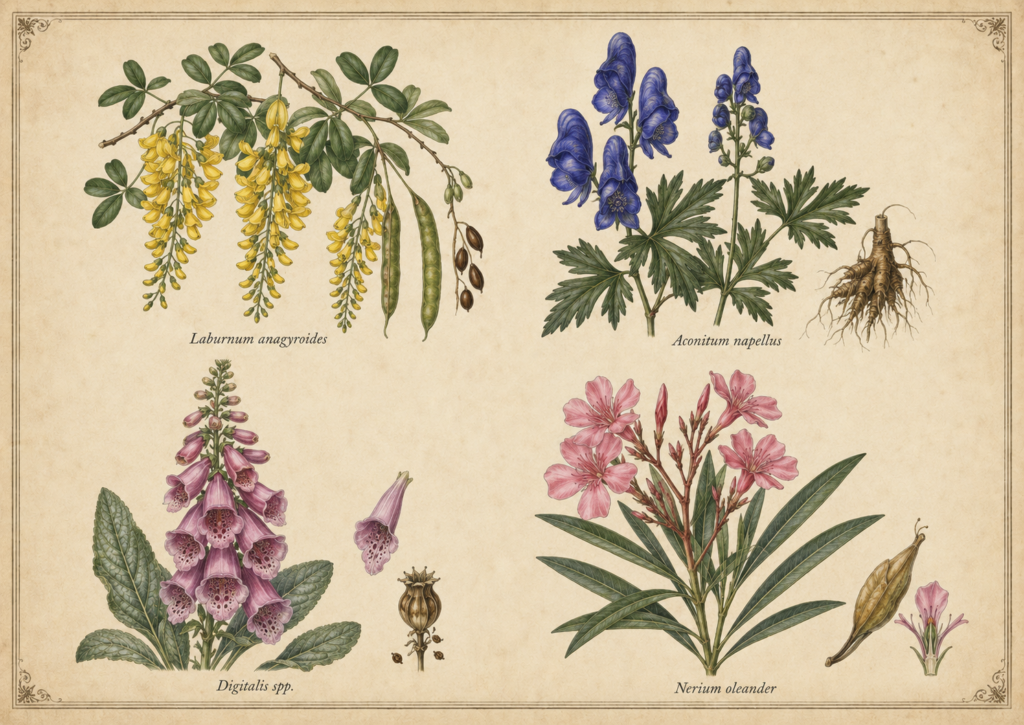
Laburnum – Laburnum anagyroides
The whole plant contains cytisine. The pods and seeds have particularly high concentrations. After flowering, these can drop or be blown into neighbouring enclosures.
Monkshood – Aconitum napellus
Monkshood is one of the most poisonous native garden perennials. Leaves, flowers, and remains of the tubers must not get into the enclosure or into gathered food. The sap can also irritate skin and mucous membranes.
Foxglove – Digitalis spp.
The whole foxglove plant contains cardiac glycosides. The leaves and seeds are particularly critical. As foxglove self-seeds easily, it can also turn up unexpectedly near an enclosure or at gathering sites.
Oleander – Nerium oleander
Oleander is a popular container plant on patios and balconies. The whole plant contains cardiac glycosides. Wilted and dried leaves also remain problematic and must be kept out of tortoises’ reach.
Important poisonous plants when gathering food
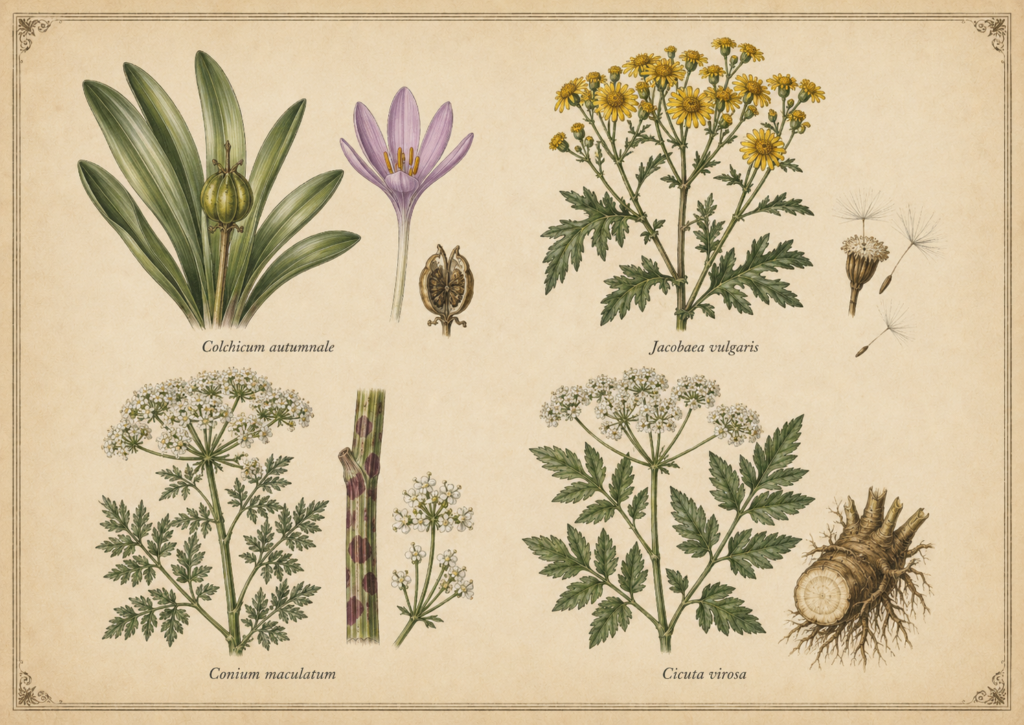
Meadow saffron (autumn crocus) – Colchicum autumnale
Meadow saffron is one of the most important high-risk plants in meadows. The colchicine it contains is highly toxic and remains active in dried plant material.
Confusion is particularly dangerous in spring: at this time only the broad, glossy leaves appear, while the crocus-like flowers only become visible in autumn.
Common ragwort – Jacobaea vulgaris
Common ragwort contains pyrrolizidine alkaloids, which can damage the liver. The effect can build up through repeated intake; dried plant parts also remain problematic.
The plant grows in meadows, pastures, fallow land, and on verges, and spreads through its many wind-borne seeds.
Hemlock – Conium maculatum
Hemlock is particularly dangerous because it can be confused with other members of the carrot family (umbellifers). The whole plant contains coniine.
Typical features are the smooth, purple-spotted stem and an unpleasant smell when crushed. Unknown umbellifers should never be gathered.
Cowbane – Cicuta virosa
Cowbane is one of the most poisonous plants in Europe. It grows mainly along ditches, ponds, and stream banks.
Damp gathering sites generally carry particular risks of confusion. Anyone who cannot identify umbellifers with absolute certainty should not gather food at such sites.
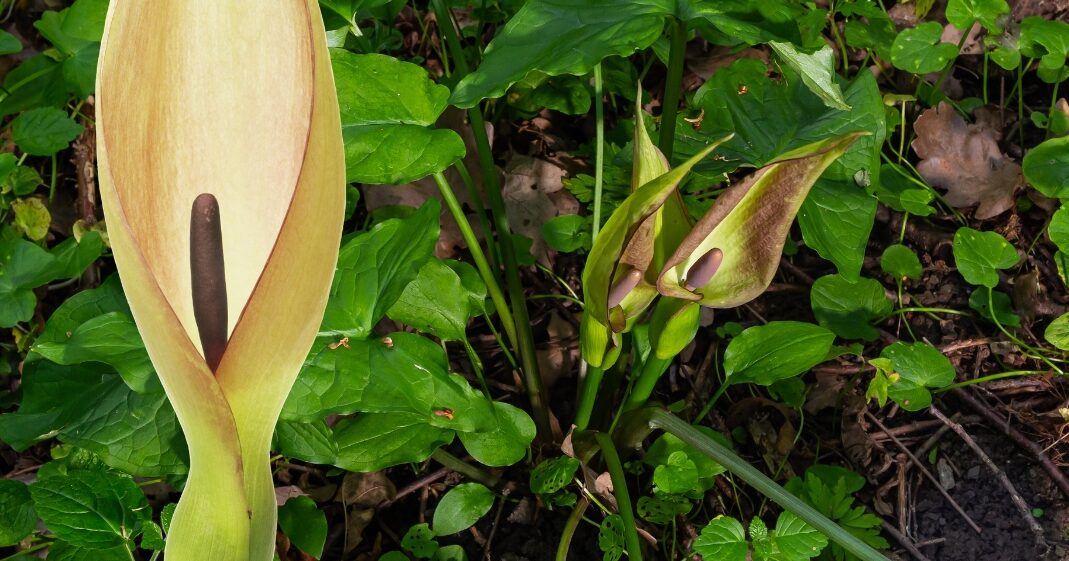
Lords-and-ladies (cuckoo pint) – Arum maculatum
Lords-and-ladies grows along shady woodland edges and in hedges. All parts of the plant contain irritant substances and calcium oxalate needles; the berries that appear later are particularly conspicuous and problematic.
The arrow-shaped, often dark-spotted leaves appear as early as early spring and can grow among other shade-loving greenery.
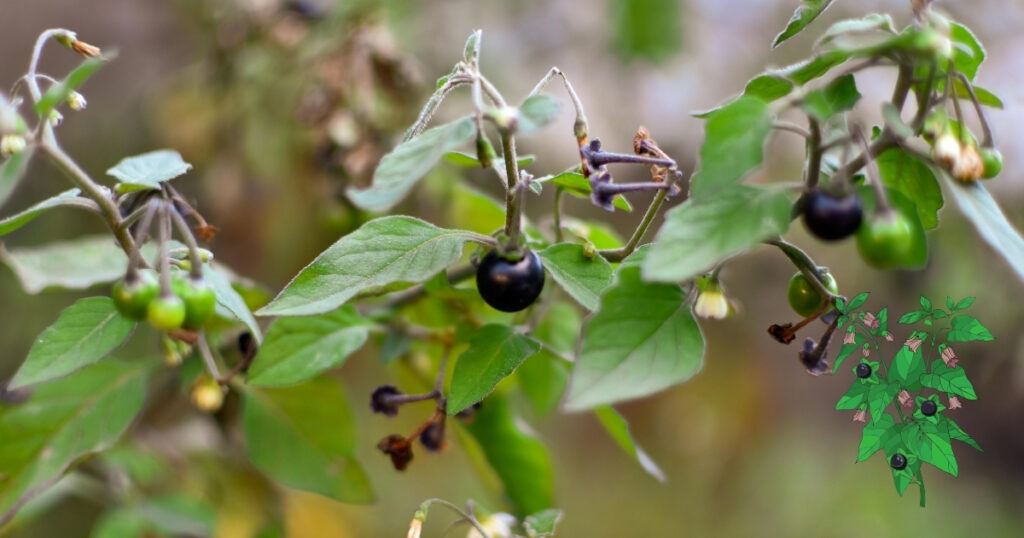
Deadly nightshade – Atropa belladonna
The whole of the deadly nightshade plant contains tropane alkaloids. The glossy black berries, which sit in a star-shaped, spreading calyx, are particularly conspicuous.
The plant can grow along woodland and hedge edges – exactly where food plants are sometimes gathered.
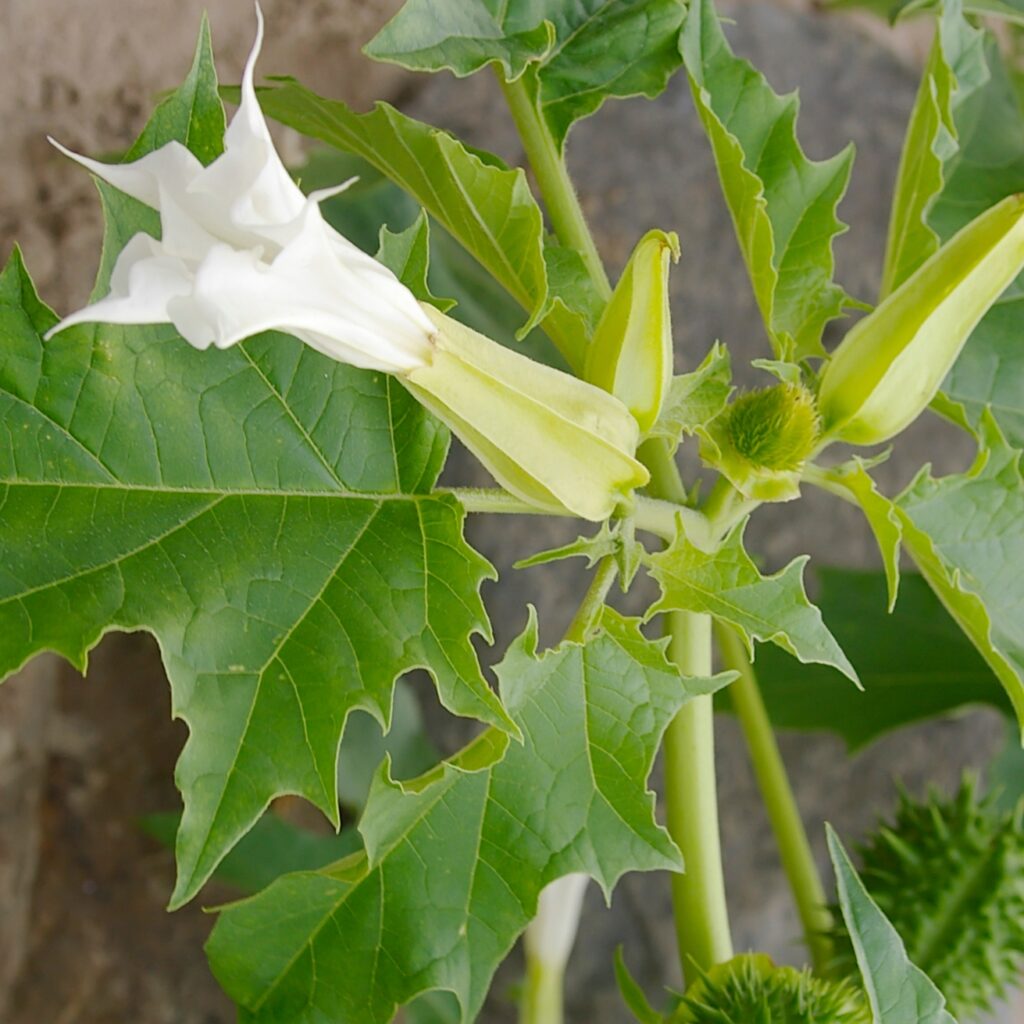
Thorn apple – Datura stramonium
Thorn apple also contains tropane alkaloids in all parts of the plant. They are particularly concentrated in the seeds.
The plant often grows on waste ground and along field edges and verges. Thanks to its long-lived seeds, it can also appear unexpectedly on patches of bare soil in the garden or even in the enclosure.
Why a short list of poisonous plants is not enough
The species listed here are among the most important high-risk plants. Besides these, however, there are many other garden plants, wild plants, woody plants, bulbs, and container and house plants that are poisonous to tortoises or at least unsuitable as food.
Plants also change over the course of the year. Young leaves can look different from fully grown plants, flowers appear only briefly, and some species can only be clearly identified by their fruits or seeds. Regional differences and similar common names can also make identification harder.
Plants should therefore never be judged on the basis of a single photo or a common name alone. What matters is the combination of scientific name, growth habit, leaves, flowers, fruits, location, and other identifying features.
The Poisonous Plants Handbook from the series Modern Husbandry of European Tortoises
The TASCHENDINOS Poisonous Plants Handbook (English edition in preparation) was developed as a compact field guide for everyday life with tortoises. It helps with checking the area around the enclosure as well as with gathering food plants safely.
The plant portraits show, among other things:
- the common and scientific plant names,
- the decisive identifying feature,
- the main dangers,
- typical locations and ways of getting into the enclosure,
- possible confusions,
- and advice for emergencies.
The handbook is considerably more comprehensive than this first overview. It helps keepers not only to know typical high-risk plants by name, but to actually recognise them in the garden and when out and about.
If poisoning is suspected
Carefully remove any plant remains from the mouth straight away. Then take a photo, keep a sample of the plant, and contact a reptile vet or veterinary clinic immediately.
Do not try home remedies and do not wait for symptoms to appear. Take the plant, plant remains, and photos with you to the vet.
Rule of thumb: if in doubt, leave the plant where it is – for safety’s sake.