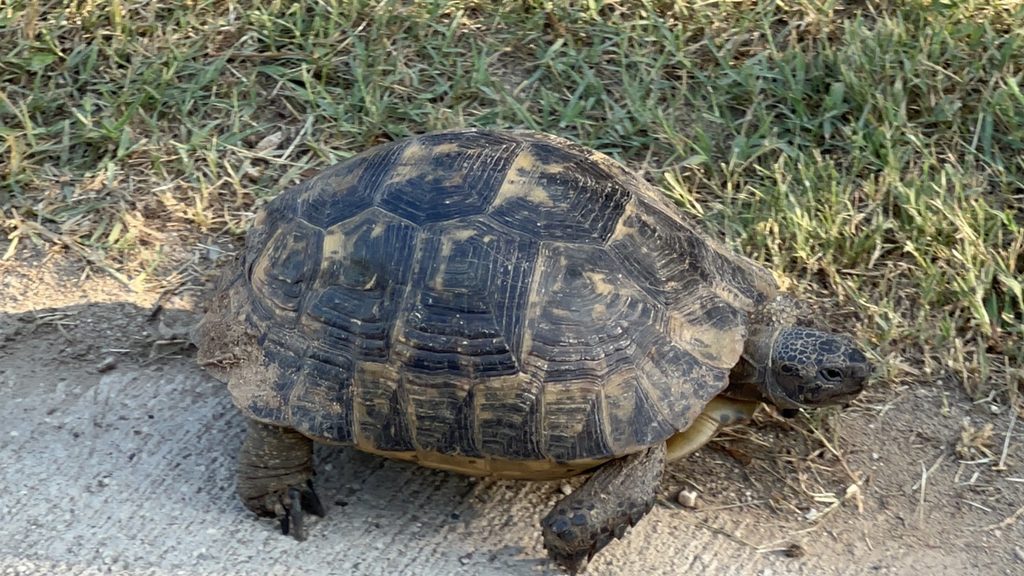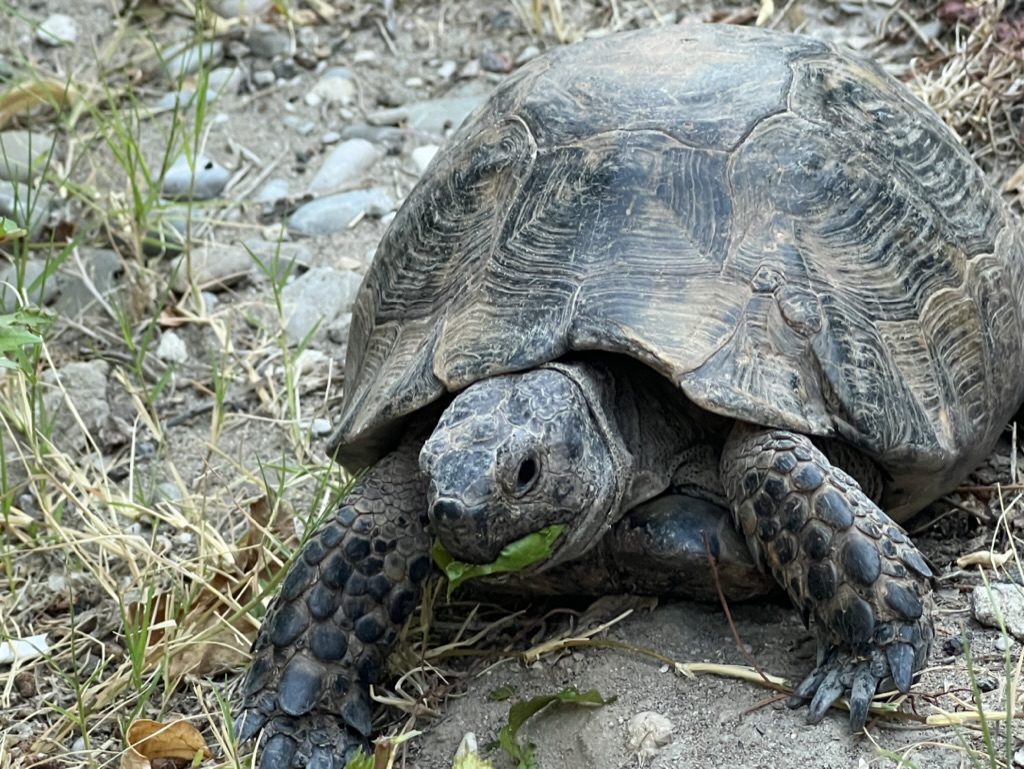
The Spur-thighed Tortoise (Testudo graeca) has an exceptionally large natural range. It extends from North Africa and the Iberian Peninsula across south-eastern Europe and Anatolia to the Caucasus, the Levant and Iran.
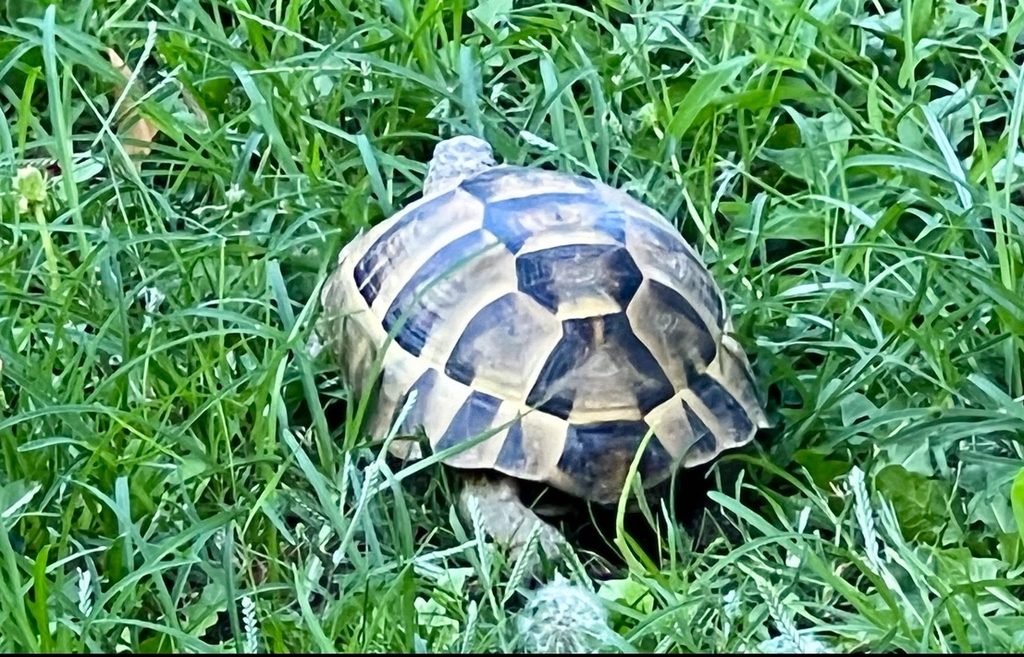
Regional variation is therefore considerable. Populations live under very different climatic conditions, ranging from Mediterranean regions to continental steppe landscapes and the margins of hot deserts.
Taxonomically, Testudo graeca is anything but straightforward. Over the decades, populations have repeatedly been described, reassigned or combined with other subspecies. Names found in older books, scientific papers or provenance records therefore do not always correspond to the current classification.
For an introduction to terms such as species, subspecies, taxon, synonym and nominate form, see the TASCHENDINOS article Tortoise taxonomy and conservation status.
The evolutionary history of the genus Testudo is discussed in more detail in The origins of today’s Testudo species.
A compact overview of the tortoise species covered by TASCHENDINOS can also be found under Species of European tortoises.
How many subspecies of Testudo graeca are currently recognised?
According to the current taxonomic treatment used by the Reptile Database, eleven subspecies of Testudo graeca are presently listed.
The 10th edition of the international reference work Turtles of the World, published by the Turtle Taxonomy Working Group (TTWG) in 2025, is also an important basis for the current classification.
The most recent change of particular relevance to this overview concerns north-western Libya, where the new subspecies Testudo graeca tripolitania was described in 2024.
The following eleven subspecies are currently recognised:
| Subspecies | Main distribution | Older or alternative names |
|---|---|---|
| Testudo graeca graeca | South-western Morocco | T. g. soussensis |
| Testudo graeca marokkensis | Northern and central Atlantic Morocco | partly T. g. lamberti |
| Testudo graeca whitei | North-eastern Morocco, western Algeria, Iberian Peninsula | formerly often T. g. graeca |
| Testudo graeca nabeulensis | Tunisia, extreme north-eastern Algeria | Furculachelys nabeulensis, partly T. flavominimaralis |
| Testudo graeca tripolitania | North-western Libya | previously assigned to T. g. nabeulensis |
| Testudo graeca cyrenaica | North-eastern Libya / Cyrenaica | – |
| Testudo graeca ibera | Balkans, Turkey, western Caucasus | T. ibera, including T. g. nikolskii |
| Testudo graeca armeniaca | Armenia, Azerbaijan, Iran, Dagestan, Turkey | including T. g. pallasi |
| Testudo graeca buxtoni | Iran, Iraq, Turkey | including T. perses |
| Testudo graeca terrestris | Levant and south-eastern Turkey | including T. g. floweri, T. g. anamurensis, T. g. antakyensis |
| Testudo graeca zarudnyi | Iran | Testudo zarudnyi |
Note: English common names for individual subspecies are not consistently standardised. For this reason, TASCHENDINOS deliberately uses the scientific names as the primary designation.
The western subspecies of Testudo graeca
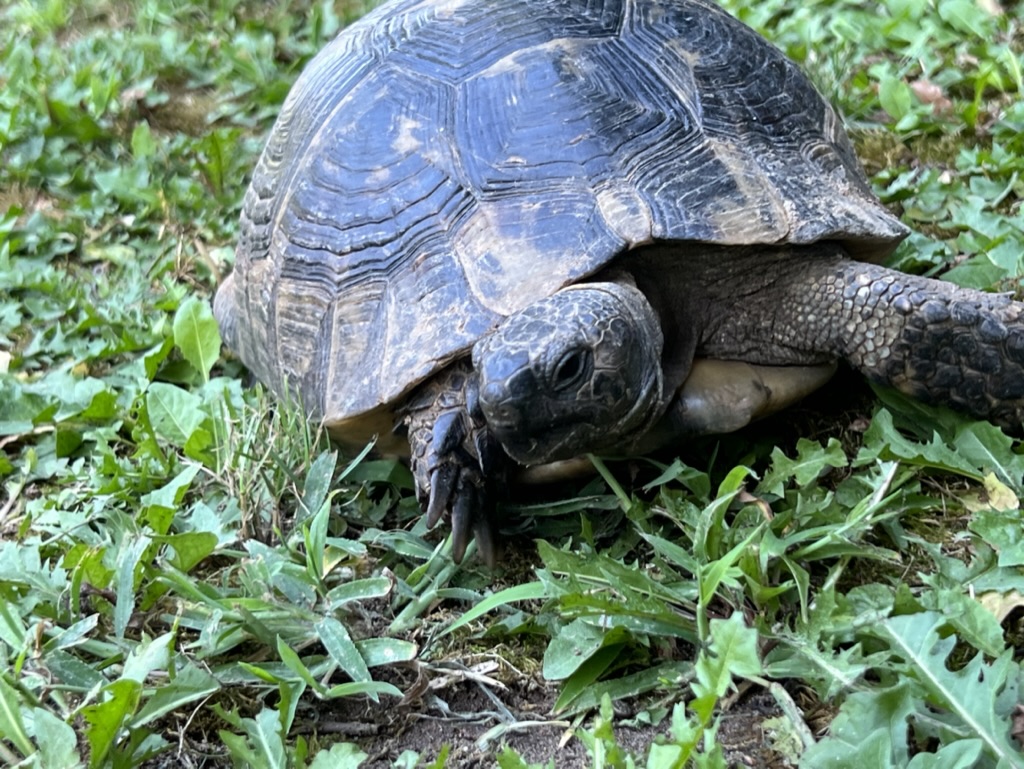
The western lineages of Testudo graeca occur mainly in North Africa and on the Iberian Peninsula.
Testudo graeca graeca
The nominate subspecies Testudo graeca graeca is now assigned to populations from south-western Morocco.
This is important because the name T. g. graeca was used much more broadly in older literature.
Animals from south-western Morocco that were formerly described as Testudo graeca soussensis are no longer treated as a separate subspecies and are now included within T. g. graeca.
When reading older literature referring to “T. g. graeca”, it is therefore always worth checking where the animals described actually originated.
Testudo graeca marokkensis
Testudo graeca marokkensis occurs in northern Morocco and the central Atlantic regions of the country.
Other forms have also been described from this region in the past. The name Testudo graeca lamberti therefore still appears occasionally in older publications, but it is not currently recognised as a separate subspecies.
Testudo graeca whitei
Testudo graeca whitei is assigned to populations from north-eastern Morocco and western Algeria, as well as populations on the Spanish mainland.
This subspecies is particularly relevant when interpreting older literature, as many of these tortoises were formerly classified as Testudo graeca graeca.
The populations now found on Mallorca and Formentera, by contrast, are regarded as introduced.
Testudo graeca nabeulensis
Testudo graeca nabeulensis is known mainly from Tunisia and the extreme north-east of Algeria.
The subspecies was originally described under the genus Furculachelys. When the author and year are given in full, the name is therefore written as:
Testudo graeca nabeulensis (Highfield, 1990)
The brackets indicate that the subspecies was originally described in a different genus.
Its distinction from populations in north-western Libya is particularly important today.
Newly described: Testudo graeca tripolitania
In 2024, Poterala and colleagues described Testudo graeca tripolitania as a new subspecies from north-western Libya.
The study was based in particular on mitochondrial DNA data. A distinct lineage that had already been recognised previously was also detected in wild tortoises from the area around Gharyan.
Populations from north-western Libya that had previously been identified as Testudo graeca nabeulensis were consequently reassigned to the newly described Testudo graeca tripolitania.
The precise geographical boundary between T. g. nabeulensis and T. g. tripolitania has, however, not yet been fully resolved. The authors explicitly state that further work is needed, particularly for parts of Tunisia.
For current texts, this means:
Tortoises from north-western Libya should no longer automatically be referred to as Testudo graeca nabeulensis.
Older publications, however, need to be interpreted in the context of the classification used at the time, when nabeulensis was often given a wider range that included north-western Libya.
This also explains why older specialist sources and current taxonomic databases may differ for this region.
Testudo graeca cyrenaica
Further east in Libya occurs Testudo graeca cyrenaica.
Its range lies in Cyrenaica in north-eastern Libya.
Two subspecies are therefore currently recognised in Libya with geographically separated core ranges:
North-western Libya: Testudo graeca tripolitania
North-eastern Libya: Testudo graeca cyrenaica
The eastern subspecies of Testudo graeca
The eastern lineages range from south-eastern Europe through Anatolia and the Caucasus to the Levant, Iraq and Iran.
The current specialist treatment by Türkozan and colleagues recognises five eastern subspecies:
Testudo graeca ibera
Testudo graeca armeniaca
Testudo graeca buxtoni
Testudo graeca terrestris
Testudo graeca zarudnyi
Testudo graeca ibera
Testudo graeca ibera has a particularly extensive range.
It includes populations in:
- Bulgaria
- Greece
- Kosovo
- North Macedonia
- Romania
- Serbia
- Georgia
- Turkey
- the Krasnodar region of Russia
Older literature often also uses the name Testudo ibera.
Other described forms such as Testudo graeca nikolskii are not recognised as separate subspecies in the current classification.
T. g. ibera is among the Spur-thighed Tortoises relatively commonly kept in Central Europe.
Its broad natural range also illustrates why provenance and local climate can be just as important in husbandry as the scientific name itself. More on this can be found in the TASCHENDINOS article Species-appropriate keeping of European tortoises.
Testudo graeca armeniaca
Testudo graeca armeniaca is assigned to populations in Armenia, Azerbaijan, Iran, Dagestan and parts of Turkey.
Further names may occur in older literature. One example is Testudo graeca pallasi, which is no longer recognised as a separate subspecies.
Testudo graeca buxtoni
Testudo graeca buxtoni occurs in Iran, Iraq and Turkey.
Additional taxa have also been described from this lineage in the past, including Testudo perses.
Under the currently used taxonomic concept, perses is not treated as a separate subspecies of Testudo graeca.
Testudo graeca terrestris
Testudo graeca terrestris occurs mainly in the Levant and neighbouring parts of Turkey.
Its range includes:
- Israel
- Palestine
- Jordan
- Lebanon
- Syria
- parts of Turkey
Several additional forms were described from this region in the past, including:
Testudo graeca floweri
Testudo graeca anamurensis
Testudo graeca antakyensis
These are not currently included as separate subspecies in the accepted subspecies list.
Testudo graeca zarudnyi
Testudo graeca zarudnyi is an Iranian subspecies and is currently assigned to Iran, particularly the eastern parts of the country.
In older literature it may also appear as the separate species Testudo zarudnyi.
Subspecies are not neat lines on a map
A table of distribution ranges can easily give the impression that the subspecies of Testudo graeca can be separated cleanly from one another.
In nature, the situation is more complicated.
Among the eastern populations in particular, transition zones and intergradation are known. Contact and transitional areas have been described between:
- armeniaca and ibera
- armeniaca and buxtoni
- ibera and terrestris
- buxtoni and terrestris
Natural populations do not necessarily follow the tidy categories used in taxonomic schemes.
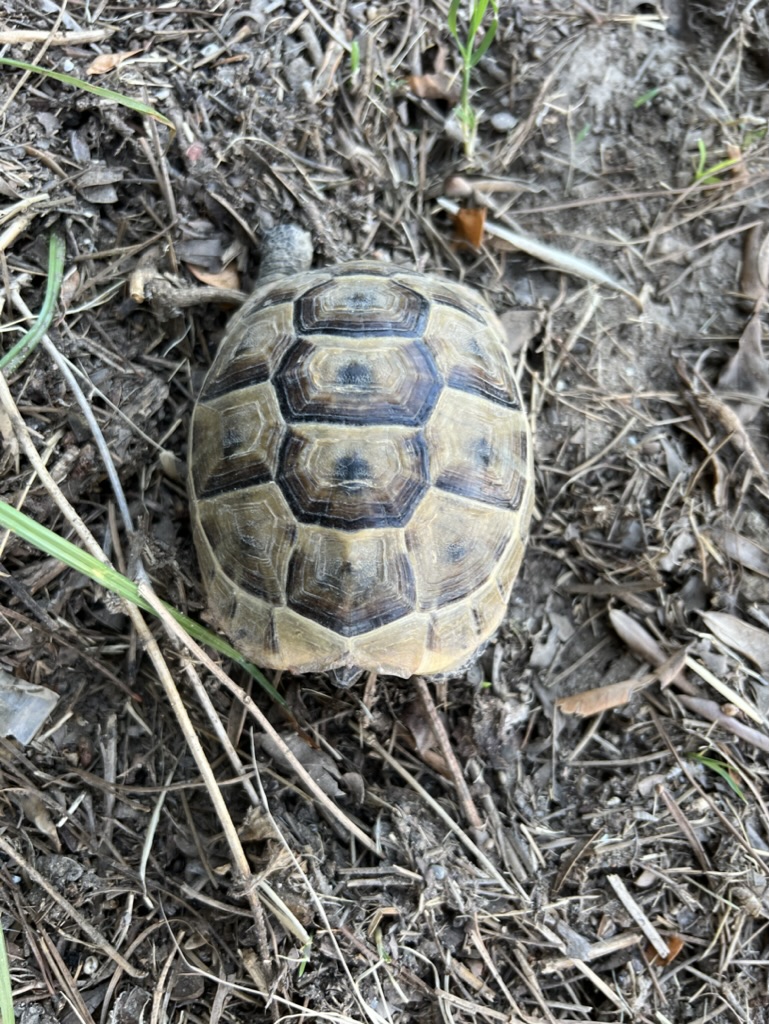
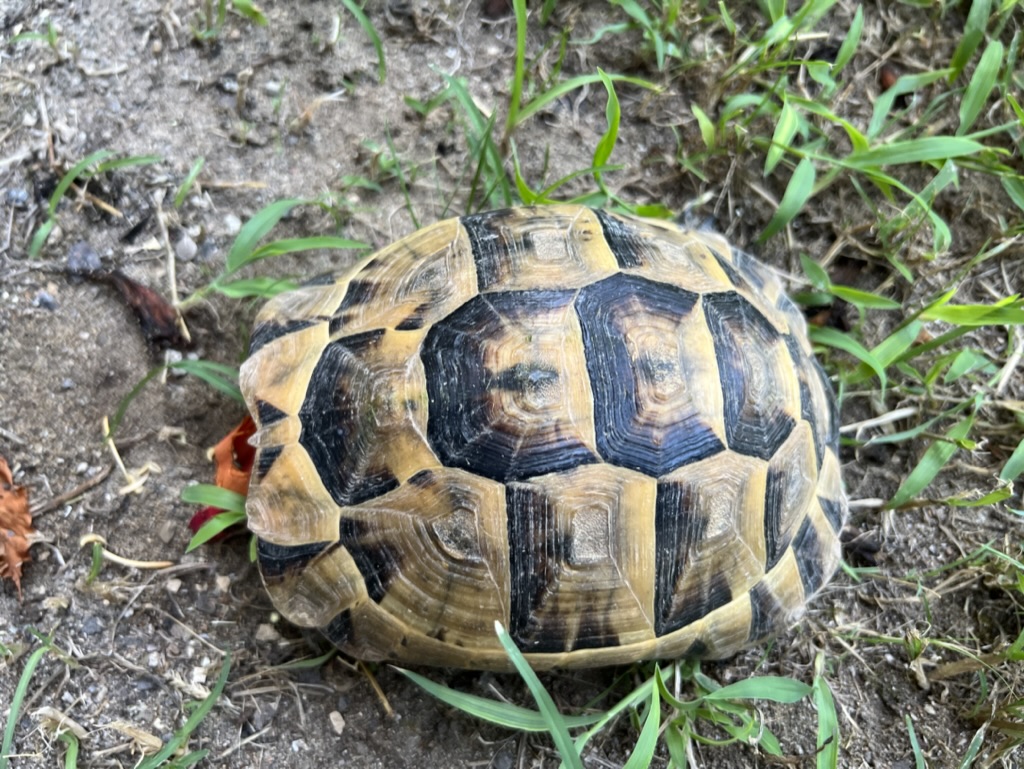
In addition, Testudo graeca is remarkably variable in appearance. Colouration, shell shape and body size can differ substantially between regions.
Genetic studies have shown, however, that striking morphological differences do not automatically reflect an equally strong genetic separation.
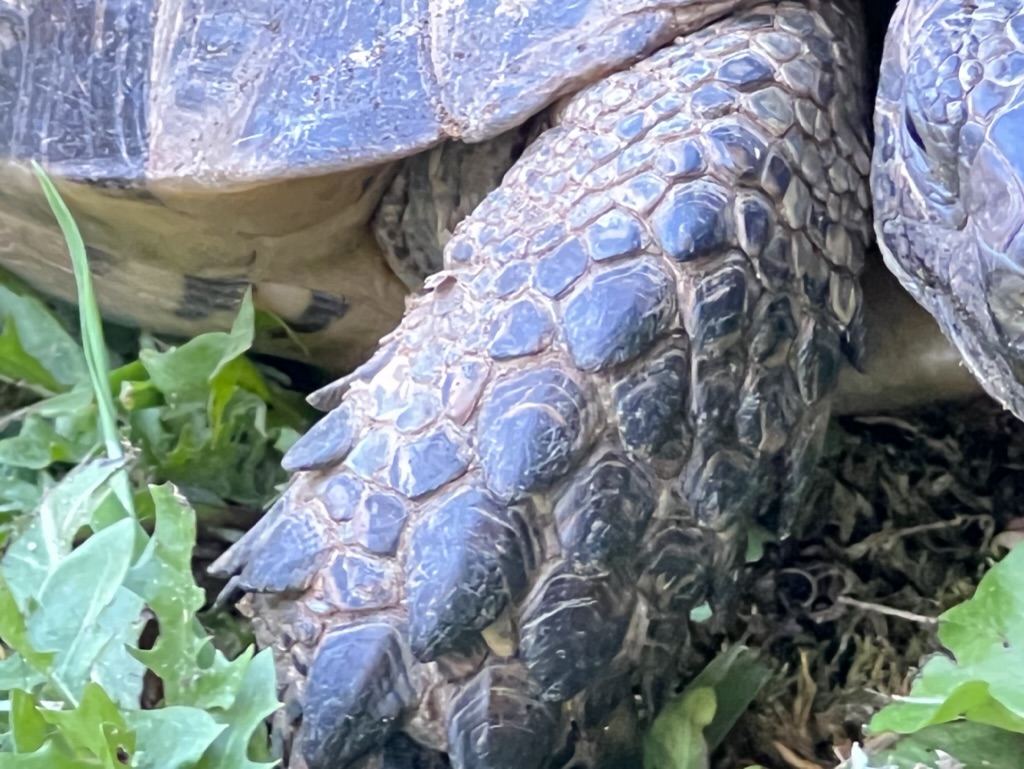
Can the subspecies be identified from a photograph?
Often only to a very limited extent.
Assigning an individual tortoise securely to a subspecies on the basis of colour, shell markings or body shape alone can be problematic, especially in Testudo graeca.
For tortoises in human care, well-documented provenance is therefore far more informative than visual identification alone.
This is particularly relevant for animals whose ancestors have already been kept for several generations or have been bred without reliable provenance information.
Why older books use different names
Anyone researching Spur-thighed Tortoises will quickly encounter scientific names that no longer appear in current overviews.
Examples include:
Testudo graeca soussensis
Testudo graeca nikolskii
Testudo graeca pallasi
Testudo graeca anamurensis
Testudo graeca floweri
Testudo graeca antakyensis
Testudo perses
This does not automatically mean that earlier authors were “wrong”.
Taxonomy always reflects the scientific understanding available at a particular time. New genetic studies, additional localities, reassessments of type material and changing species concepts can all result in names later being synonymised or taxa being reassigned.
More about this dynamic process can be found at TASCHENDINOS under Tortoise taxonomy and conservation status.
Historical scientific names should therefore not simply be replaced with a current name without checking the original context. Provenance, date and the basis of the original identification all need to be taken into account.
Why provenance also matters in husbandry
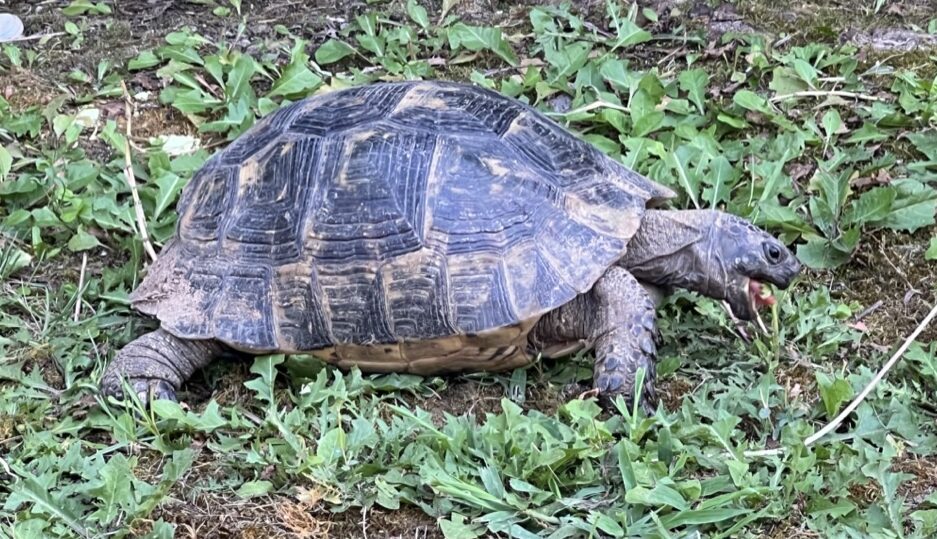
Taxonomy is not merely a question of correct labelling.
The enormous range of Testudo graeca encompasses very different climatic conditions and seasonal rhythms.
A population from south-eastern Europe or Anatolia experiences different environmental conditions from one in Tunisia, Libya or Iran.
Within the eastern subspecies group alone, the climates occupied range from Mediterranean and Mediterranean-continental conditions to steppe climates and the margins of hot deserts.
For husbandry, therefore, the species name alone should not be the only consideration where the animal’s provenance is known.
It is also worth asking:
Where does the population originate?
What is the climate like there?
How do temperatures and rainfall change through the year?
Which seasonal periods of activity and dormancy occur?
This habitat-oriented approach is also central to TASCHENDINOS husbandry recommendations: Species-appropriate keeping of European tortoises.
Testudo graeca within the genus Testudo
The extensive geographical differentiation of Testudo graeca is also the result of a long evolutionary history.
Climatic change, geological processes, geographical isolation, range expansions and later secondary contact have all shaped today’s populations.
For a deeper look at this background, see the TASCHENDINOS article The origins of today’s Testudo species.
The broader species overview can be found under Species of European tortoises.
Current taxonomic status
This overview reflects the taxonomic framework used by TASCHENDINOS as of September 2026.
The main reference sources are:
- the current Reptile Database
- the Turtle Taxonomy Working Group (TTWG), Turtles of the World, 10th Edition, 2025
- the current specialist treatments of the western and eastern Testudo graeca lineages
- the 2024 description of Testudo graeca tripolitania
Taxonomy is not a static system.
In a geographically widespread and genetically as well as morphologically complex taxon such as Testudo graeca, future studies may lead to further changes.
This page will therefore be updated when materially important new taxonomic findings emerge.
More from TASCHENDINOS
Understanding taxonomy
Tortoise taxonomy and conservation status
What do taxon, species, subspecies and nominate form mean, and why can scientific names change?
Evolution of the genus Testudo
The origins of today’s Testudo species
How did today’s Testudo species evolve, and what roles did climate and geological history play?
Species overview
Species of European tortoises
An overview of the main species and subspecies.
Habitat-oriented husbandry
Species-appropriate keeping of European tortoises
Why provenance, climate and natural seasonal rhythms matter in husbandry.
Sources and further reading
The Reptile Database
Uetz, P., Freed, P., Aguilar, R., Reyes, F. & Hošek, J. (eds): The Reptile Database. Entry for Testudo graeca Linnaeus, 1758. Accessed September 2026.
The Reptile Database – Testudo graeca
The Reptile Database currently lists eleven subspecies of Testudo graeca, including T. g. tripolitania, described in 2024.
Turtle Taxonomy Working Group (TTWG) (2025)
Rhodin, A. G. J., Iverson, J. B., Fritz, U., Gallego-García, N., Georges, A., Shaffer, H. B. & van Dijk, P. P. (2025):
Turtles of the World: Annotated Checklist and Atlas of Taxonomy, Synonymy, Distribution, and Conservation Status. 10th Edition. Chelonian Research Monographs 10: 1–575.
DOI: 10.3854/crm.10.checklist.atlas.v10.2025
The current international reference work on turtle taxonomy, synonymy and distribution.
Escoriza, D., Díaz-Paniagua, C., Andreu, A. & Ben Hassine, J. (2022)
Testudo graeca Linnaeus 1758 – Western Subspecies Clade: Testudo g. graeca, T. g. cyrenaica, T. g. marokkensis, T. g. nabeulensis, T. g. whitei.
Chelonian Research Monographs 5(16): 117.1–117.18.
DOI: 10.3854/crm.5.117.western.graeca.v1.2022
TFTSG species account: western Testudo graeca subspecies
Note: This paper was published in 2022, before the description of T. g. tripolitania. Populations from north-western Libya that were still assigned to T. g. nabeulensis in this account should therefore be interpreted in the light of Poterala et al. (2024).
Türkozan, O., Javanbakht, H., Mazanaeva, L., Meiri, S., Kornilev, Y. V., Tzoras, E., Popgeorgiev, G., Shanas, U. & Escoriza, D. (2023)
Testudo graeca Linnaeus 1758 – Eastern Subspecies Clades: Testudo g. armeniaca, T. g. buxtoni, T. g. ibera, T. g. terrestris, T. g. zarudnyi.
Chelonian Research Monographs 5(17): 120.1–120.33.
DOI: 10.3854/crm.5.120.eastern.graeca.v1.2023
TFTSG species account: eastern Testudo graeca subspecies
The paper describes the five currently recognised eastern subspecies as well as known transitional and hybridisation zones.
Poterala, S. F., Rattay, P., Johnson, A. S., Buijlayyil, M. S. A., Kiraz, A. & Ajaj, A. M. S. (2024)
Testudo graeca tripolitania, a new taxon of spur-thighed tortoise found in Libya at risk of exploitation for the international pet trade.
Basic and Applied Herpetology 38.
DOI: 10.11160/bah.279
Original paper describing Testudo graeca tripolitania
Using mitochondrial DNA, the authors identified a distinct lineage in north-western Libya and described it as Testudo graeca tripolitania. They also stress that the precise boundary with T. g. nabeulensis requires further investigation.
Fritz, U., Hundsdörfer, A. K., Široký, P., Auer, M., Kami, H., Lehmann, J., Mazanaeva, L. F., Türkozan, O. & Wink, M. (2007)
Phenotypic plasticity leads to incongruence between morphology-based taxonomy and genetic differentiation in western Palaearctic tortoises (Testudo graeca complex; Testudines, Testudinidae).
Amphibia-Reptilia 28: 97–121.
A fundamental study examining the discrepancy between external variation and genetic differentiation within the Testudo graeca complex.
Graciá, E., Vargas-Ramírez, M., Delfino, M., Anadón, J. D., Giménez, A., Fahd, S., Corti, C., Jdeidi, T. B. & Fritz, U. (2017)
Expansion after expansion: dissecting the phylogeography of the widely distributed spur-thighed tortoise, Testudo graeca.
Biological Journal of the Linnean Society 121: 641–654.
A detailed phylogeographical study of the origin and expansion of the different lineages within the widespread Testudo graeca complex.