Introduction
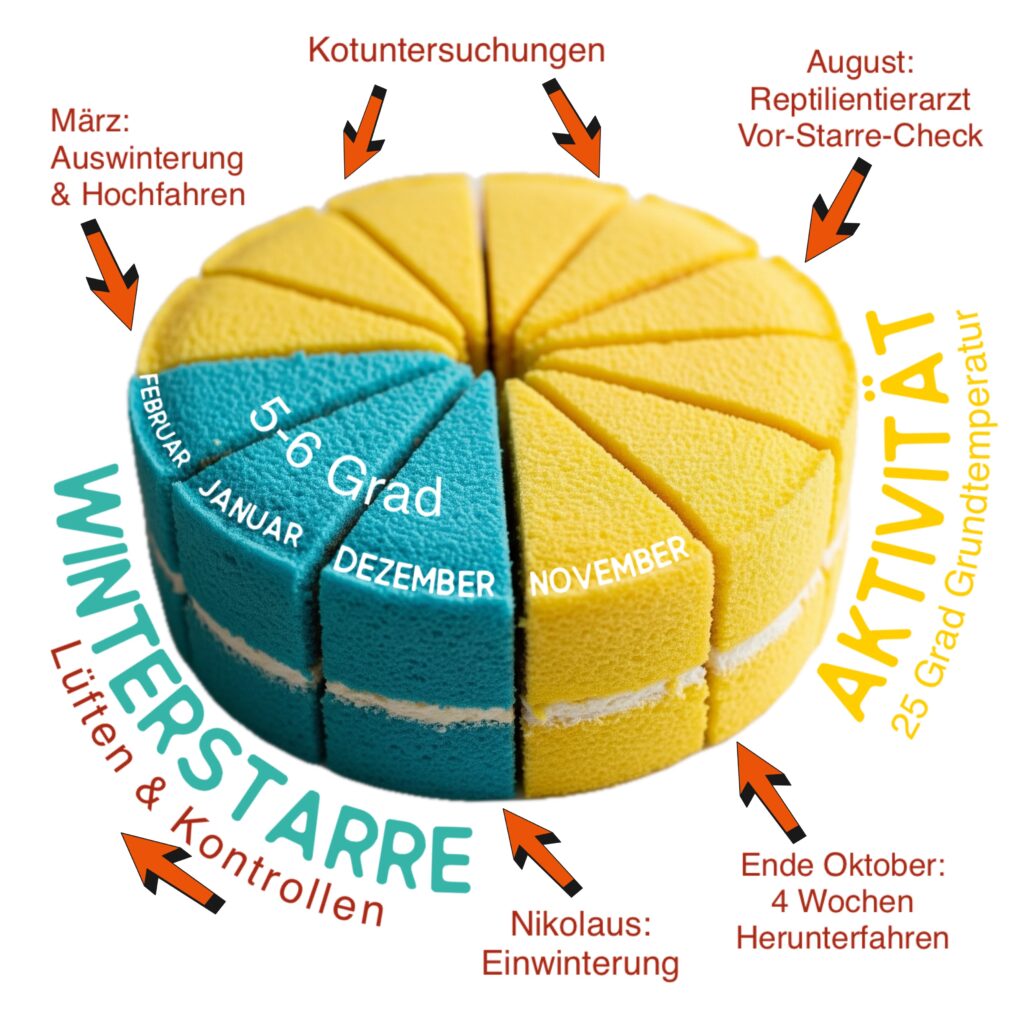
The tortoise season usually begins in early March, or mid-March at the latest. Successful emergence from brumation, however, begins weeks earlier: the cold frame, equipment, and food plants need to be prepared in good time, and the tortoises should be checked once more.
Preparing the cold frame and enclosure in mid-February
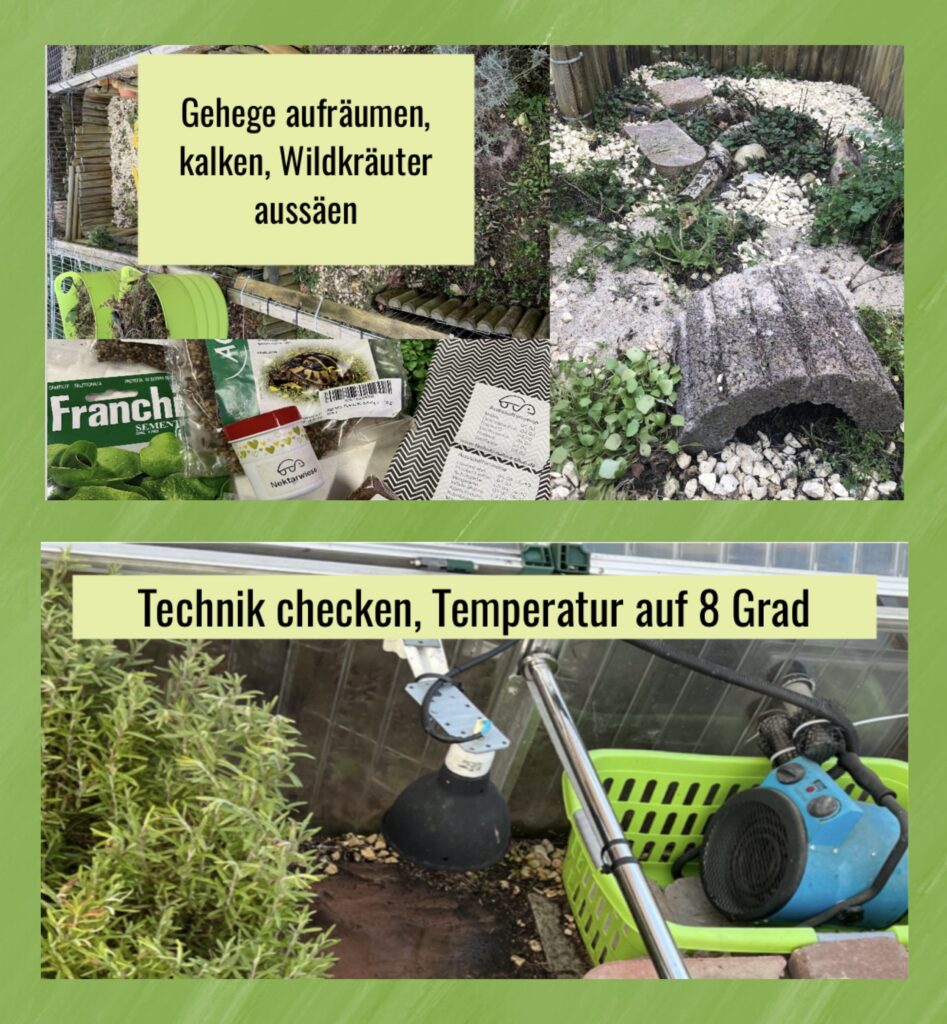
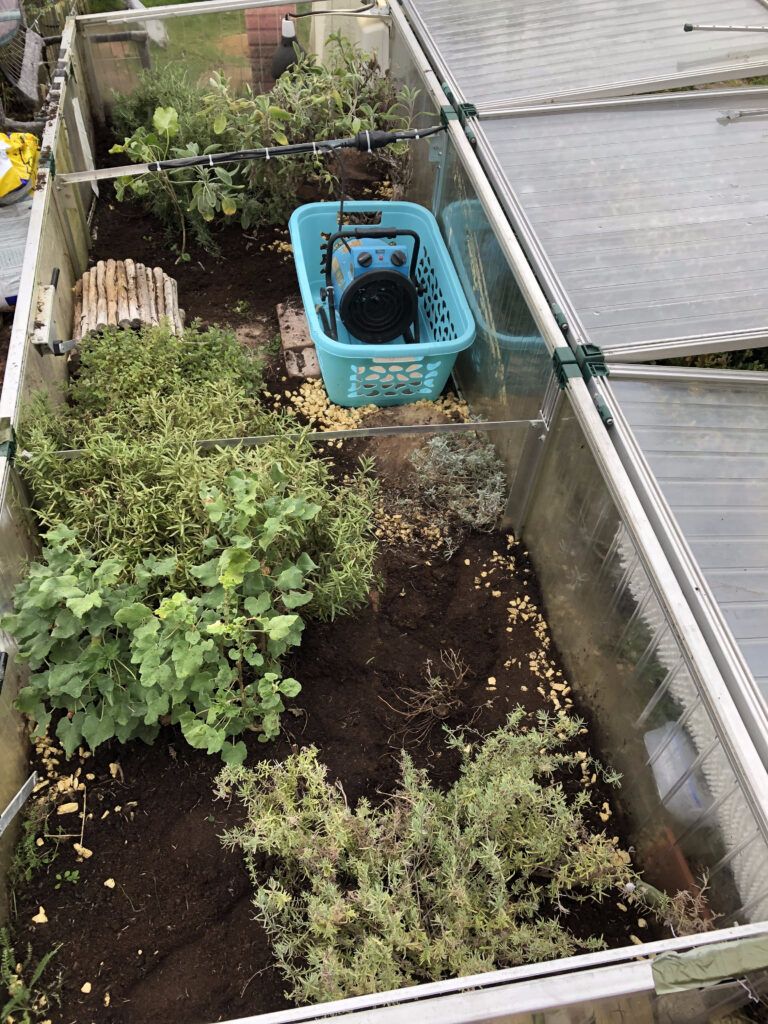
For a stress-free emergence, the cold frame and enclosure should be ready at least two weeks beforehand. This gives the frost time to leave the ground, so that everything is ready for emergence.
To-do list: preparing for emergence
Scheduling
☐ Set the date for emergence (early to mid-March)
☐ Plan to carry it out in the evening
☐ Ideally Monday to Thursday, so that a reptile vet can be reached
Checking the tortoises every two weeks
☐ Weigh the tortoises
☐ Record the weights
☐ Check their general condition
☐ No unusual smell
☐ No visible changes to the shell, nose, or eyes
Preparing the cold frame
Cleaning and maintenance
☐ Clean the cold frame thoroughly (soft sponge cloth and water with a little washing-up liquid)
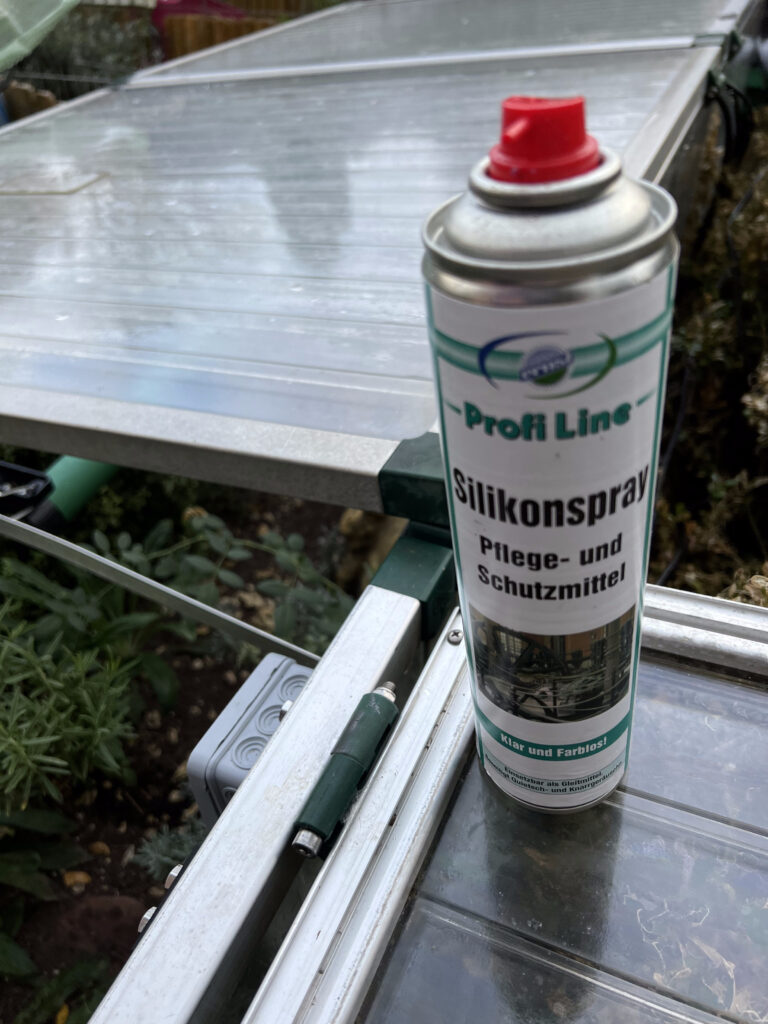
☐ Oil hinges, moving metal parts, and automatic vent openers, and tighten them if necessary
☐ Refit the automatic vent openers correctly
☐ Clean the strip curtain and keep it supple with gun oil
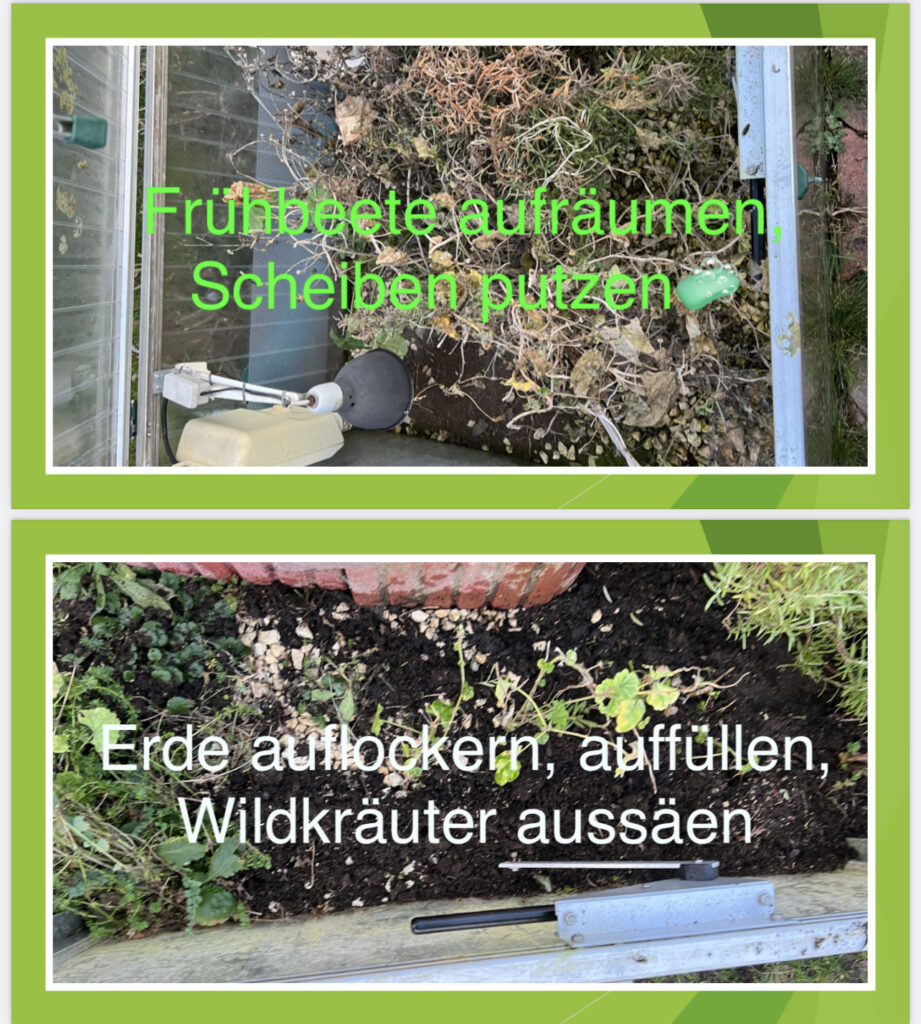
☐ Loosen the soil
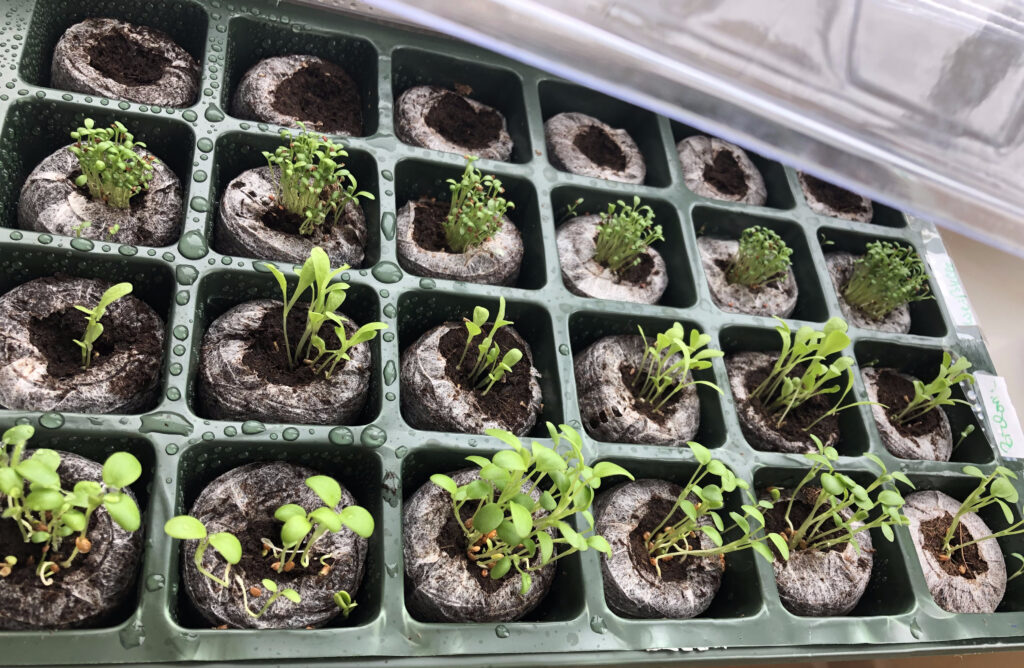
☐ Sow or plant food plants and hiding plants
Checking the equipment
☐ Check the heating
☐ Check the UV basking spot
☐ Check that back-up equipment (in German) is ready to hand
☐ Test that thermometers and thermostats work
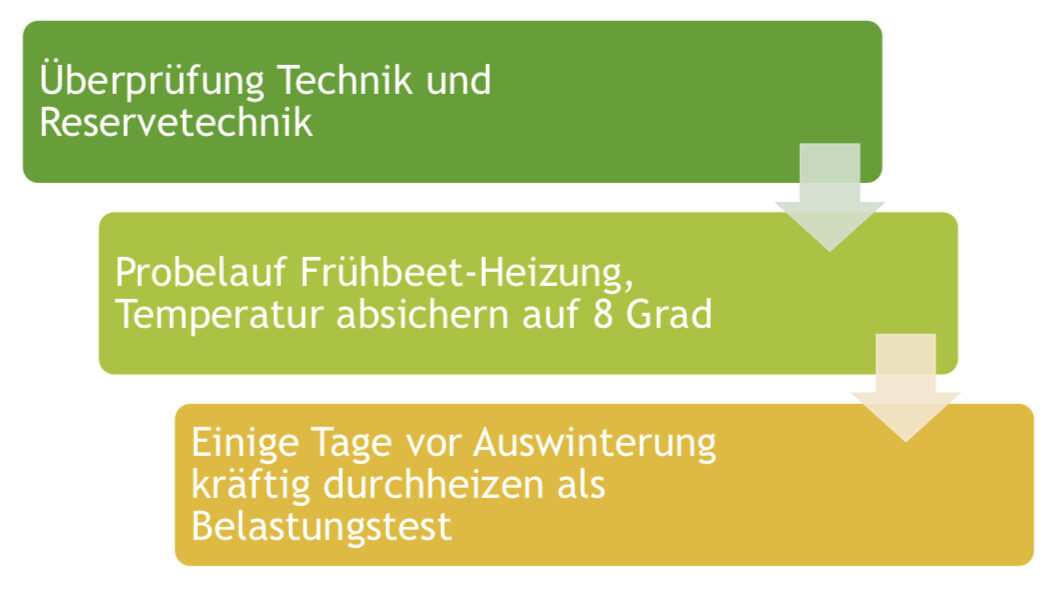
Temperature test run
☐ Stabilise the cold frame at about 8 °C
☐ Heat it up to about 25 °C as a test
☐ Then lower it back to 8 °C
☐ Check that the soil temperature is stable
Soil and plants
☐ Loosen the soil in the cold frame
☐ Remove dead plants
☐ Replace hiding plants that have died (e.g. rosemary, sage, lavender)
☐ Plant new hiding plants and food plants and water them well
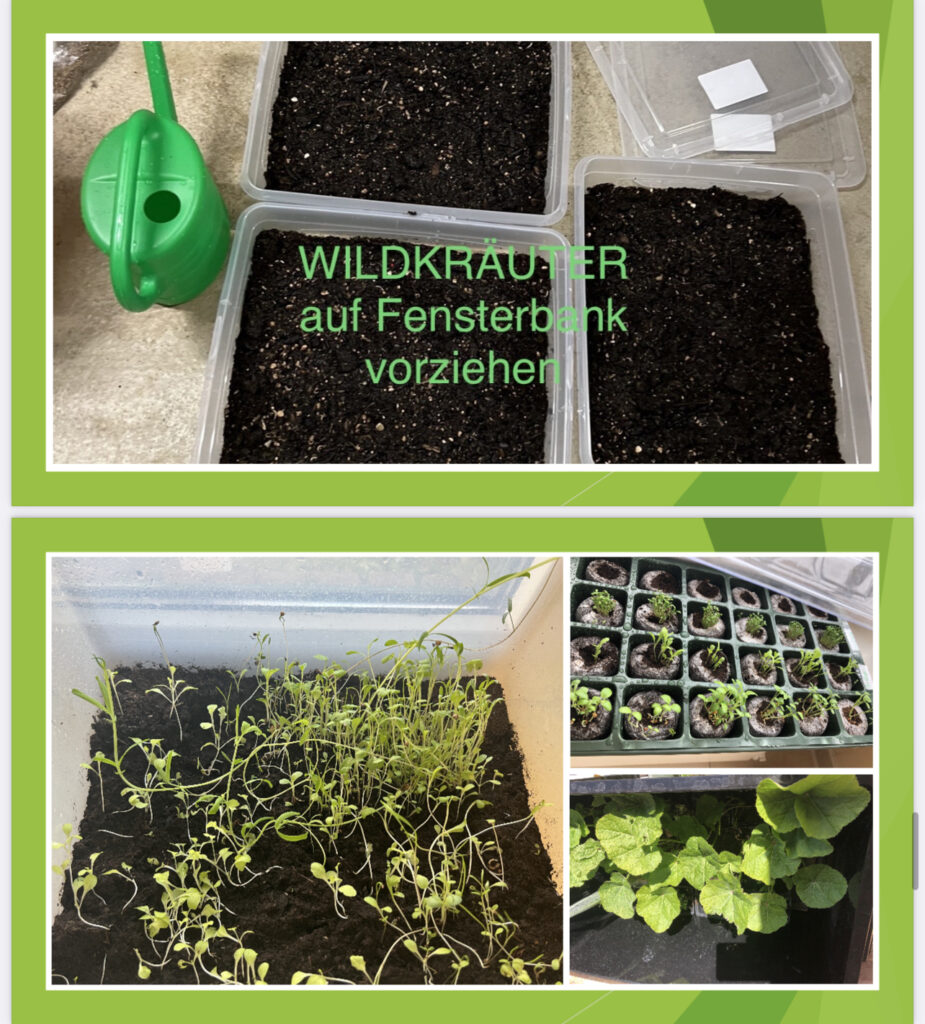
☐ Sow the first food plants directly in the cold frame
☐ Start further plants on a windowsill or in a raised bed with a cold frame top (sowing food plants (in German))
Enclosure
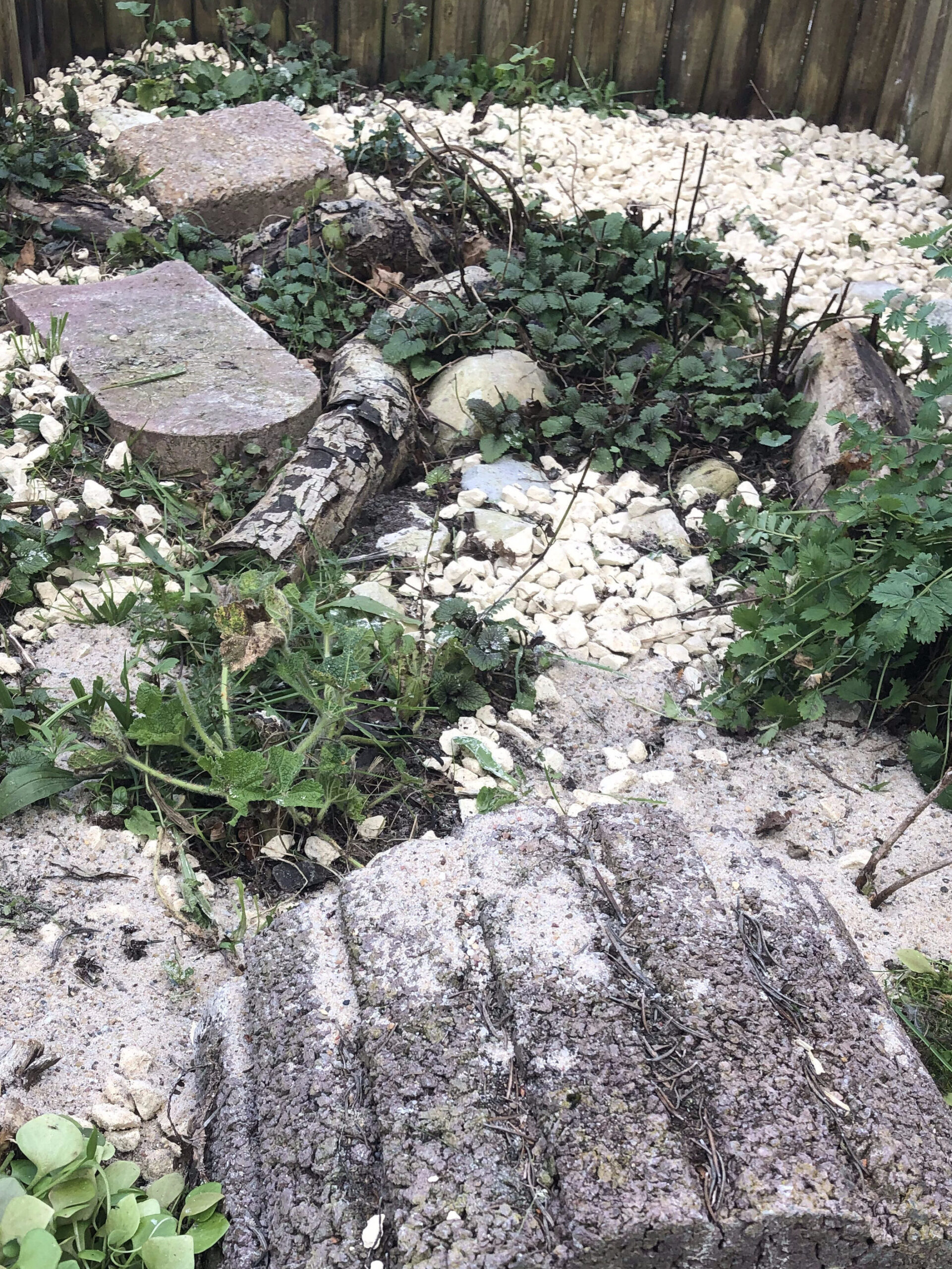
☐ Tidy the outdoor enclosure
☐ Top up the limestone gravel
☐ Spread dolomite lime
☐ Sow the first food plants directly in the enclosure
☐ Check the enclosure wall for stability (minimise escape routes)
☐ Collect microplastics and rubbish – cable ties, rotten pieces of wood, and New Year’s firework debris, for example
All about background and soil temperature
The cold frame is stabilised at about 8 °C with a greenhouse heater, so that the soil can gradually warm up. The soil temperature is easy to check with an infrared or probe thermometer (thermometers (in German)). In mid-February, it usually takes about one to two weeks for the soil in the cold frame to warm up, even if the air at tortoise height quickly reaches summer-like temperatures. If the soil is too cold at emergence, the tortoises risk staying inactive and getting chilled. After emergence, the tortoises must become active, so the right temperatures are essential.
The temperature test run
A few days before emergence, the equipment is given a stress test:
- Heat up to about 25 °C as a test
- Then lower back to 8 °C
This checks whether the equipment works reliably.
The check before emergence
In the final third of brumation, the tortoises should be checked and weighed every two weeks. For most keepers, this means one last check (in German) in mid-February. Many reptile vets recommend a maximum brumation period of about 12 weeks; ideally, brumation should not be shorter than 8 weeks.
About two weeks before the planned emergence, we therefore:
- weigh the tortoises
- record their weights
- check their general condition
- make sure there is no unusual smell
- make sure there are no visible changes to the shell, skin, nose, or eyes
If everything is in order, the tortoises can continue to brumate in the refrigerator until the planned emergence.
Tortoises do not wake up by themselves!
As ectothermic animals, tortoises in a refrigerator do not wake up by themselves. They depend on us to take them out of brumation and then raise the temperatures in the cold frame.
Emergence ideally takes place in the evening, Monday to Thursday, so that a reptile vet can be reached the next morning if there is a problem.
The next step is emergence from the refrigerator itself.
Like moving them into the refrigerator, emergence is completely stress-free for tortoises in deep brumation. They are placed, still in deep brumation, into the cold frame heated to 8 °C, so that ideally they notice nothing of their time in the refrigerator.
The full procedure, including the temperature schedule and basking spot times, is described here:
Detailed explanations of refrigerator brumation in European tortoises – preparation, brumation itself, and emergence into natural husbandry – are given in the Refrigerator Brumation Handbook.

Anyone who is still unsure which equipment is useful and safe, how to use it, or who would like to modernise their set-up will find answers in the Technology Handbook. All proceeds from Taschendinos books go to Schildkroetensuche.org.