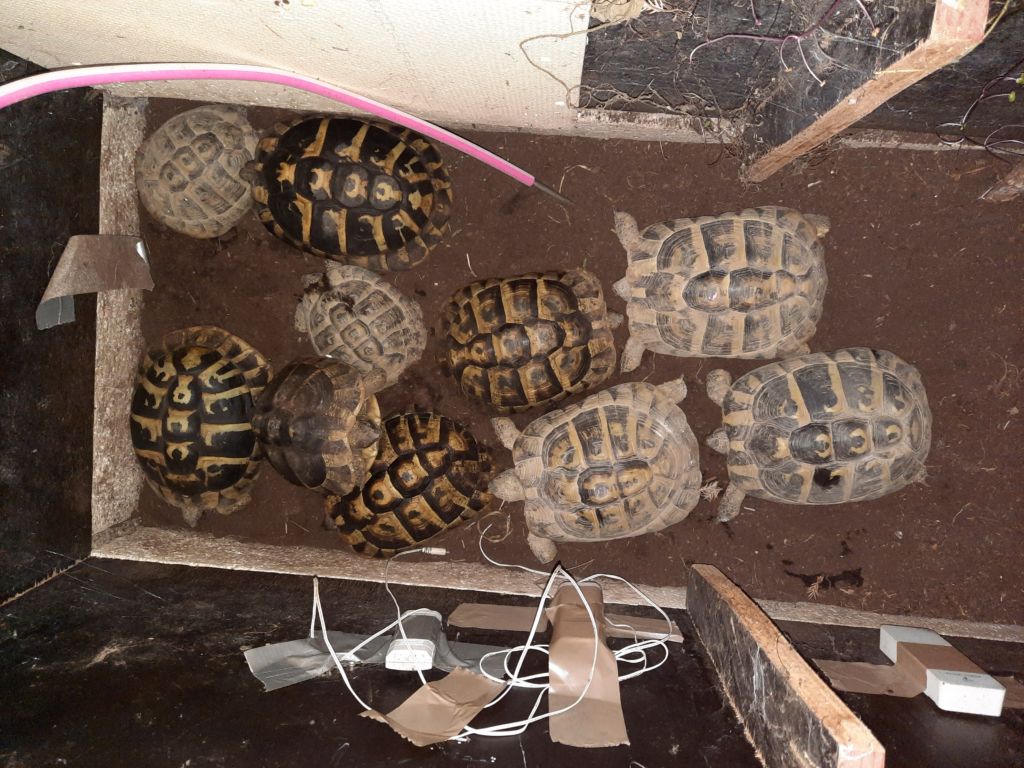
Emergence into heated husbandry after refrigerator brumation
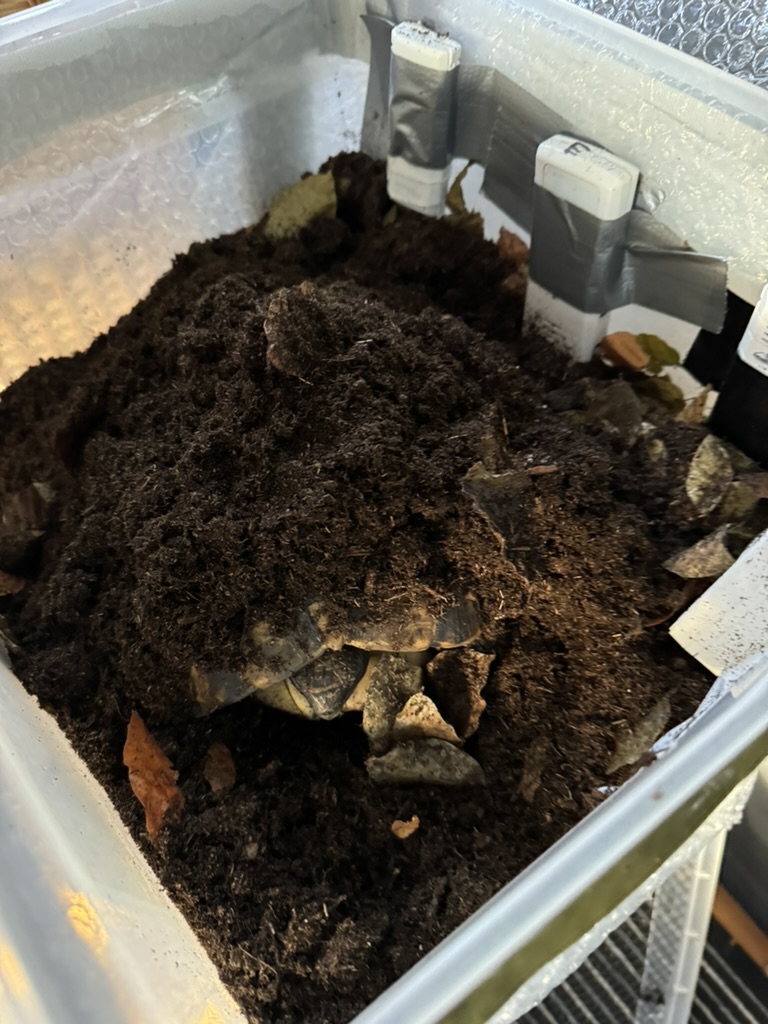
The season for European tortoises usually begins in early March, or mid-March at the latest. In particularly warm habitats, such as Turkey and southern Spain, the first tortoises are often seen as early as mid-February.
So March is the time to bring our tortoises gently out of brumation too. The tortoises are moved, still in deep brumation, from the refrigerator into the prepared cold frame, where they emerge into heated husbandry with suitable equipment.
Important:
As ectothermic animals, tortoises in a refrigerator do not wake up by themselves. They depend on us to take them out of brumation and raise the temperatures in the cold frame.
Checks before emergence
In the final third of brumation, the tortoises should be checked and weighed every two weeks. For most keepers, this means one last check in mid-February. Many reptile vets recommend a maximum brumation period of about 12 weeks; ideally, brumation should not be shorter than 8 weeks. Waiting too long risks the tortoises sleeping through the natural start of the active season and reaching the limit of their energy reserves.
Preparing the cold frame and enclosure in mid-February
For a stress-free emergence, the cold frame and enclosure should be ready at least two weeks beforehand. A to-do list is given here:
In the two weeks before emergence, the temperature in the cold frame should not fall below 8 °C, so that the frozen ground can slowly warm up.
A few days before emergence, it is a good idea to heat the cold frame up to 25 °C as a test, to make sure the equipment works reliably. The temperature is then stabilised at 8 °C again.
👉 Measure the soil temperature!
The soil must not be colder than the substrate in the refrigerator, as the tortoises stay close to the ground. A probe thermometer and an infrared thermometer are indispensable for temperature management.
More about the different types of thermometer used in tortoise keeping: thermometers (in German).
The right time for emergence
The refrigerator stays switched on – the tortoises should not wake up in it, but only in the prepared cold frame. Ideally, they notice nothing of the whole process and are moved in and out while in deep brumation.
We plan emergence for a weekday evening (Monday to Thursday). If a health problem shows up the next day, a reptile vet can easily be reached.
Step by step: emergence from the refrigerator
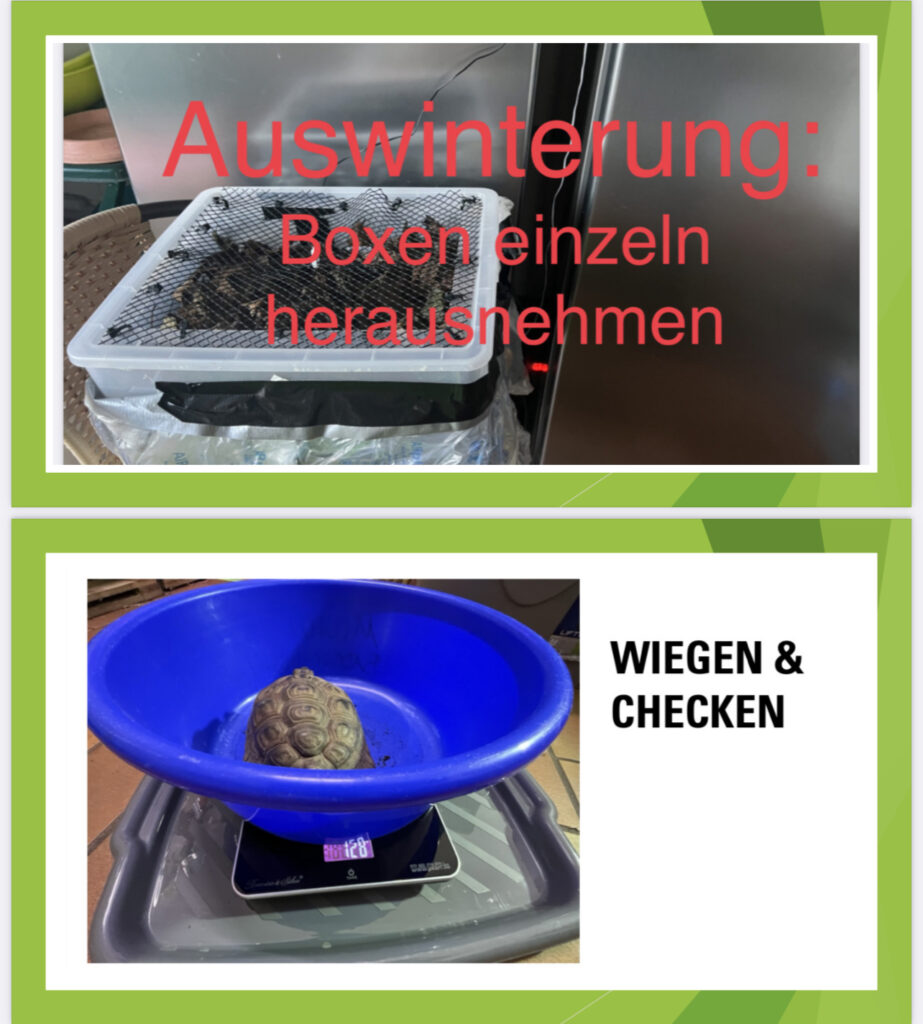
The procedure
- Take the tortoises out one at a time – each in its refrigerator box
- Carry out a quick check: plastron, nose, eyes
- Weigh each tortoise and record its weight
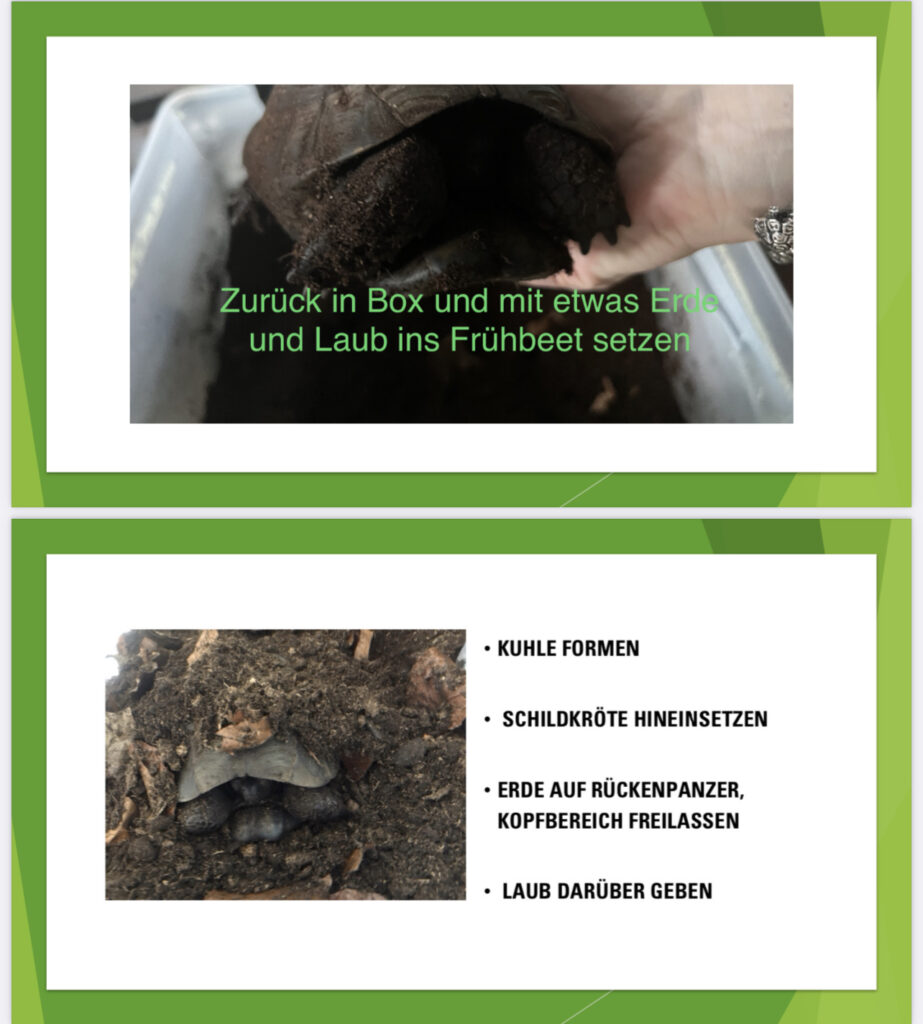
- In the cold frame, form a shallow hollow away from the lamp and the heater
- Carry the tortoise to the cold frame in its brumation box, bringing some soil from the box
- Place the tortoise in the hollow with its head facing the basking spot
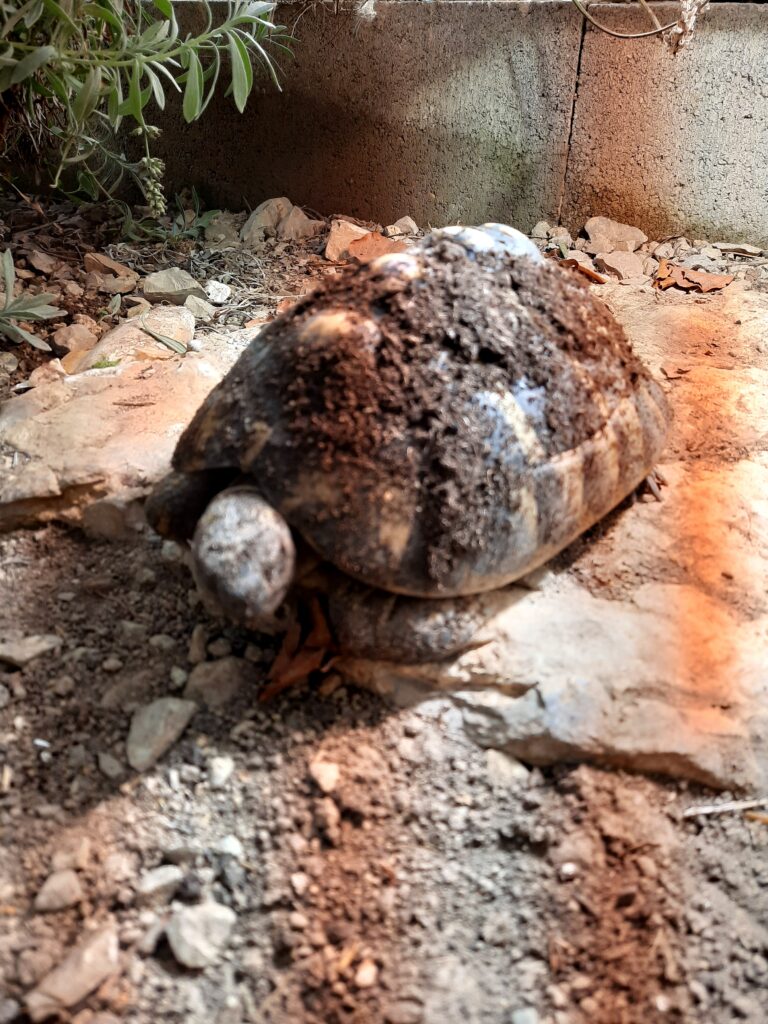
- Loosely spread a few handfuls of soil from the box over the shell (keep the head free)
- Spread leaf litter from the box over it as an insulating layer
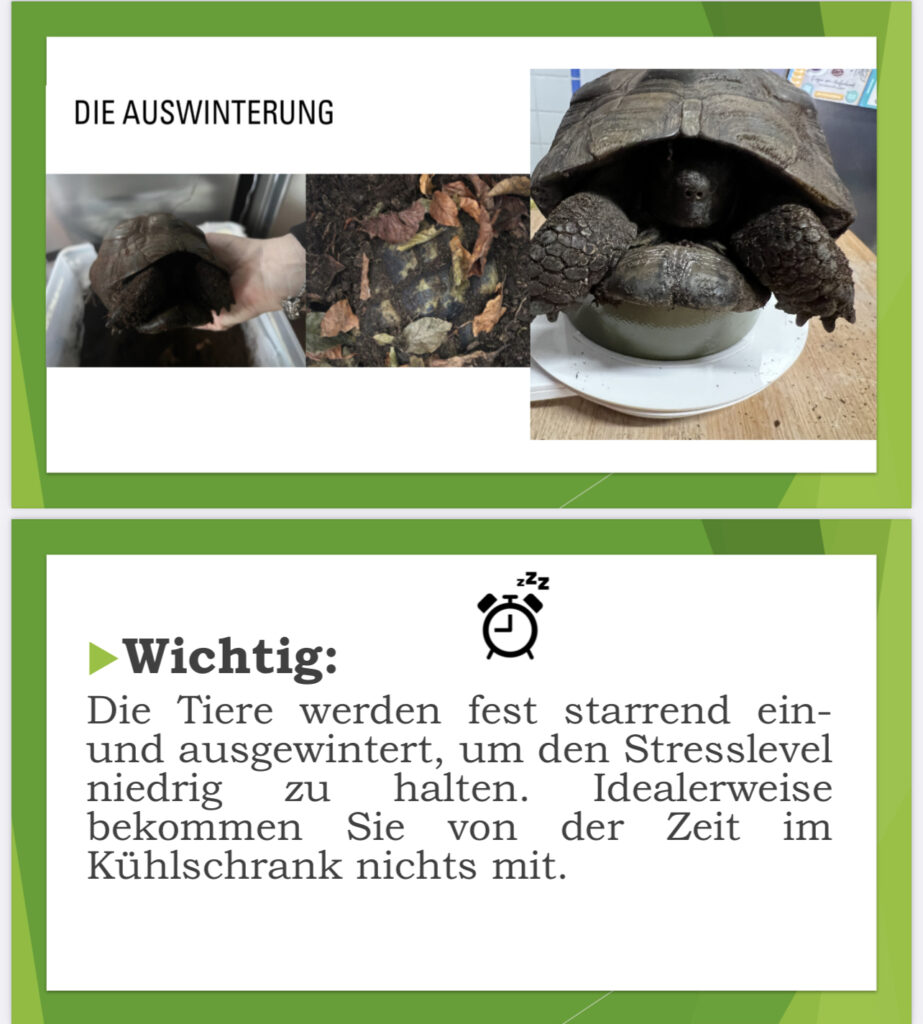
Raising the temperature and basking time after emergence

- First night: a constant 8 °C
- From the next morning: start at 12 °C, then +1 °C each day until 20 °C is reached
- Allow it to cool down clearly at night, but no longer below 12 °C
If tortoises unexpectedly stay inactive or do not bask, temperatures can be raised a little faster and night temperatures carefully increased to up to 16 °C.
👉 The temperature directly at the tortoise is best checked with an infrared thermometer.
Basking spot and lighting
- Day 1: offer 5 hours of basking spot straight away
- Then +1 hour each day, aiming first for 12 hours, later 14 hours of warm, bright basking spot with UV
- Temperature under the spot: about 35 °C at shell height, measured on the largest tortoise
From the first day, fresh water and food are offered daily.
What is normal – and when does it become critical?
Within a few days, most tortoises should:
- drink
- become active
- bask
- eat
- bathe
- pass urates
If a tortoise stays apathetic or refuses food, close observation is essential. If in doubt, consult a reptile-experienced vet promptly.
Possible causes include post-brumation anorexia or other metabolic disorders.
Conclusion
Well-planned emergence is the key to a healthy start to the new season. Keeping an eye on equipment, temperatures, and timing gives tortoises a low-stress transition from brumation to the active phase.
The talk on emergence (slides in German):
📘 More details, background, and checklists in the Refrigerator Brumation Handbook.
What to do if a tortoise is slow to get going
After brumation, European tortoises quite often have trouble getting going. If a tortoise does not start eating, seems lethargic, or keeps losing weight, low blood sugar or post-brumation anorexia may be the cause. The article Warning Signs After Brumation explains the physiological adjustment processes, distinguishes between a normal start-up phase and disorders that need treatment, and describes the key warning signs that call for early veterinary advice.
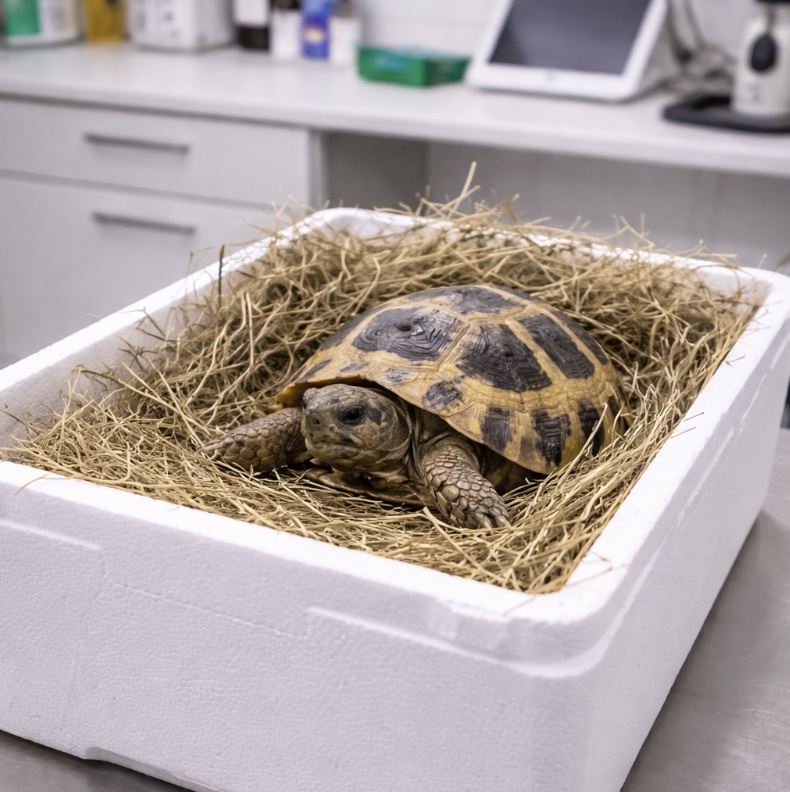
Emergence from a brumation pit: emergence from the pit (in German)