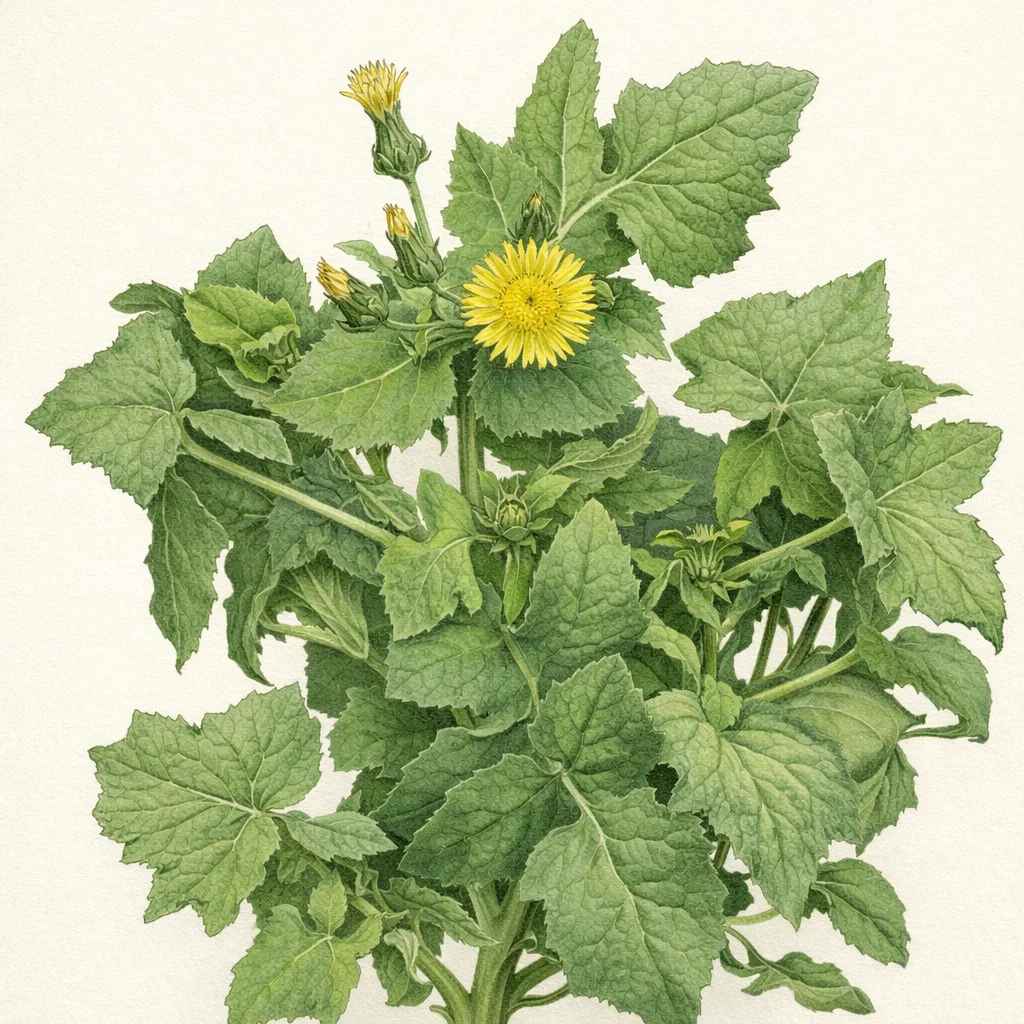
Sow thistle as a food plant for tortoises
(𝘚𝘰𝘯𝘤𝘩𝘶𝘴)
Sow thistle is one of the most common wild plants in Europe and a very popular food plant for tortoises. It grows quickly, is undemanding, and many tortoises love to eat it.
The annual smooth sow thistle (𝘚𝘰𝘯𝘤𝘩𝘶𝘴 𝘰𝘭𝘦𝘳𝘢𝘤𝘦𝘶𝘴) is also known as common sow thistle. Despite its scientific name (oleraceus, “vegetable-like”), it is not related to cabbages.
With its high water content and comparatively moderate nutrient content, it fits well into a natural diet for European tortoises.
Flowering time and features
The main flowering time of smooth sow thistle is from June to October. Individual plants, however, can flower until the first hard frost in late autumn or early winter.
Its height depends very much on the site. In towns or on verges, the plant often stays fairly small at about 30 to 50 centimetres. On nutrient-rich soils, on the other hand, it can grow to over a metre.
Typical features are its yellow, dandelion-like flowers and its softly toothed leaves, which can have fine, soft spines.
Distribution and habitat
The original range of smooth sow thistle covers Europe, North Africa, and parts of Asia. Today, thanks to human influence, the plant is found almost worldwide.
It prefers sunny to partially shaded sites and is particularly common on
- verges
- banks and embankments
- gardens and parks
- patches of bare soil
It can even grow in the joints between paving stones or on walls. This makes it ideal for natural tortoise outdoor enclosures with limestone gravel (in German).
Importance for insects
Smooth sow thistle is an important food source for many insects. Honeybees and wild bees in particular visit its yellow flowers regularly.
Aphids also feed on the plant, which is why ladybirds and their larvae, which feed on the aphids, can often be seen on sow thistles.
Can tortoises eat sow thistle?
Yes – sow thistle is one of the healthy wild plants that are very well suited to European tortoises.
Smooth sow thistle (𝘚𝘰𝘯𝘤𝘩𝘶𝘴 𝘰𝘭𝘦𝘳𝘢𝘤𝘦𝘶𝘴) in particular is eaten with great enthusiasm by many tortoises. The leaves, stems, and flowers can all be fed.
The plant provides plenty of moisture, is well tolerated, and is therefore well suited as part of a varied wild-plant diet.
Is sow thistle poisonous to tortoises?
No – sow thistle is not poisonous to tortoises.
It is even one of the wild plants frequently recommended in tortoise keeping and can be fed regularly.
The fine spines on the leaves are not normally a problem for tortoises.
Advantages as a food plant
Sow thistle offers tortoises several advantages:
- readily accepted by many tortoises
- a juicy, well-tolerated wild plant
- leaves, stems, and flowers are edible
- relatively low in nutrients and therefore well suited
- easy to grow and often self-seeding
Which sow thistle species can tortoises eat?
Besides smooth sow thistle, other species of the genus are also suitable food plants, including
- Smooth sow thistle (𝘚𝘰𝘯𝘤𝘩𝘶𝘴 𝘰𝘭𝘦𝘳𝘢𝘤𝘦𝘶𝘴)
- Prickly sow thistle (𝘚𝘰𝘯𝘤𝘩𝘶𝘴 𝘢𝘴𝘱𝘦𝘳)
- Perennial sow thistle (𝘚𝘰𝘯𝘤𝘩𝘶𝘴 𝘢𝘳𝘷𝘦𝘯𝘴𝘪𝘴)
All three species are eaten readily by many tortoises and can be part of a varied wild-plant diet.
Can sow thistle be grown in a tortoise enclosure?
Yes – sow thistle is very easy to establish in a tortoise enclosure. Sow thistles (Sonchus) are undemanding wild plants that spread easily by self-seeding from spring (April–May) on sunny to partially shaded, nutrient-rich soils. As light germinators (in German), the seeds are only pressed lightly onto the soil, not buried deep. They are perennial (perennial sow thistle) or annual and can spread vigorously via rhizomes.
The plants germinate quickly and also grow on rather poor soils. They often self-seed, so that new plants appear every year.
If you wish, you can scatter seeds in the enclosure to increase the natural food supply.
When should sow thistle be harvested?
The plants can be harvested throughout the growing season.
From about mid-June, powdery mildew can occasionally appear. A light infestation is usually unproblematic, but badly affected parts of the plant are best not fed.
Sow thistle can also be used dried and works well as part of herb hay.