Chicory – an underrated food plant for tortoises
Common chicory, also known as wild chicory or blue sailors, is a common wild herb in Central Europe. It belongs to the same plant family as Belgian endive (in German).
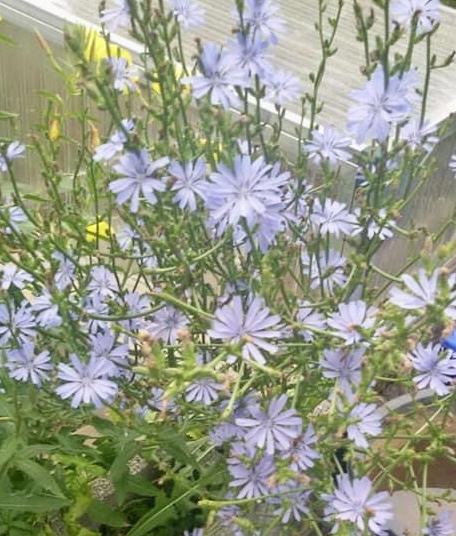
With its striking, mostly sky-blue flowers (rarely pink or white), it can be seen from afar. In Germany, it was named “Vegetable of the Year” in 2005 and “Flower of the Year” in 2009.
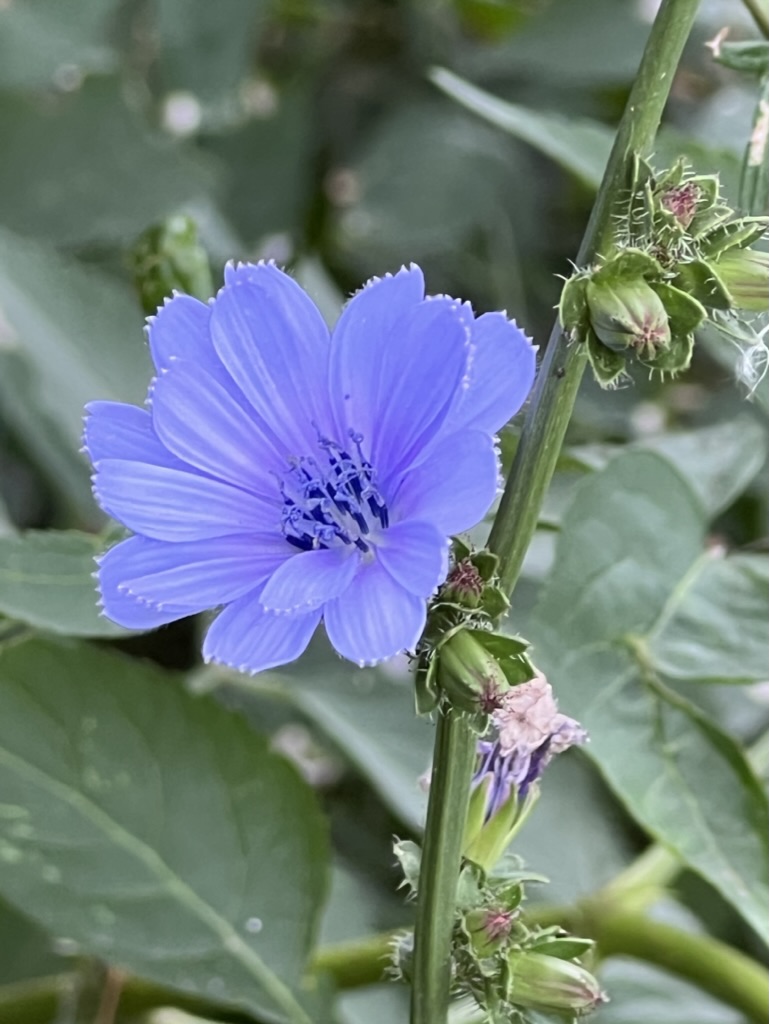
A nutritious food plant for tortoises
The genus Cichorium comprises around eight species, of which only common chicory (Cichorium intybus) is native to Central Europe. This perennial wild plant with its bright blue flowers prefers verges and nutrient-rich waste ground. It belongs to the daisy family (Asteraceae) and is found across Eurasia and North Africa. Besides its value as a food plant for tortoises, it is also used in herbal medicine and as a coffee substitute.
Site & soil
Chicory prefers sunny sites with rather poor, stony, or compacted soil.
- prefers sunny positions but also tolerates partial shade
- free-draining, rather dry soils are ideal
- well suited to limestone gravel (in German) in the enclosure
- weak growth on sandy soils
- often found on verges, field edges, and fallow land
Growth and flowering
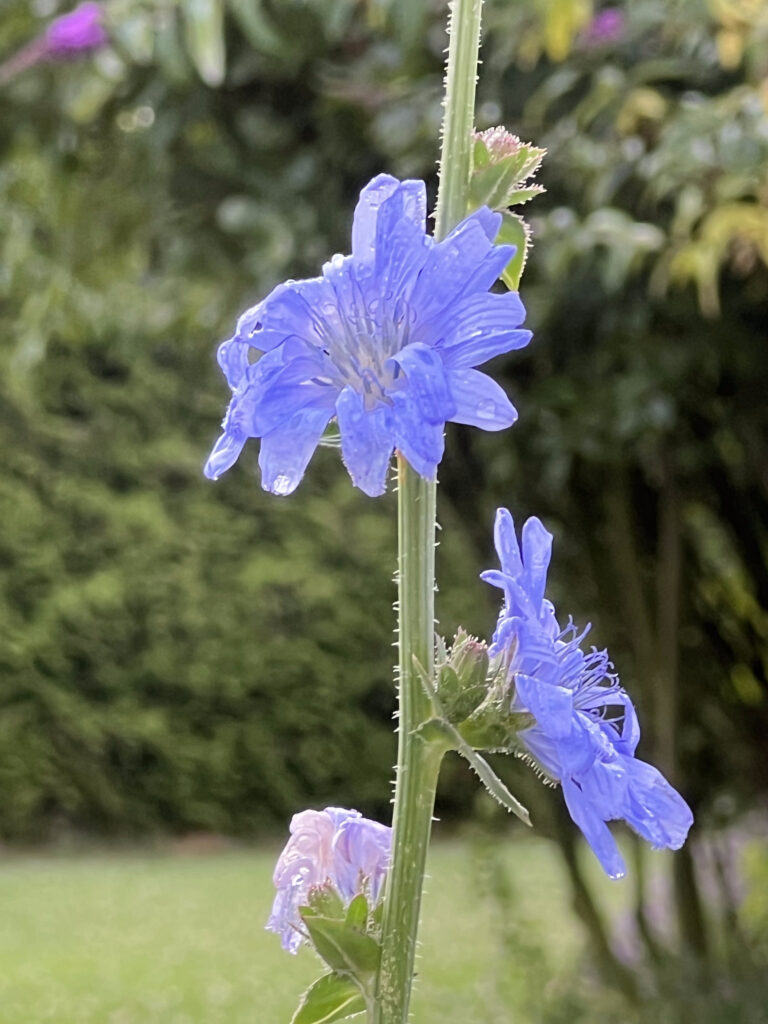
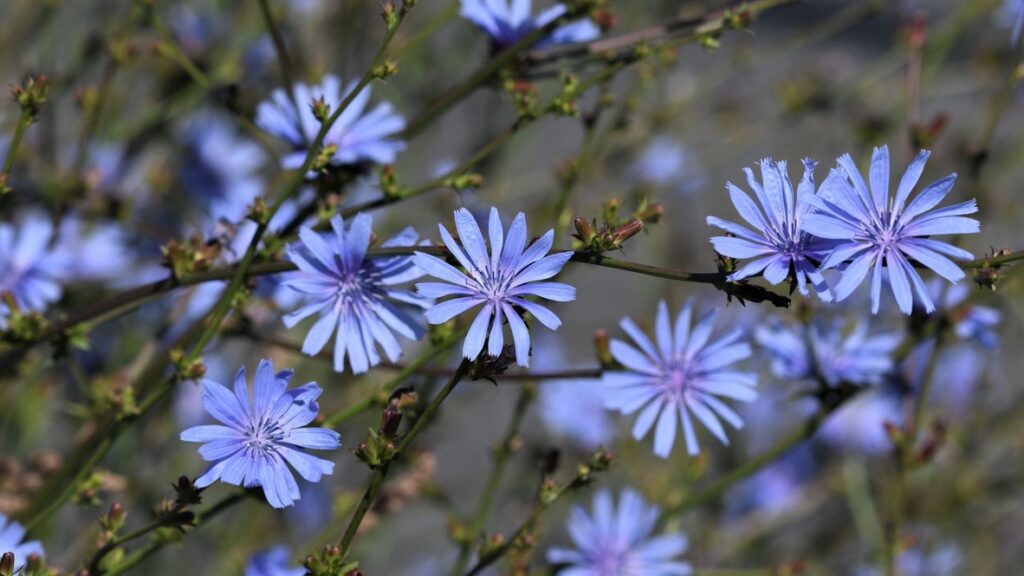
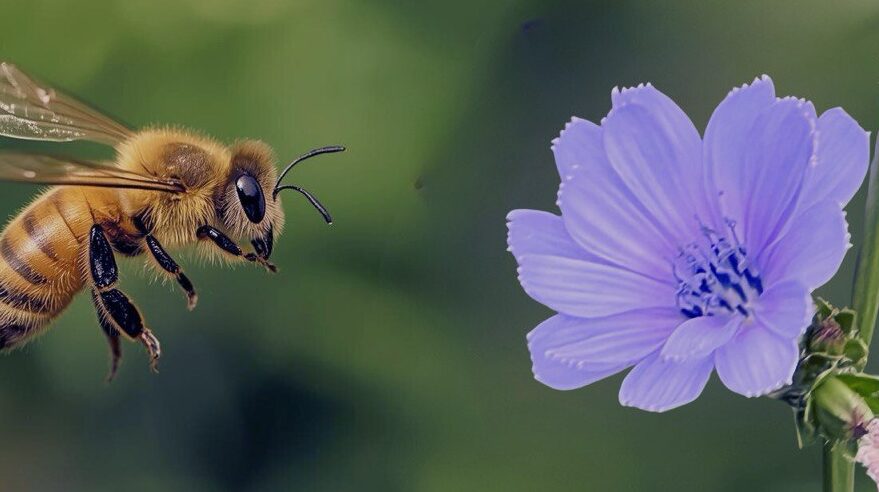
From a leaf rosette, chicory forms angular, branched flowering stems with bitter milky sap and a deep taproot. The ray-like flowers appear from July to September and open only in the morning. They are a valuable food source for wild bees, honeybees, and hoverflies.
- Flowering time: late June to early October
- Flower colour: mostly blue, rarely pink or white
- Flower diameter: up to 6 cm
- Special feature: ray florets only, no disc florets
Harvesting seeds
Chicory is easy to propagate from seed and often spreads by itself in the garden.
Germination takes about two to three weeks. In cultivation, chicory usually behaves like a biennial: it forms a leaf rosette in the first year and only flowers in the second. Harvesting the seeds deliberately helps to keep self-seeding under control, as chicory can otherwise spread widely in the garden.
Chicory seeds are harvested from late summer to autumn. They are ripe when the flower and seed heads have turned brown, are completely dry, and crumble easily when touched. Ideally, harvest on a dry day.
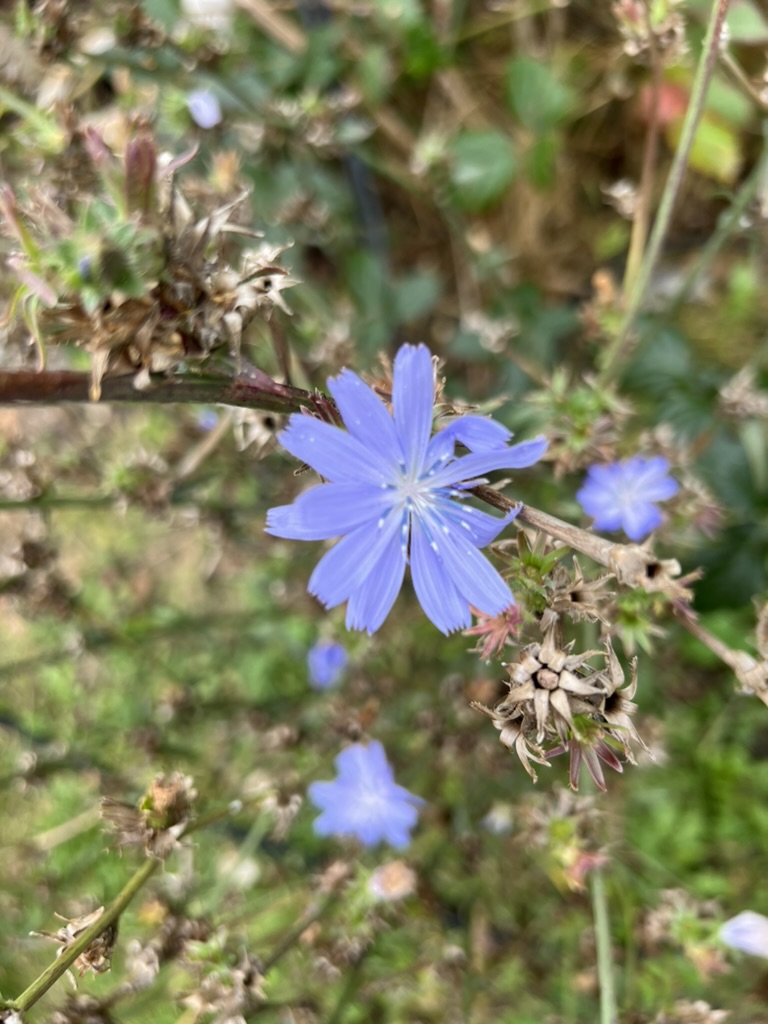
To collect the seeds, cut off the dry, brownish seed heads and hang them upside down to finish drying in an airy, sheltered place. Once they are completely dry, the seeds are easy to shake out – over a container, for example. More about harvesting food plant seeds is given in Harvesting forage plant seeds.
After harvesting, store the seeds in a cool, dry, dark place; they then remain viable for many years.
Resilience
The plants are extremely hardy and are rarely attacked by pests such as aphids or slugs.
Sowing & care
Chicory can be sown in autumn or in spring; autumn sowing often produces particularly strong plants. Chicory is undemanding but needs deep soil for its taproot.
- Sowing time: March (in the cold frame, or started on the windowsill) to May (outdoors), or in autumn.
- Germination: dark germinator (in German) – press the seed 1.5–2 cm deep into the soil
- Spacing: about 15 × 15 cm
- Germination time: 2–4 weeks
- develops deep taproots and grows slim and upright
- Chicory is easy to care for, but should be thinned out and transplanted early, as the long root is difficult to move later
- Watering: very drought-tolerant; copes with several days without rain
- Overwintering: hardy to –20 °C and reliably resprouts in spring
Use in the tortoise garden
The young leaves and shoots of common chicory are excellent food for tortoises. They are rich in bitter substances and secondary plant compounds (in German) and aid digestion. The decorative flowers can also be fed in moderation.
The plant is easy to integrate into wildflower meadows, where it goes particularly well with mallows, evening primroses, and nasturtiums (in German).
Other forms
Cichorium intybus var. foliosum is known as Belgian endive (in German), radicchio, or sugarloaf chicory. Grown organically at home, these varieties are also suitable for feeding tortoises – especially the leaves that are rich in bitter substances. Cichorium endivia, known as endive or frisée, comes from the Mediterranean and also provides nutritious leaves with a mild to bitter taste.
Ecological value
Common chicory is not only a valuable food plant for tortoises but also an excellent native bee plant and a valuable food source for insects from June to October.
It attracts more than 38 species of wild bee and so contributes to biodiversity. Its bright blue flowers offer plenty of nectar and pollen, especially for honeybees, bumblebees, hoverflies, and specialised wild bees. Its seeds are eaten by birds.
Summary for tortoise keepers
Chicory is a robust, long-lived, easy-care food plant that enriches the diet with its healthy bitter substances and attracts insects at the same time. Ideal for sunny areas of the outdoor enclosure.
More about the diet of European tortoises, suitable food plants, and how to grow them can be found in the following articles:
Food and calcium (English version below the German text)
Sowing food plants (in German)