🌼 Medicinal Plant of the Year 2026
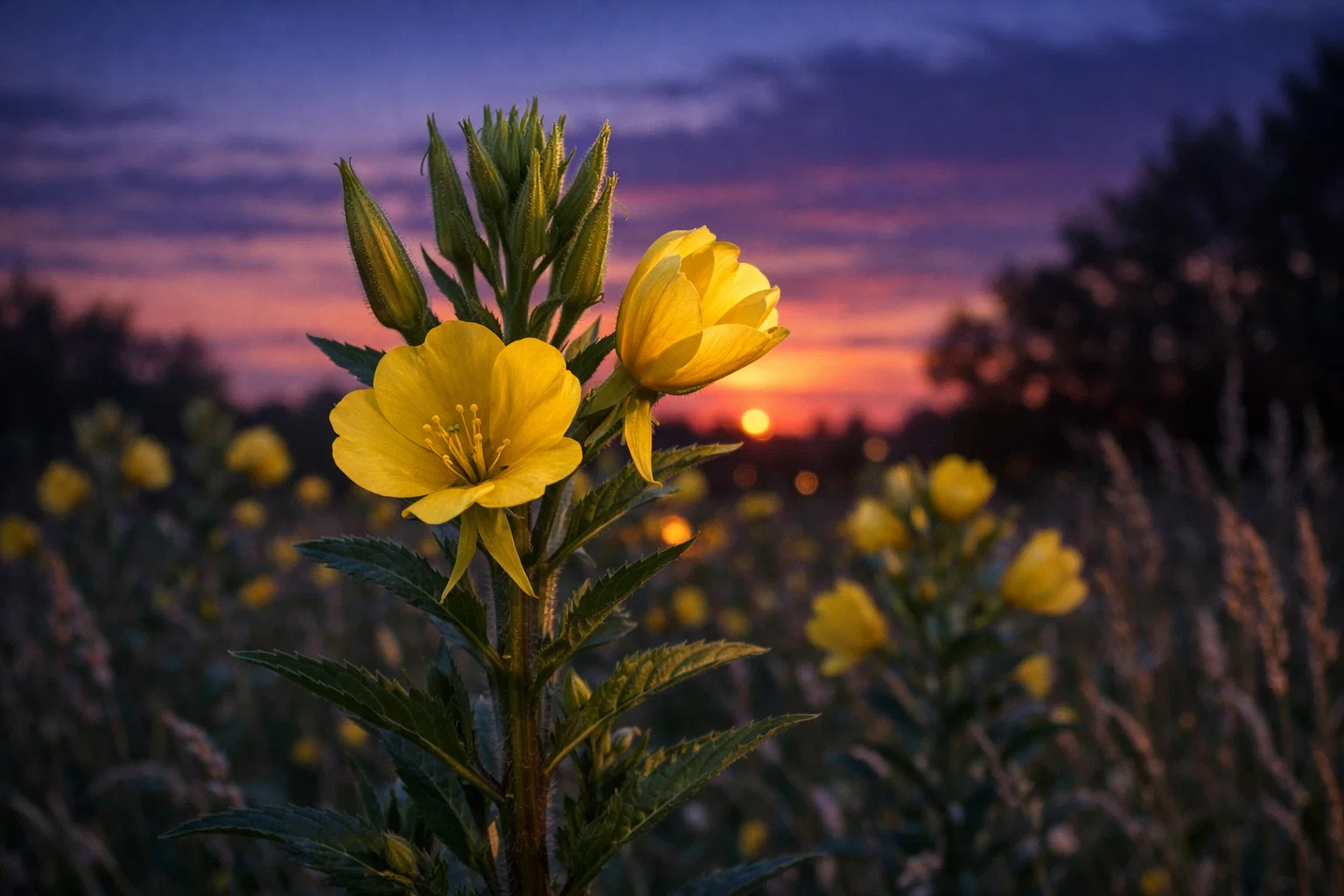
Common evening primrose (𝘖𝘦𝘯𝘰𝘵𝘩𝘦𝘳𝘢 𝘣𝘪𝘦𝘯𝘯𝘪𝘴) was named Medicinal Plant of the Year 2026 by the German naturopathic association NHV Theophrastus.
The oil extracted from the seeds is rich in linoleic acid and gamma-linolenic acid. The European Medicines Agency lists evening primrose as a traditional herbal medicinal product for dry skin and itching.
This has no direct application for European tortoises, but the award underlines the plant’s content of biologically active constituents, also known as secondary plant compounds (in German).
Common evening primrose as food for tortoises
(Oenothera biennis)
Common evening primrose is a firmly established wild plant in Central Europe. It originally comes from North America and was brought to Europe as an ornamental plant at the beginning of the 17th century. By the 18th and 19th centuries, it had a firm place in cottage gardens; it later went wild and is now widespread across large parts of Europe.
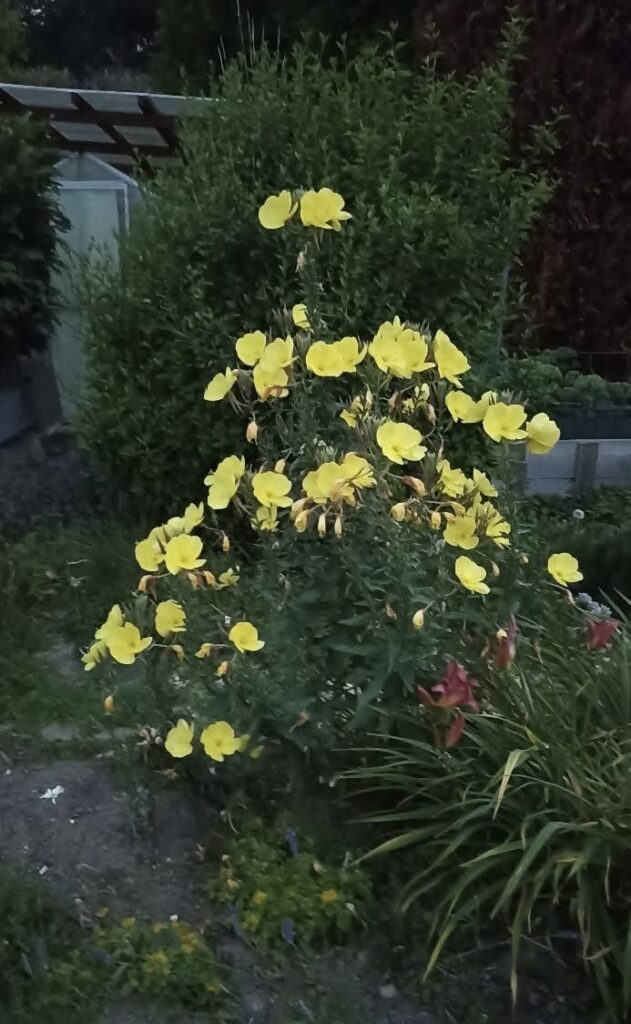
It grows wild on sunny, dry railway embankments, banks, roadsides, and waste ground. Today it is grown as an ornamental and wild plant, and once again specifically for evening primrose oil.
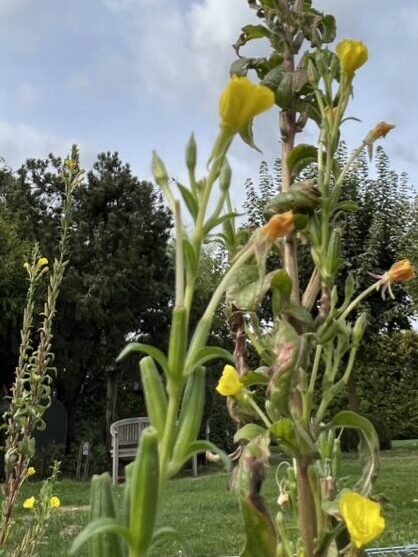
Many tortoises eat evening primrose – in the first year they prefer the leaves, and in the second year the flowers. The seed capsules and seeds should not be fed. Like all food plants, evening primrose is always offered as part of a varied diet with many different plants, never as the only food, to ensure a balanced diet.
Special feature
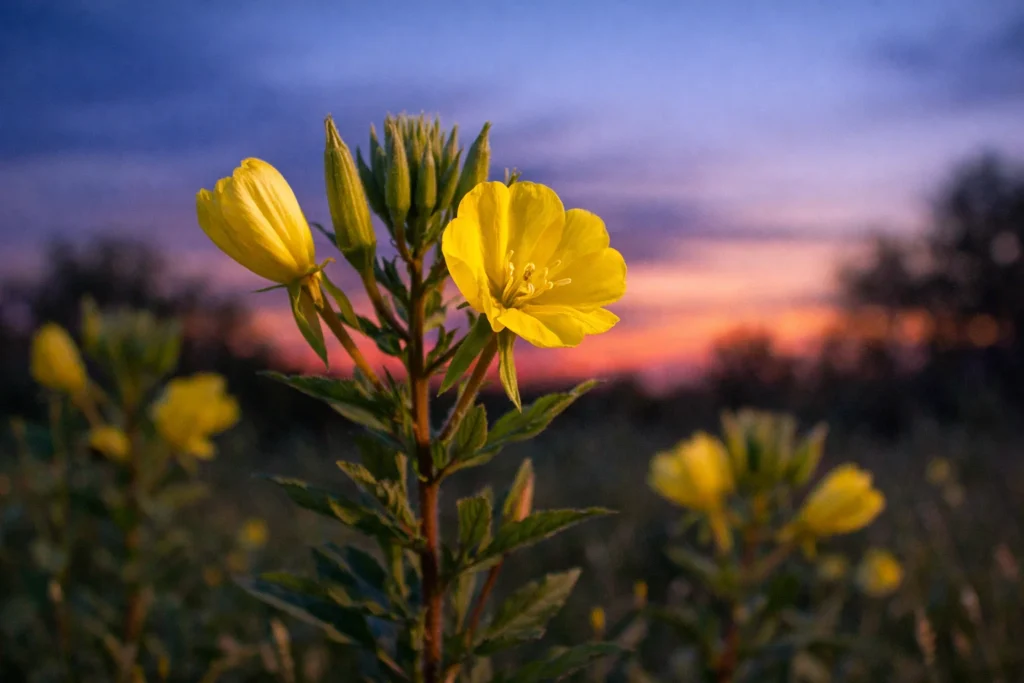
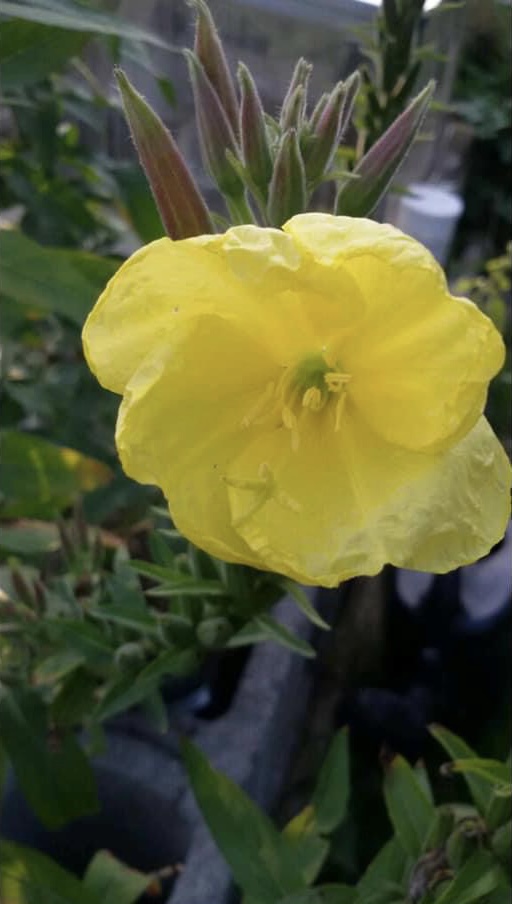
Evening primrose only opens its yellow, strongly scented flowers at dusk, specifically attracting moths and other insects. Old names such as “evening star” refer to this unusual flowering behaviour.
Growth & development
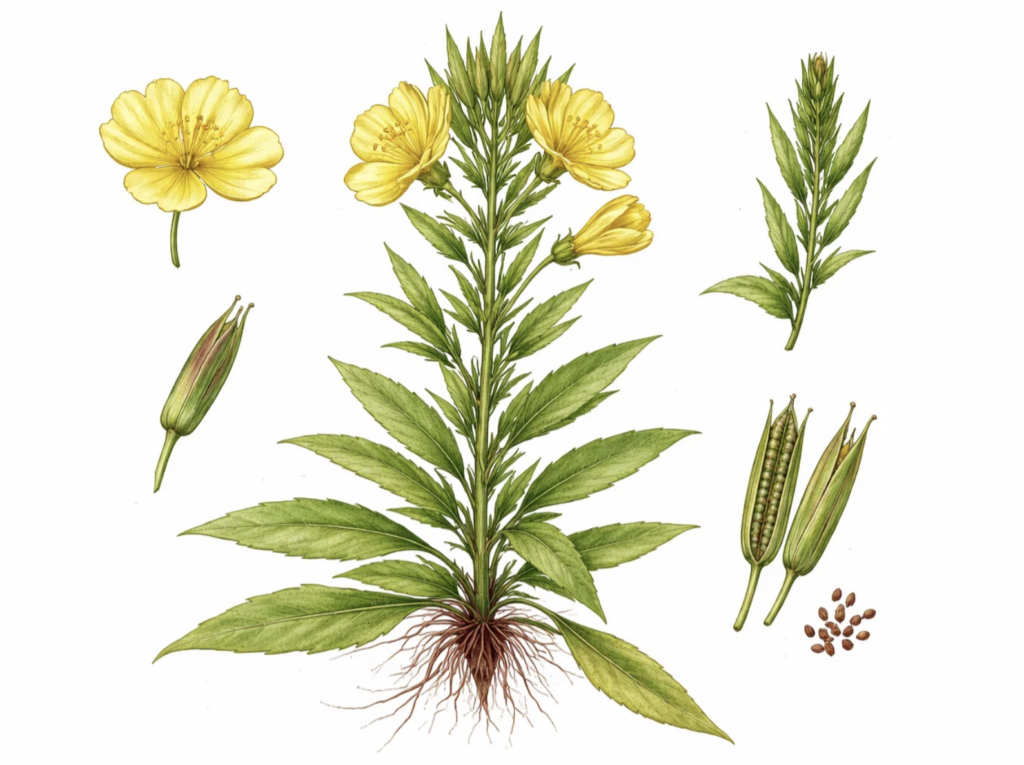
Evening primrose is a biennial herbaceous plant with a loosely upright habit:
- Year 1: forms a leaf rosette close to the ground and a strong, slightly reddish taproot, which is edible
- Year 2: develops upright, angular, slightly hairy stems with pointed, hairless, lance-shaped leaves and flowers
Height: about 100–200 cm
Spread: up to about 80 cm
Habit: upright, clump-forming, rosette-forming
Leaves, flowers & fruits
- Leaves: green, lance-shaped, edible, forming a rosette
- Flowers: yellow, bowl- to funnel-shaped, strongly scented, edible
- Flowering time: June to September
- Fruits: green pods that ensure reliable self-seeding
🌞 Sowing, site & soil
Evening primroses are easy to sow, as they are usually sown directly outdoors (April–May or late summer). As light germinators (in German), the fine seeds must not be covered with soil, but only pressed in and kept moist. They prefer sunny sites with dry, sandy soil. Germination takes about 3–4 weeks.
- Light: sunny
- Soil: sandy to loamy
- Soil moisture: dry to moderately dry
- pH: neutral
- Lime: very lime-tolerant
- Nutrient needs: low
- Humus: prefers soil low in humus
Ideal for poor, natural sites – and therefore ideal for outdoor enclosures with limestone gravel (in German).
Care
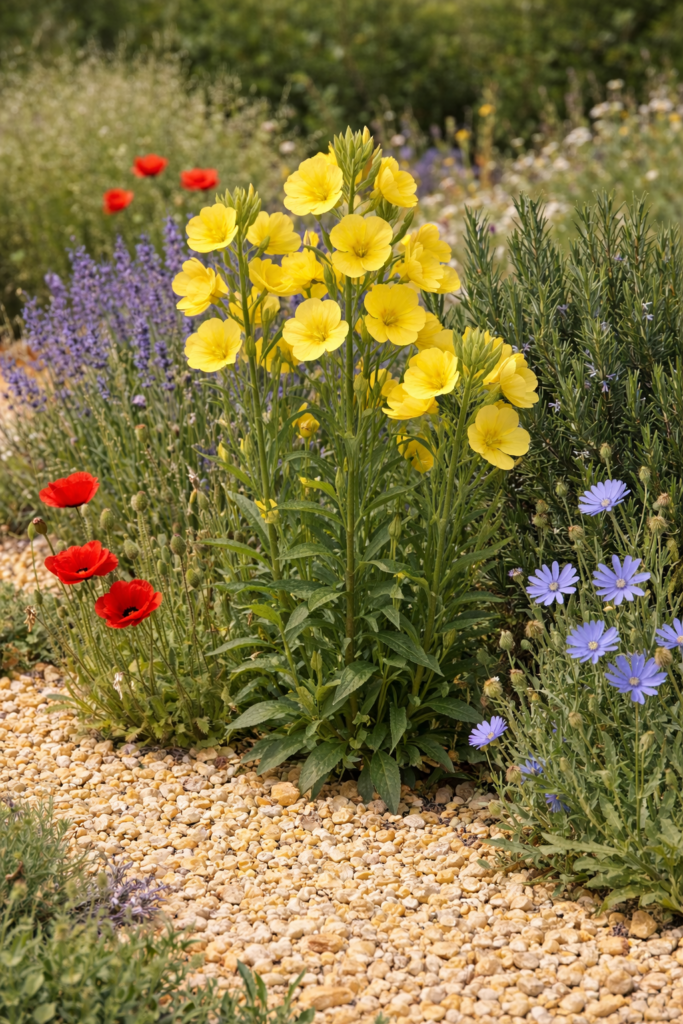
Evening primrose is very easy to care for and needs no special attention.
- No regular feeding needed
- Drought-tolerant
- To prevent heavy self-seeding, the flower stems can be cut back in autumn before the seed capsules open. They can then finish ripening in a dry, bright place, so that the seeds can be used elsewhere.
🐝 Ecological & practical value
- Bee- and insect-friendly
- A valuable nectar and pollen plant, especially for night-flying insects
- An edible wild plant with a long history of use
- Besides tortoise enclosures, also suitable for wildlife, cottage, and apothecary gardens, flower meadows, borders, and naturalising
In short
Common evening primrose is a robust, easy-care wild plant of impressive height, with edible parts and high ecological value – ideal for natural gardens, enclosures, and wild-plant areas.
Collecting evening primrose seeds
Timing
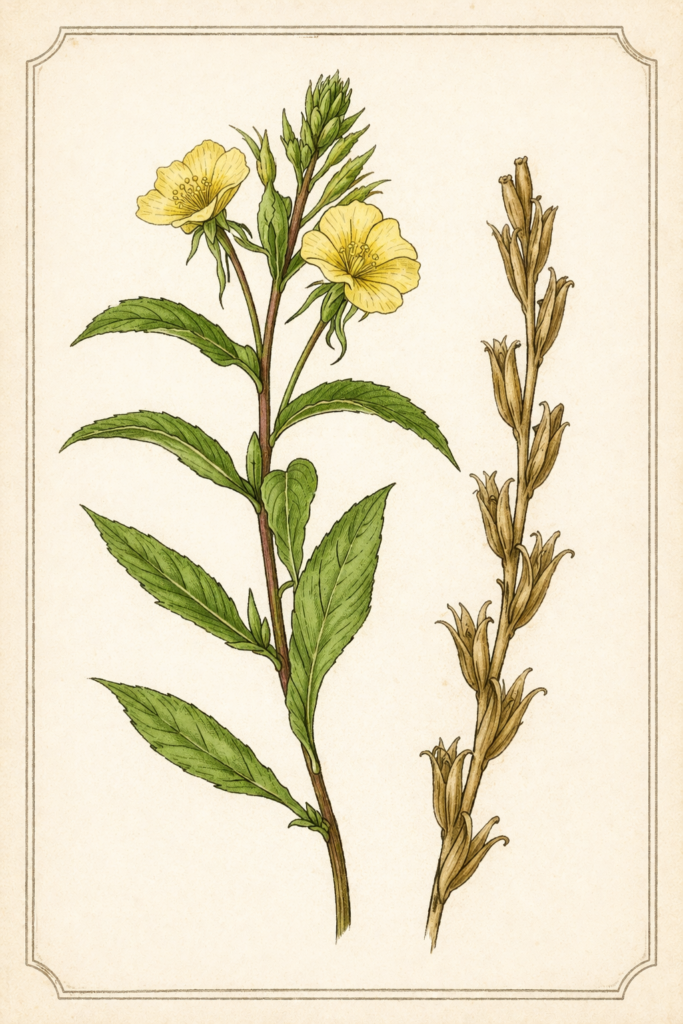
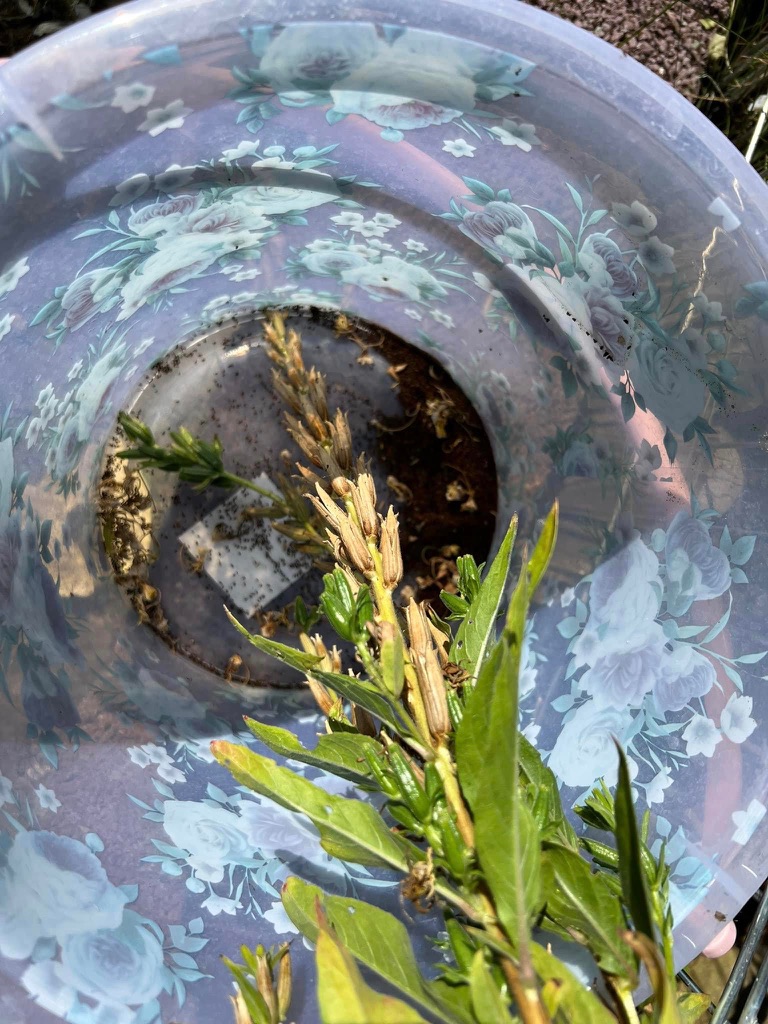
Evening primrose seeds should only be collected once they are fully ripe. Ripe seeds can be recognised by the seed capsules being completely dry and opening easily. More about harvesting is given in Harvesting forage plant seeds.
Features of ripe seed capsules
- brown to dark brown
- dry and firm
- open under light pressure
Method
The ripe seed heads are cut or snapped off and then tapped out over a bucket. In this way, the numerous fine seeds can be collected easily and with little loss.
Note
Collecting too early results in incompletely developed seeds that germinate poorly. If the capsules have been harvested too early, it is better to leave them in a dry, bright place until they are ripe.
Sowing food plants is covered in sowing food plants (in German); a selection of popular plants is given in Food plants; and a healthy diet and calcium supply are covered in Food and calcium (English version below the German text).