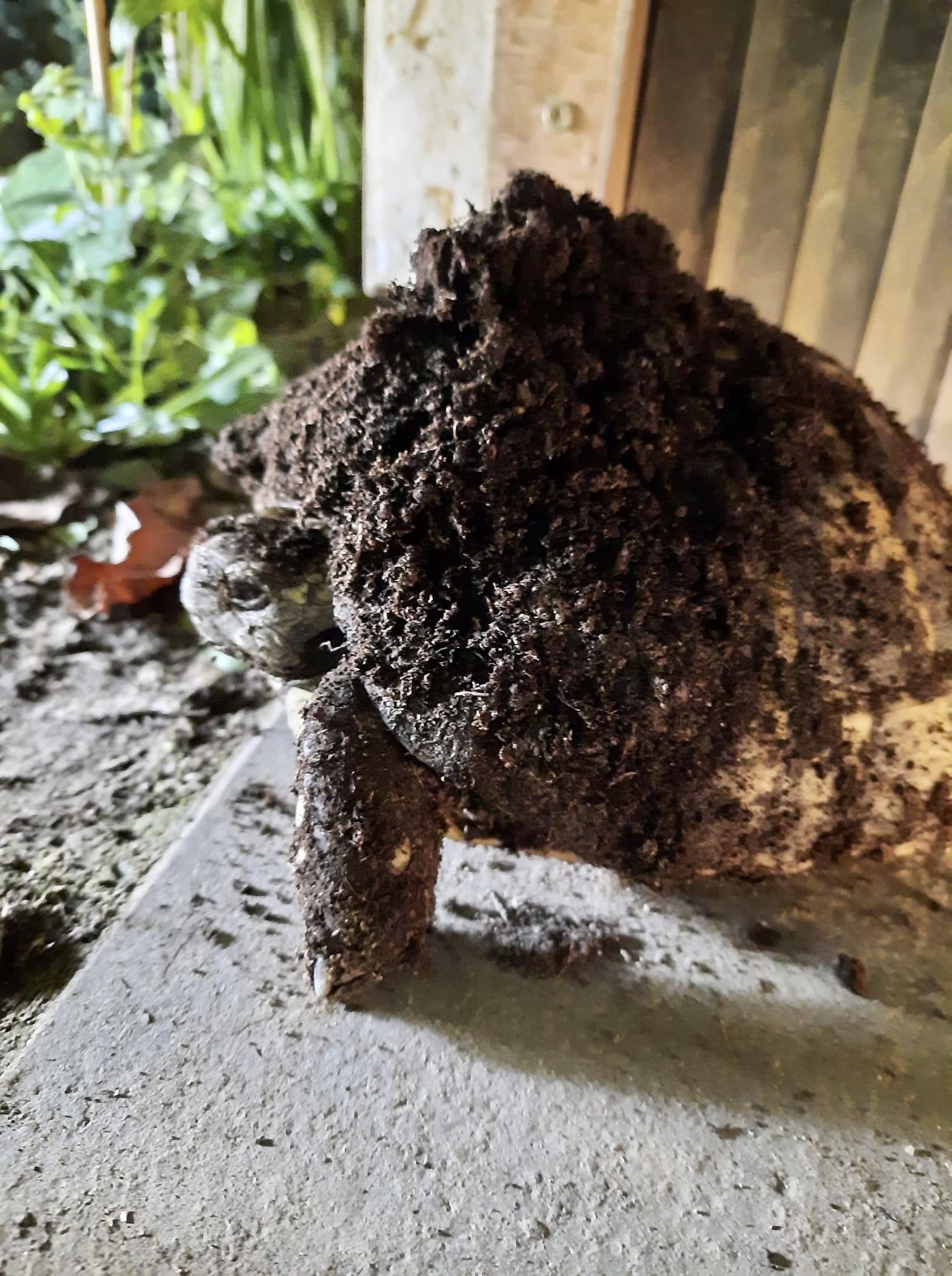
Brumation in a pit protected against frost and predators
“Brumation in the winter pit” – a first-hand account by Anke Rotzler
When we built a new house a few years ago, I was finally able to fulfil my wish for a large enclosure including a greenhouse. At the same time, I wanted to switch from refrigerator brumation to near-natural pit brumation. The brumation pits were dug for two groups, measuring 1.2 × 0.6 × 0.6 m and 0.6 × 0.6 × 0.6 m. As we live in a karst area and hit rock at a depth of around 60 cm, we could not go any deeper, but as the pit is integrated into the greenhouse, this is sufficient in terms of temperature.
Two boxes, open at the bottom, were built from 8 cm rigid foam insulation board and closed at the bottom with rodent-proof mesh. Protection against predators is very important.
As the bottom layer, I put in about 8 cm of gravel for additional drainage,
and then filled the rest with a mixture of topsoil and tortoise substrate.
Two sleeping houses of the same dimensions, made of film-faced plywood, were then placed on top of these boxes at ground level, and heating cables were laid on the lids. Finally, everything was insulated from the outside with rigid foam board.
This keeps the temperature very constant and has the additional advantage of staying cooler inside in summer. Almost all my animals use the sleeping house at night, even in high summer.

As I am lucky enough to have a good friend with the necessary know-how and access to the right technology, everything was perfectly equipped, so that I can set and switch everything from one station.
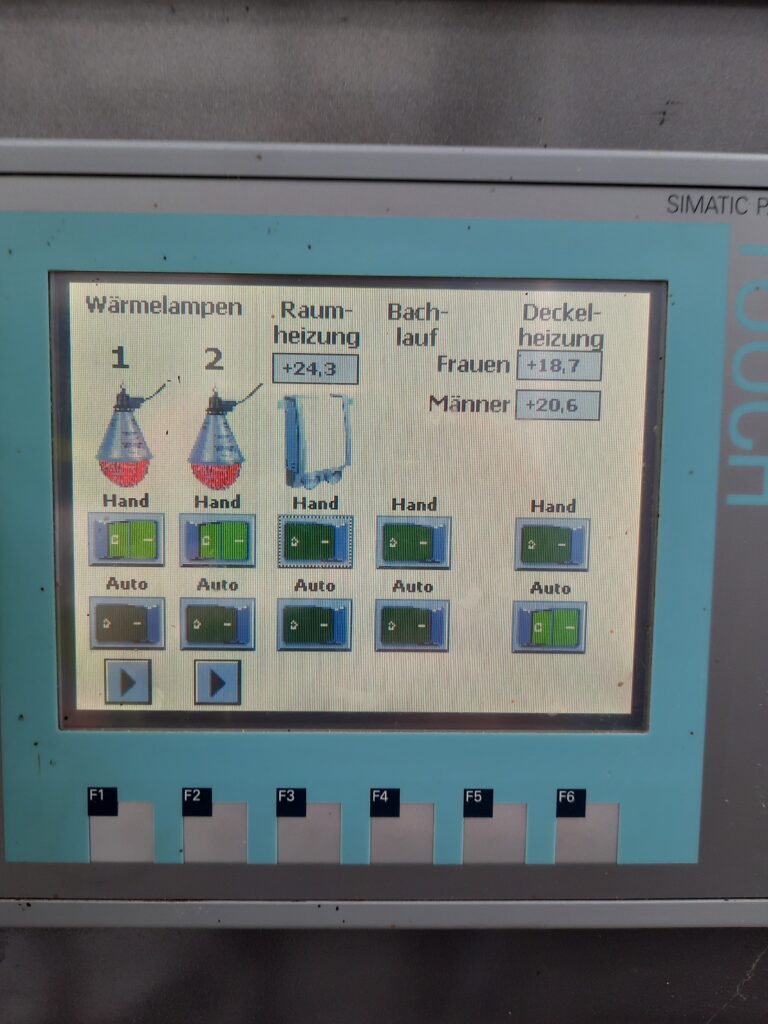
Usually in mid-October, I set the lid heating of the sleeping houses to a minimum of 20 °C at night and, during the day, the greenhouse heating for the ambient temperature to approx. 25 °C as needed, depending on the weather.
The heat lamps are on from morning to evening, depending on the weather outside.
At the latest when the night-time temperatures in the greenhouse drop below 20 °C, I “put to bed” the tortoises – which in summer are of course allowed to choose their own sleeping place in the greenhouse and at this point do not go into the sleeping house on their own. This way, I only need to heat the sleeping house and not the whole greenhouse.
From about the end of October, I reduce the night-time temperature by 2 °C roughly every 14 days, and the heating likewise, so that by about the beginning of December I have reached a brumation temperature of below 8 °C day and night. Depending on the weather, this is sometimes earlier, sometimes a little later.
St Nicholas’ Day (6 December) is often given as the cut-off date.
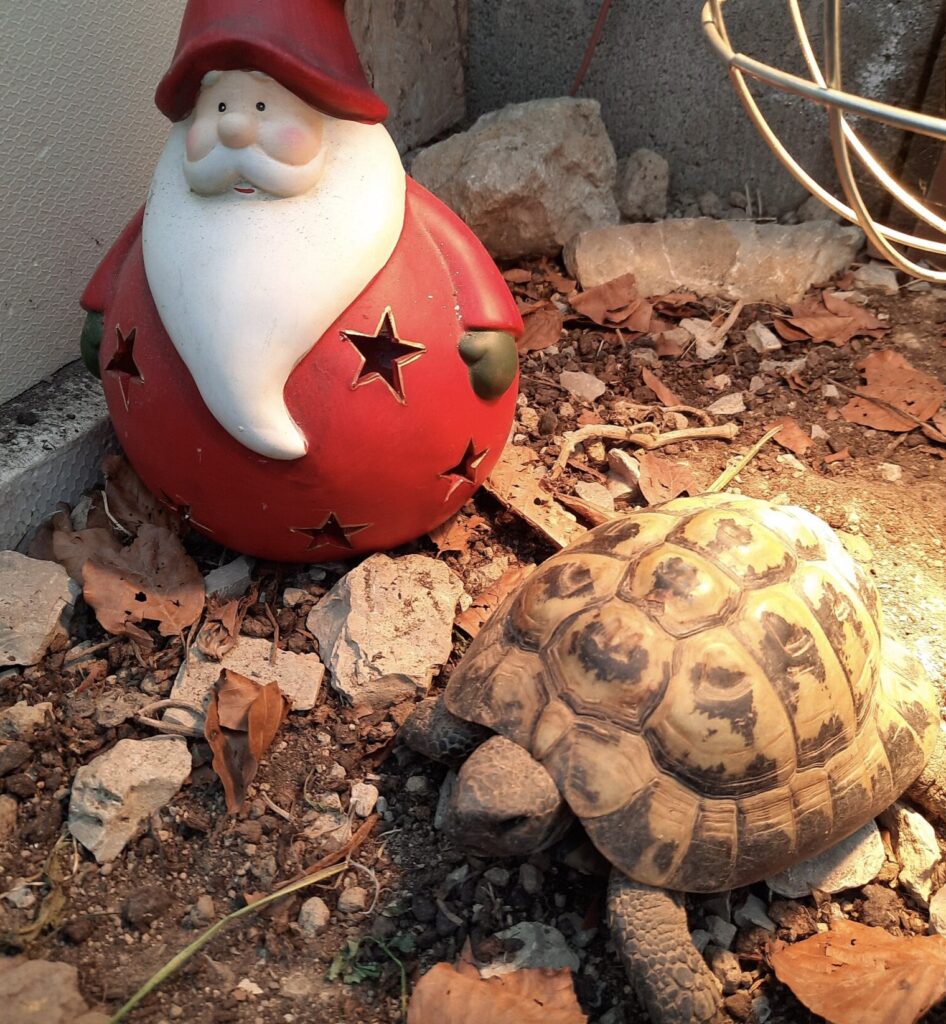
Until the very last animal has disappeared underground, heat lamps, food, and water continue to be offered during the day.
During this time, the animals become more sluggish, eat less, and sometimes do not come out of the sleeping house for days. This is all part of normal preparation.
Some animals suddenly come out again after sleeping for days, use the heat lamp, or even eat a little.
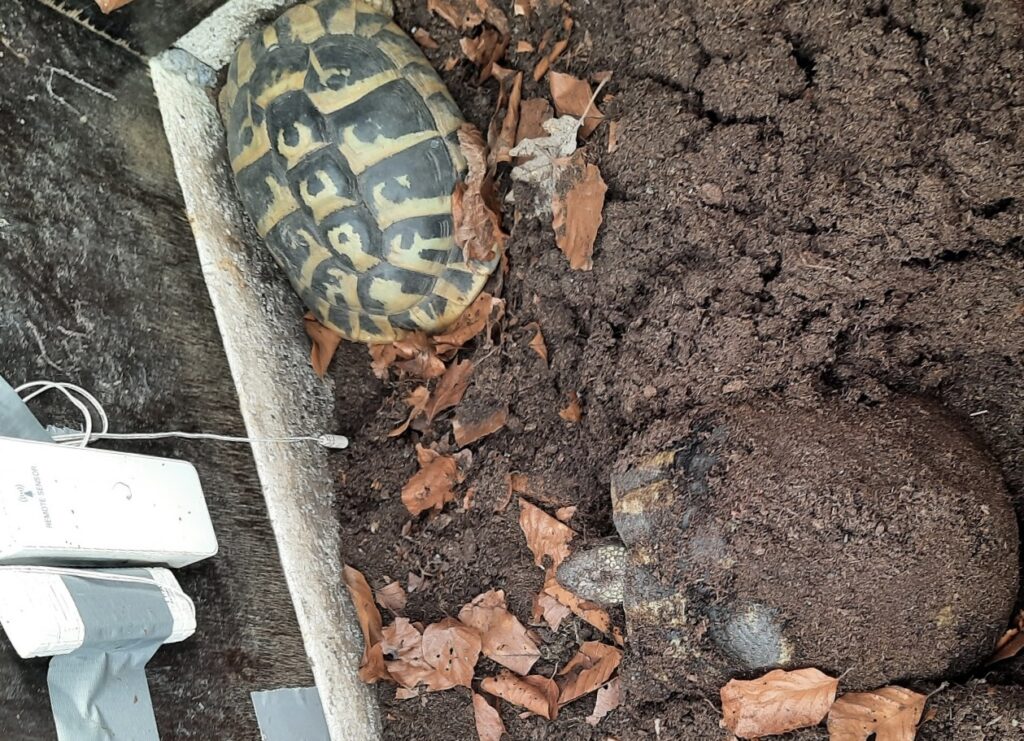
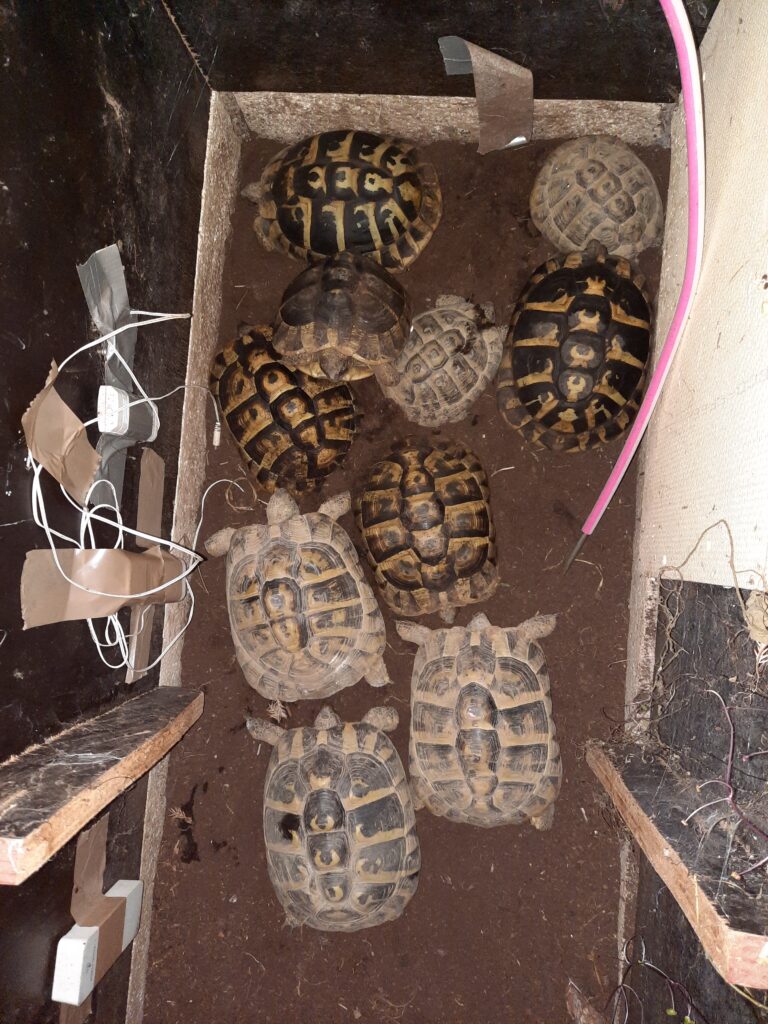
Every few days, I moisten the soil in the sleeping house to maintain a basic level of moisture. The photo clearly shows who spent the day in the house and who spent it outside.
At some point in November, the first animals disappear completely underground, and by December most of them are in brumation. Some are completely buried, but there are also candidates that spend the entire brumation period on the surface of the soil, in a hollow, covered only with leaves.
Once no animal has reappeared for at least a week, it is time to place the sensors for the lid heating next to the uppermost animal and to fill the sleeping houses with the prepared leaves. These are also moistened and then checked weekly.
Now I do not see my tortoises for about three months, but as an additional check I have placed TFA Dostmann smart thermometers next to the animals, so that I also have information on temperature and humidity on my mobile phone.
No matter when the animals go underground, the procedure starts again in reverse in early to mid-March at the latest
– always in line with the weather outside, of course.
I remove the leaves and raise the night-time temperature to 10–12 °C. This is then increased further.
The change in air pressure and the March sunshine usually do the rest to bring the animals to the surface.
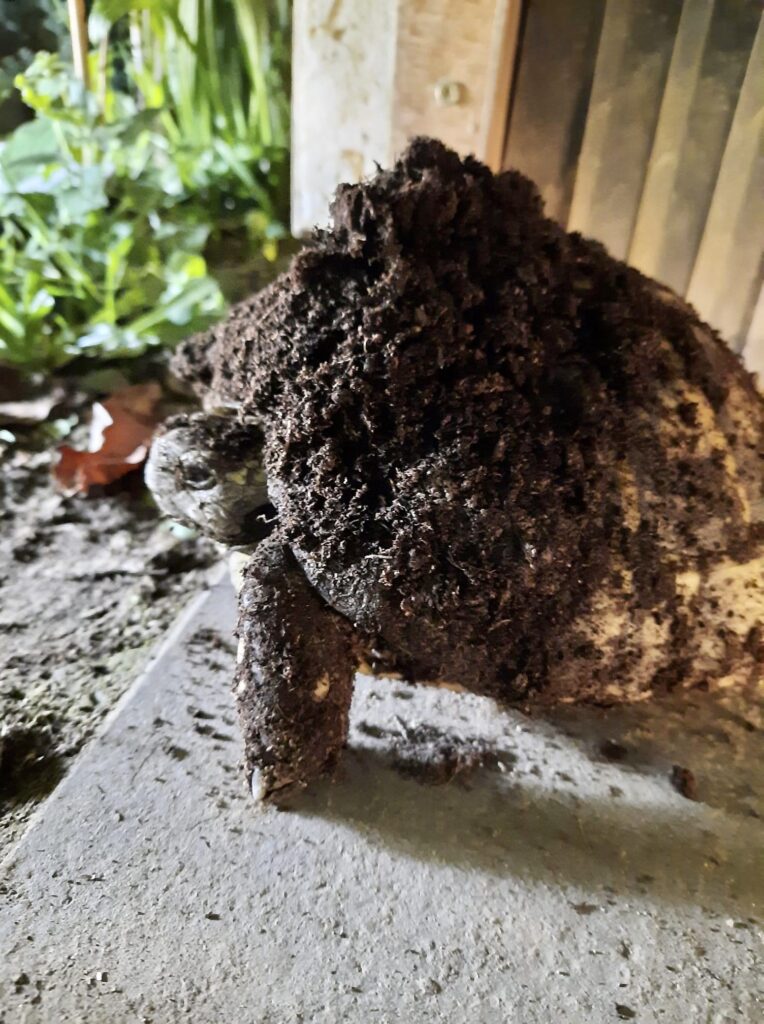
And so, one by one, usually within two to three weeks, the “lumps of mud” appear at the surface. The animals that were not buried are, of course, the first.
As soon as the first animal is awake, the bright, warm sun lamp is offered again, and it is usually used straight away. The ambient temperature in the greenhouse is then raised quickly to get the animals feeding promptly.
All my animals start eating within one to two days; this should be monitored closely in order to spot post-brumation anorexia quickly.
In conclusion, having experienced both brumation methods, I can say that pit brumation is very relaxed for keeper and animal alike, as each animal can prepare and go underground at its own pace.
Of course, tortoises in the pit can only be monitored technically and not visually, but after the first exciting winter, I now trust that the tortoises, guided by their natural instincts, will do the right thing.
Even my Sophie, who came from a vivarium and had never been allowed to brumate before, managed it wonderfully with me from her very first winter and emerged from the depths in spring completely covered in mud.
And yes, it is still exciting every year; the suspense and joy grow with every animal that finally reappears healthy.
Nature is simply fascinating 🙂
About the author:
Anke Rotzler, a mother of two, has kept European tortoises for 18 years.
Anke is an expert on food plants for herbivorous tortoises. For many years, she has been involved in voluntary husbandry advice for tortoises on Facebook, including as a member of the admin team of the German-language Facebook groups Technik für Europäische Landschildkröten (technology for European tortoises), Futterpflanzen für Schildkröten (food plants for tortoises), and Hege und Pflege Griechischer Landschildkröten (care of Hermann’s tortoises).
All the information on brumation in a pit and on building a safe pit can now be found in a practical handbook:
the Technology Handbook.