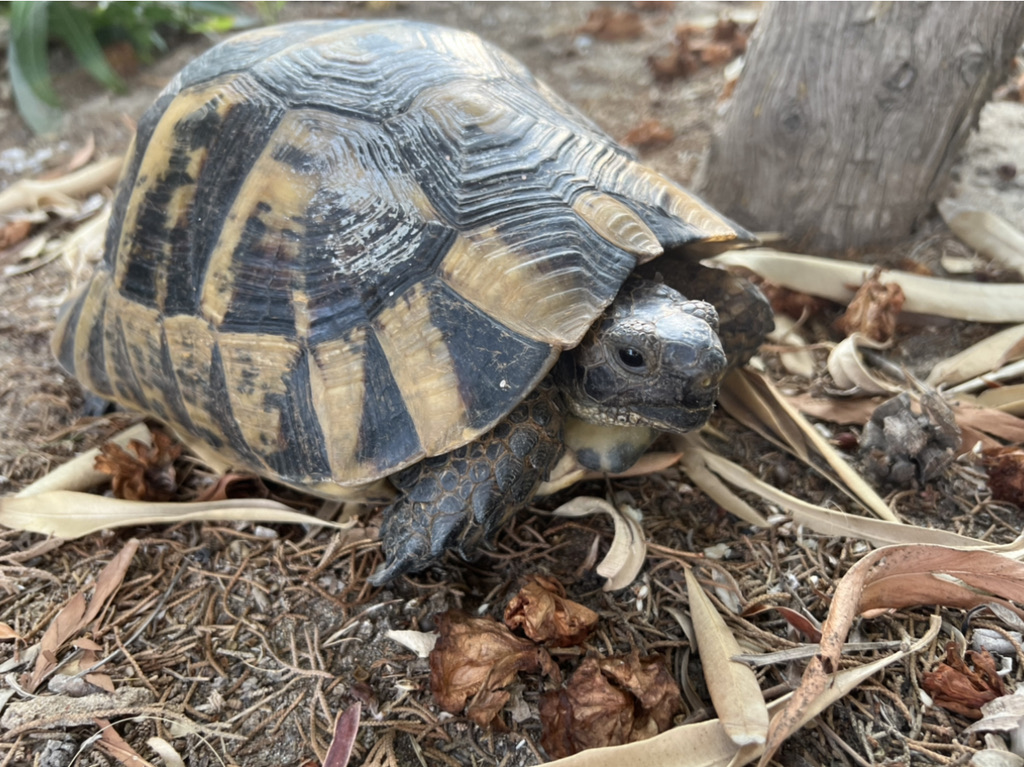
Week 1 of a four-week gradual reduction in temperature and basking hours. This is followed by approximately one to two weeks of rest or established brumation in the cold frame, before any transfer to a prepared brumation refrigerator. The animals‘ condition and temperatures determine the actual timing.
Beginning preparations for brumation
Using climate data to guide the initial reduction
Late October is an ideal time to consult climate records and weather data from the tortoises’ natural habitats. These provide valuable guidance on when and how tortoises begin preparing for winter brumation in the wild.
Climate focus: temperatures in late October
| Species / subspecies | Region | Average temperatures | Range |
|---|---|---|---|
| THB – Testudo hermanni boettgeri | Platamonas | 21 °C day / 12 °C night | 7–24 °C |
| TM – Testudo marginata | Corfu | 19 °C day / 16 °C night | 14–22 °C |
| THH – Testudo hermanni hermanni | Pollença, Mallorca | 20 °C day / 13 °C night | 9–26 °C |
| TGI – Testudo graeca ibera | Marmaris | 28 °C day / 13 °C night | 11–33 °C |
From early November onwards, a noticeable temperature drop can be expected in these regions:
- Corfu: 10–19 °C
- Platamonas: 8–14 °C
- Pollença, Mallorca: 10–17 °C
- Marmaris: 11–22 °C
The importance of sunshine hours
The reduction in sunshine hours is especially important at this stage. As daylight hours shorten, solar radiation decreases and temperatures fall, tortoises begin preparing for winter brumation.
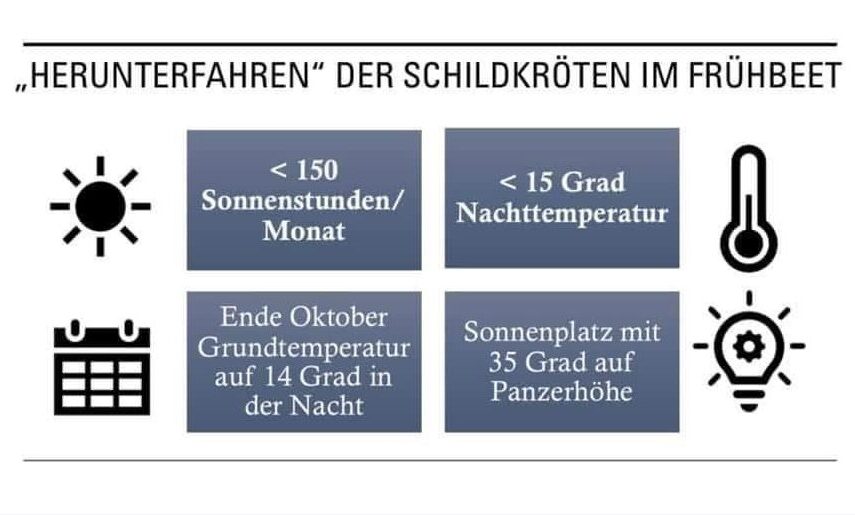
Once monthly sunshine falls below 150 hours and night-time temperatures drop below 15 °C, their activity decreases significantly.
Practical tip: Keepers who know their tortoises’ precise geographical origin can use local climate data to guide seasonal husbandry. Because of the high limestone content of Mediterranean soils, ground temperatures may be several degrees, sometimes as much as 10 °C, higher than the shaded air temperature measured two metres above the ground.
Gradually reducing temperatures in the cold frame or greenhouse
The first phase of temperature reduction now begins for healthy tortoises. Animals recently treated for parasites should continue to be kept under warm, midsummer conditions for several weeks after their final worming treatment so that the dead parasites can be expelled.
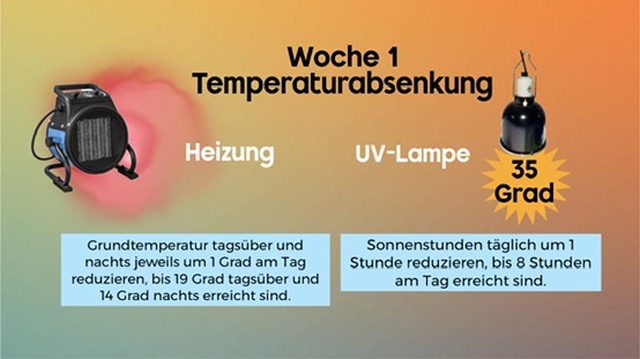
A universal thermostat (German article), such as the Bio Green Thermo 2 or UT300, can be used to lower the ambient temperature at tortoise height in a controlled manner:
- At night: approximately 14 °C
- During the day: approximately 19 °C
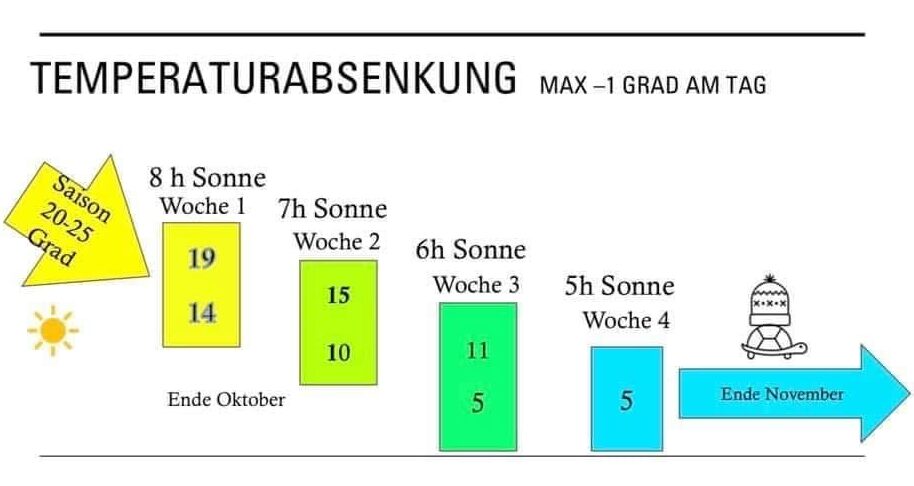
Temperatures should be reduced by no more than 1 °C per day. At the same time, reduce the basking period by one hour each day until eight hours a day have been reached. This gradual approach allows the animals to adjust and still provides enough time to bask and pass faeces and urates.
Lighting and activity
Tortoises still need access to controlled basking periods to maintain metabolic activity when necessary. The basking area should reach approximately 35 °C at shell height during the day.
Important: As long as the tortoises are still basking, keep the basking lamp available for at least five hours each day.
Food, water and behaviour
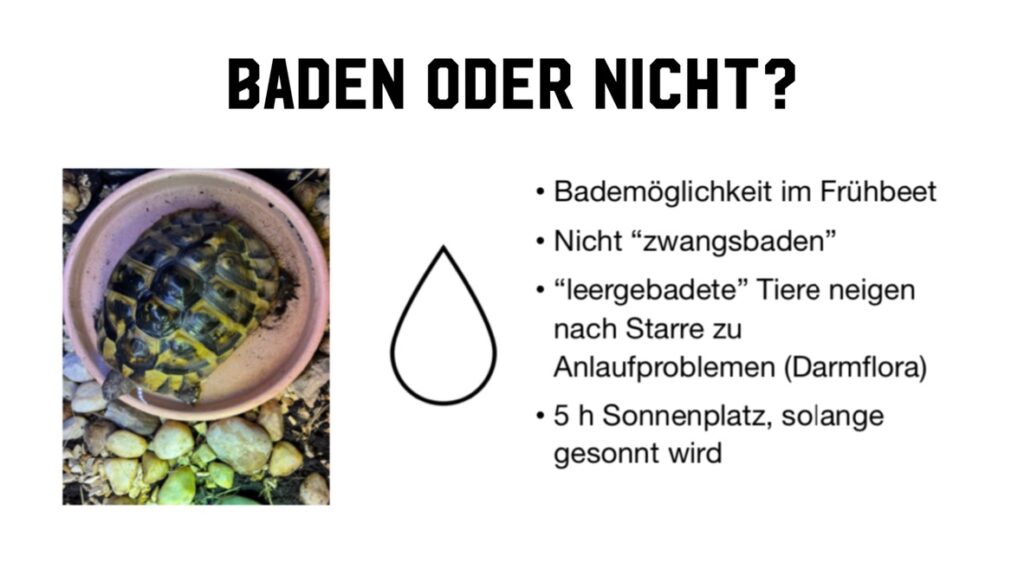
Continue offering food and fresh water until the animals have fully entered brumation. They should be able to decide for themselves when to eat, bask or bathe.
Never force tortoises to bathe. Tortoises kept under suitable husbandry conditions should only be bathed on veterinary advice. See Forced Bathing – A Former Husbandry Practice. Tortoises kept in vivaria, however, may occasionally need to be placed in their bathing dishes as they are often severely dehydrated.
Special considerations for spur-thighed tortoises (TGI)
Spur-thighed tortoises from warmer areas may benefit from a later start to temperature reduction. In line with their natural habitats, begin by reducing only the night-time temperature to around 14 °C, while keeping the basking lamp available from 9 am to 5 pm and providing 35 °C at shell height.
The aim
Over approximately four weeks, temperatures are gradually lowered towards 5–6 °C. The basking period is reduced progressively to approximately five hours a day. After this four-week reduction, allow the tortoises time to rest and enter established brumation in the cold frame; this commonly takes a further one to two weeks at consistently low temperatures. Tortoises from warmer habitats may need a slower transition.
Practical tip: Continue providing at least five hours of warmth daily while the animals remain active. Only switch off the basking lamp towards the end of preparation when all tortoises have been buried and inactive for several days.
What happens in their natural habitats?
In their natural habitats, tortoises can remain active well into November, and sometimes December, depending on the region and weather. Cooler nights and fewer sunshine hours signal that brumation is approaching.
They eat less, increasingly seek out water for drinking and bathing, and may pass faeces and urates more frequently. After the first significant autumn rainfall, puddles and small streams offer opportunities to drink and excrete metabolic waste. Water stored in the bladder during the hot, dry summer is no longer needed to the same extent. Increased drinking and excretion help relieve the liver and kidneys as the tortoises prepare for brumation.
Our aim in captivity: Reproduce these natural seasonal processes as closely as possible.
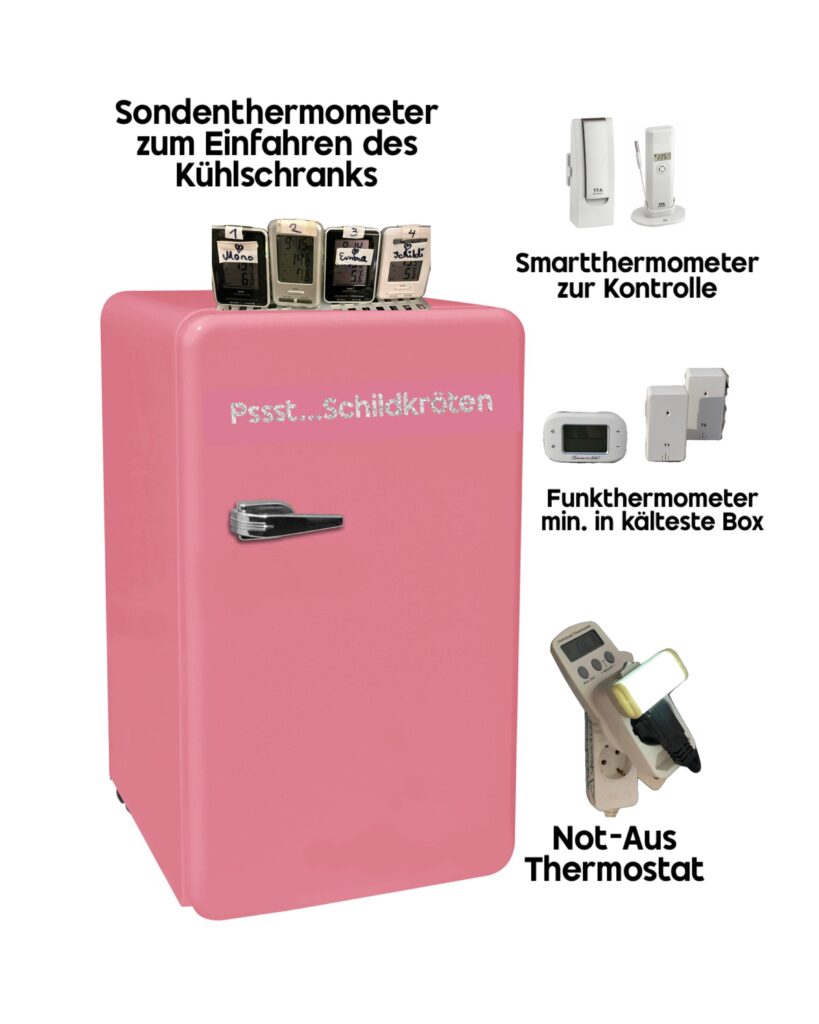
Preparing equipment for refrigerator brumation
While tortoises are preparing, keepers should start making technical arrangements for safe refrigerator brumation:
- Thoroughly clean the refrigerator and clear the drainage outlet.
- Obtain the equipment needed for safety and monitoring; consult the Refrigerator Brumation Shopping List.
- Check the emergency cut-off thermostat (such as the UT300) and obtain a spare.
- Inspect the brumation boxes and obtain suitable tortoise substrate.
- Collect fresh beech or oak leaves.
- Test the thermometers and replace the batteries in the scales used for weighing tortoises.
- Begin test-running and stabilising the refrigerator without animals.
- See also The Brumation Refrigerator and Brumation Boxes.
Further details are provided in the TASCHENDINOS Refrigerator Brumation Handbook. The target range inside the refrigerator is 4.5–7 °C.
Preparing equipment for brumation in a protected pit
For tortoises that will brumate in a protected pit beneath the cold frame, now is also the time to check all equipment. Heating cables, heating mats and greenhouse heaters should be inspected for safe operation.
- Ensure that all plugs, cables and electrical connections are undamaged and safely installed.
- Make sure thermostats function reliably and are protected from moisture.
- Keep heaters clean.
- Have spare thermostats, heaters and cables available.
Practical tip: Equipment often fails at weekends or on public holidays, when replacements are difficult to obtain. Test the whole system well before winter. Choose reliable, properly certified equipment; the safety of the tortoises may depend on thermostats and heaters working correctly.
Further technical information and guidance on constructing a brumation pit can be found in the TASCHENDINOS Technology Handbook (German edition).
Week 1 – Summary
As autumn progresses, tortoises eat less, rest longer and respond more slowly to light. They may visit their water dishes more frequently, so fresh water should remain available.
Patience, careful monitoring and a gentle approach are essential. Gradually lowering temperatures and shortening the basking period helps reproduce natural seasonal conditions.
The next stage is Week 2 – Gradual Temperature Reduction (English article forthcoming).