Hiding plants for European tortoises
Besides open basking spots and food plants, a naturalistic tortoise enclosure needs planted areas to retreat to. Hiding plants provide cover, break up sight lines, and give protection from direct sun. On hot days in particular, our tortoises withdraw under denser plants – and in enclosures with several tortoises, broken sight lines help them to keep out of each other’s way.
Mediterranean sub-shrubs and robust native woody plants that tolerate lime and drought and are non-toxic have proved particularly successful. Some of them also serve as supplementary food plants. Here we briefly introduce the most important hiding plants; detailed portraits (in German) can be found on the linked pages.
Rosemary (Rosmarinus officinalis)
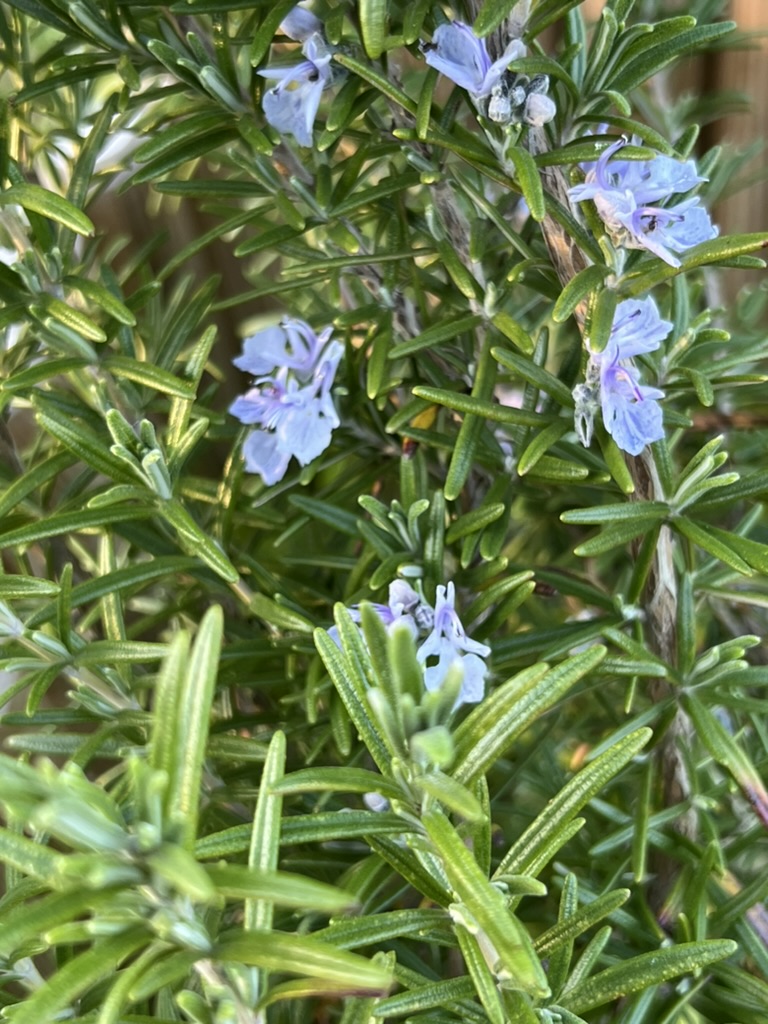
This evergreen, fragrant member of the mint family is almost indispensable in tortoise keeping. Rosemary grows robust and bushy, tolerates drought and heat, and therefore thrives in a heated cold frame too. There it provides permanent cover, shade, and a favourable microclimate. If rosemary does not thrive in the cold frame, the microclimate is usually not right for our tortoises either. A practical tip: where a tortoise tends to tip over, we plant a rosemary with a larger stone next to it – the tortoise can hook itself onto the plant and turn back over.
Common sage (Salvia officinalis)
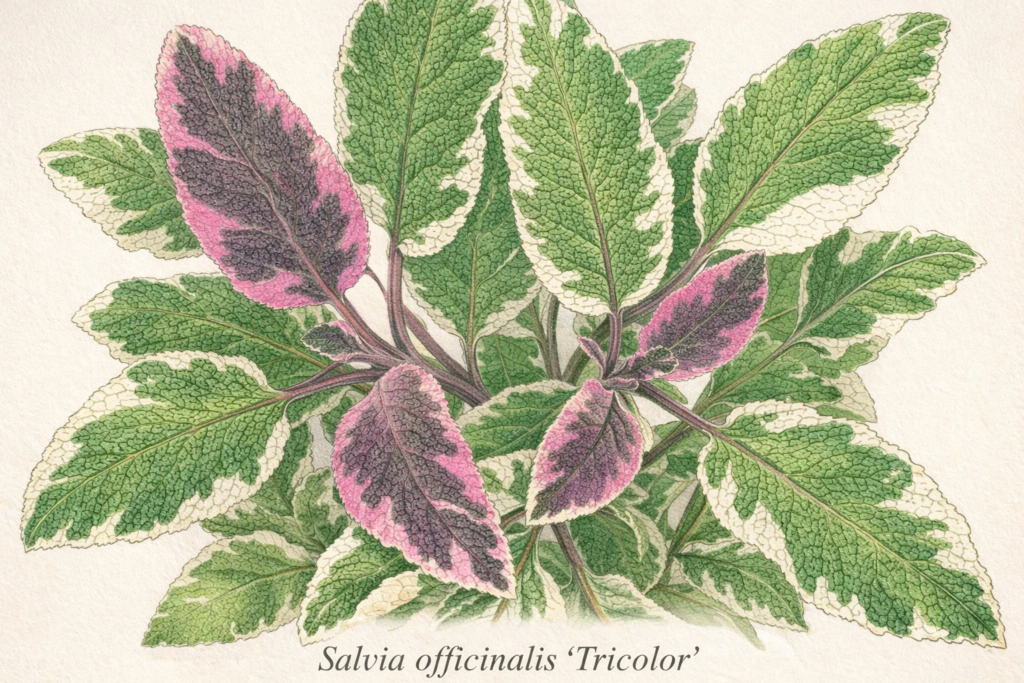
This woody sub-shrub from the Mediterranean is perfectly adapted to heat and drought. Its grey-green, hairy leaves reduce evaporation, and its compact, bushy habit stays stable even in full sun. Beneath the airy plant, the soil stays dry and well ventilated – ideal for warmth-loving tortoises. Sage is lime-loving, tolerates pruning, and becomes frost-hardy once it reaches a certain size; in its first winters, we protect it with earthed-up soil and brushwood.
English lavender (Lavandula angustifolia)
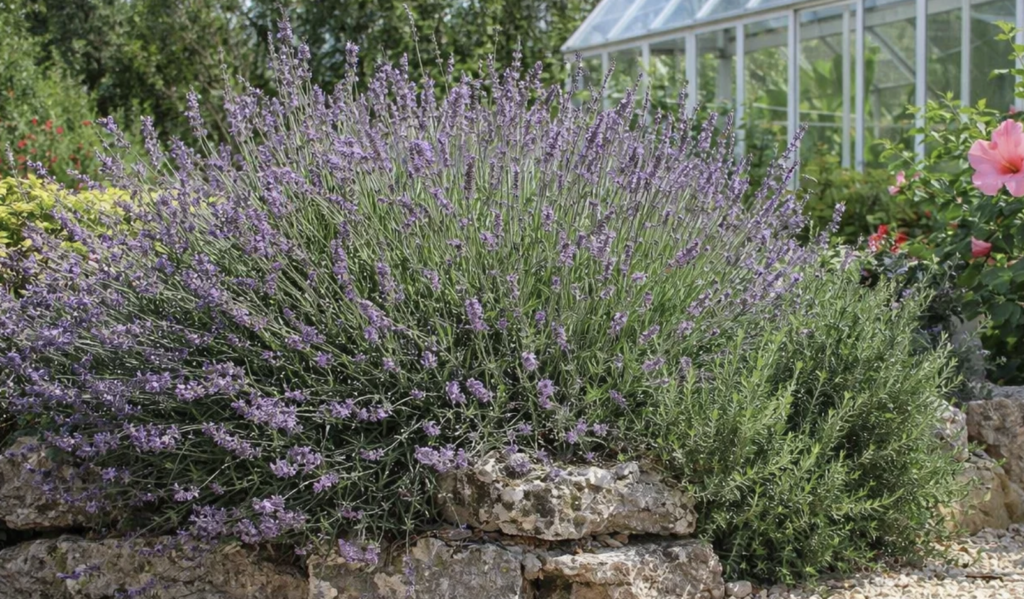
English lavender is best suited to cooler, damper climates, for example the varieties ‘Alba’ and ‘Hidcote’: it is lime-loving, tolerant of heat and drought, and fully hardy. French lavender (Lavandula stoechas), on the other hand, is frost-sensitive. If we start with three lavender plants in a triangle, a dense bush with sheltered retreats soon develops – with plenty of flowers for bumblebees and wild bees.
Willow (Salix spp.)
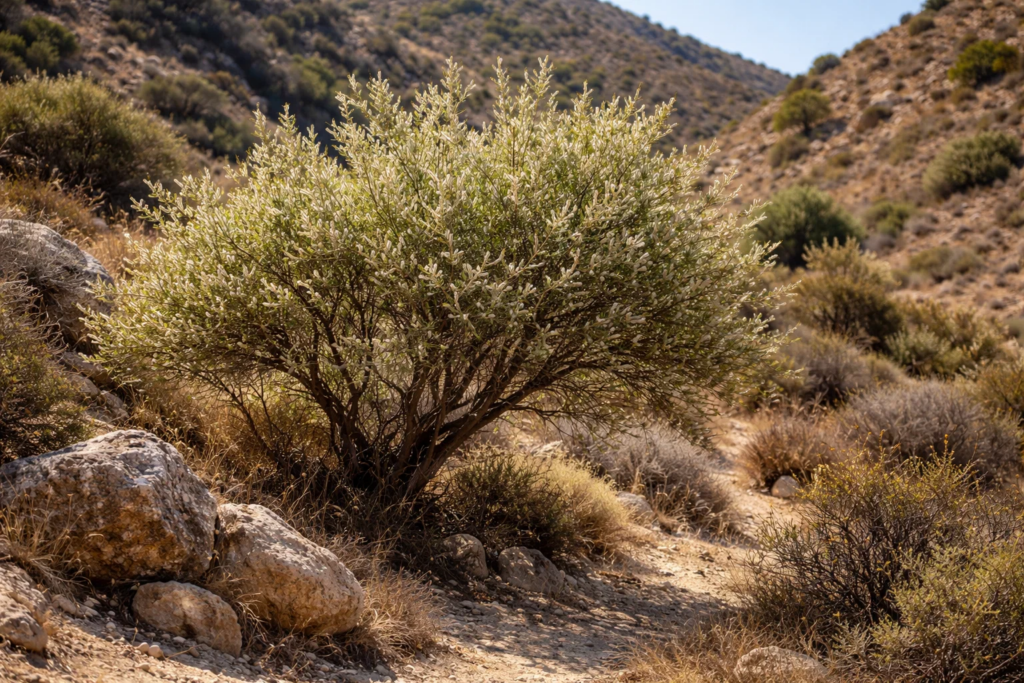
Willows – such as eared, white, or osier willow – are true all-rounders in a naturalistic enclosure. Eared willow also grows in the natural ranges of European tortoises, where it is a popular hiding place. Willows are non-toxic, high in fibre, and low in protein; leaves and young twigs are suitable as supplementary food, also dried in herb hay. Their early catkins are an important food source for insects too.
Dog rose (Rosa canina)
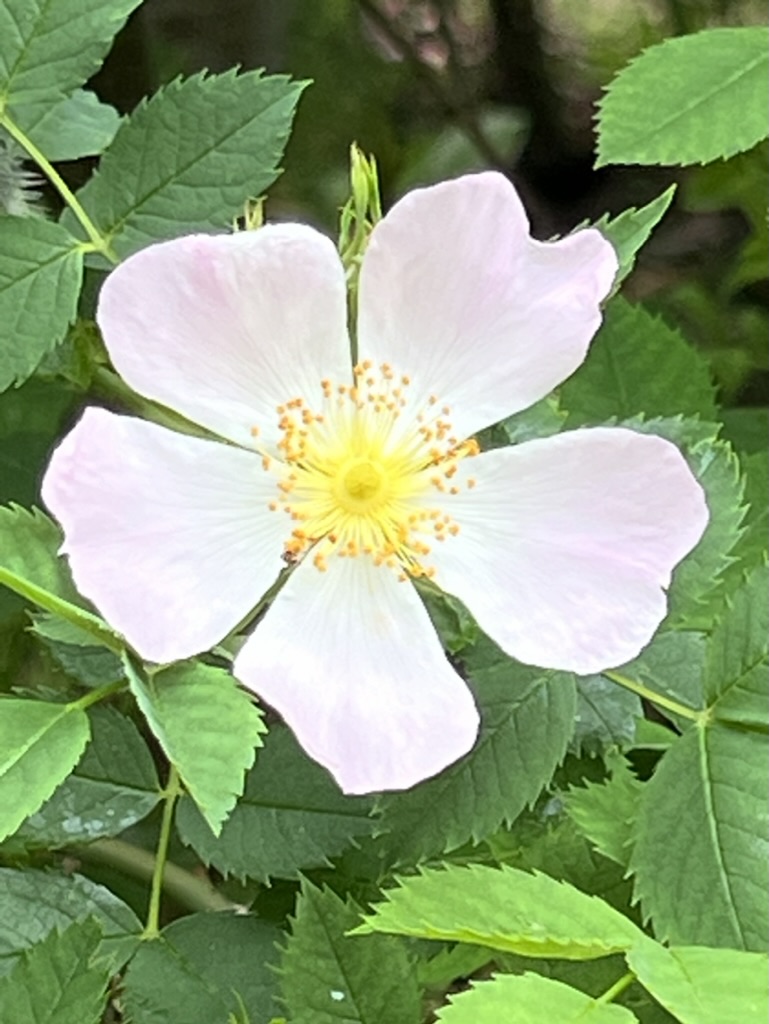
This native wild rose grows throughout Europe, including the southern European habitats, and is extremely robust, long-lived, hardy, and drought-tolerant. It provides screening, gives dappled shade, and suits banks and informal hedges in the enclosure. Its leaves and flowers are valuable food; we offer the sugary hips only very sparingly and dried.
Lady’s mantle (Alchemilla vulgaris)
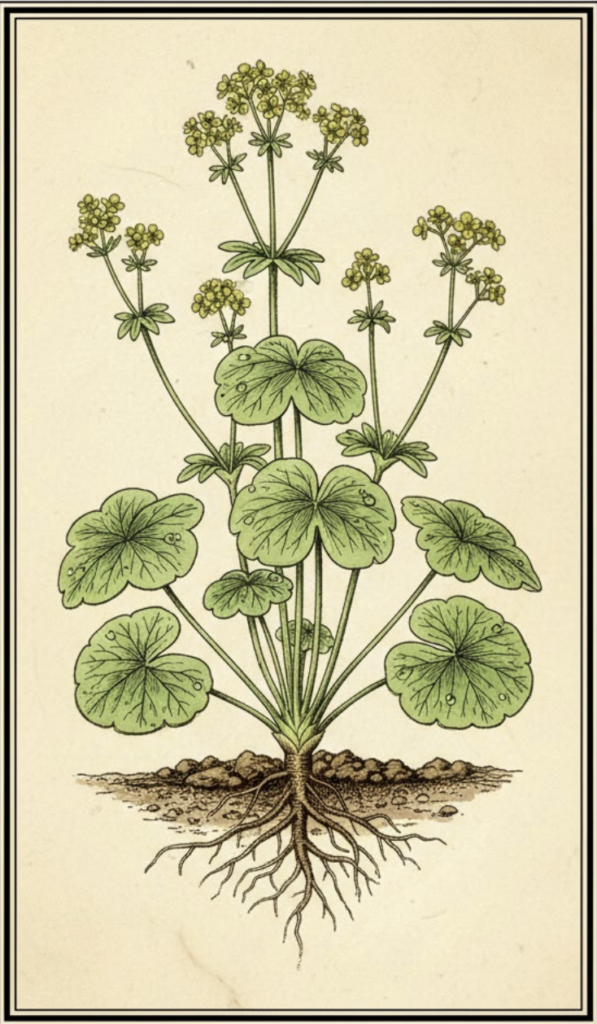
This hardy perennial from the rose family is suitable both as a hiding plant and as occasional food, and contains many secondary plant compounds. Lady’s mantle grows best in humus-rich, rather nutrient-poor loam in sun or partial shade. On limestone gravel, we give it a planting hole about 50 cm wide and deep, filled with soil – then it will grow reliably even in the middle of the enclosure.
Flowering hiding plants
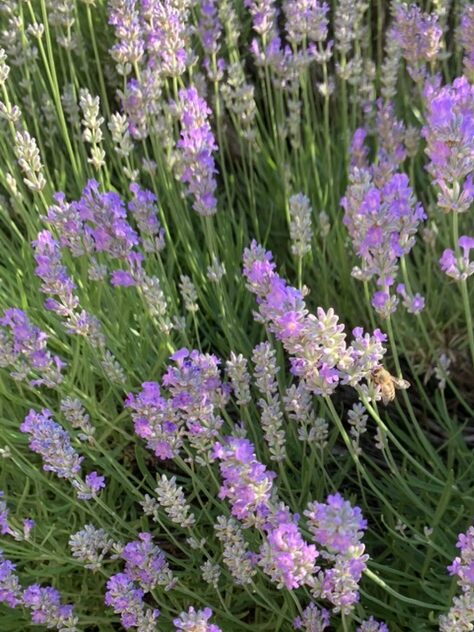
Many hiding plants flower profusely and provide food for bumblebees, wild bees, and butterflies. Loosely growing plants are particularly valuable, as different light and temperature zones develop beneath their branches – so our tortoises can choose for themselves between full sun, dappled shade, or a cooler retreat. An overview of suitable flowering species is given in Flowering hiding plants for the tortoise enclosure (in German).
Important: like all plants in the enclosure, hiding plants must be reliably identified, non-toxic, and uncontaminated. Plants from nurseries, garden centres, or DIY stores only go into the enclosure after several months in quarantine outside it, as they may be contaminated with fertiliser, pesticides, or slug pellets. Which plants do not belong in the enclosure is shown in The Most Important Poisonous Plants for Tortoises.
Related pages: Food Plants for Tortoises · The Most Important Poisonous Plants for Tortoises