A constant temperature level as the basis for low-stress brumation
Make sure that the room in which the refrigerator stands has a room temperature of at least 16 °C in winter, as otherwise the refrigerator’s built-in thermostat will not work reliably. This is very important, however, as we need to bring the refrigerator into a specific temperature range that is as constant as possible.
The equipment needed for stabilising, checking, and safeguarding the refrigerator is listed in the shopping list.
In general, when stabilising the refrigerator, we go only by the temperatures measured in the substrate under the leaves at the back of the box, as this is the coldest area, where the animals are, and the one that needs safeguarding. All sensors therefore go at the back of the boxes, under the leaves and slightly into the substrate. Likewise, once the refrigerator has been successfully stabilised, the UT sensor goes at the back of the coldest box.
Always start stabilising at the refrigerator’s warmest setting and turn it down gradually. Record the minimum and maximum temperatures every day and reset the probe thermometer.
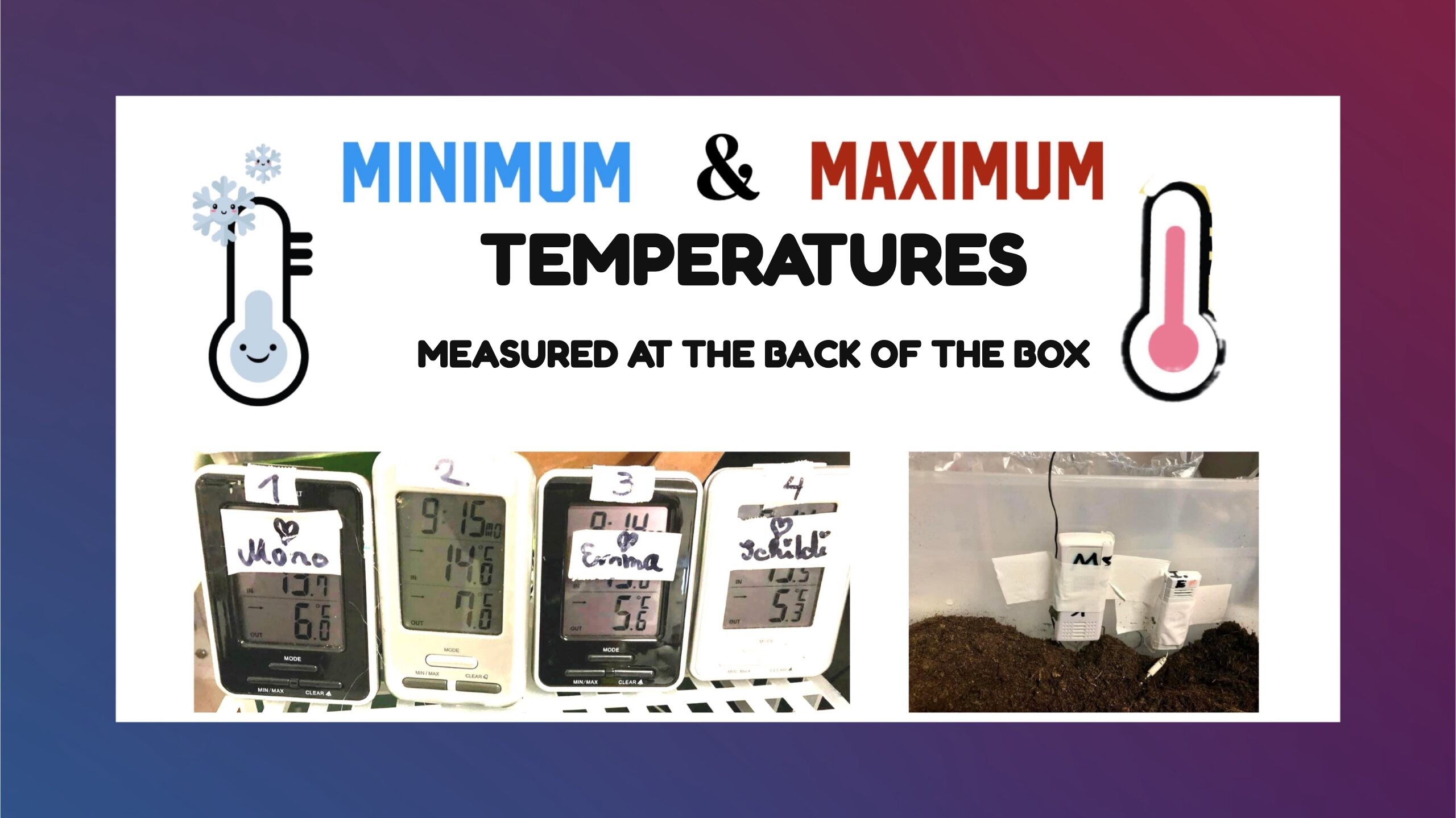
A probe thermometer with a minimum/maximum function goes at the back of each box. Record the values and reset it once a day. It helps to attach a small sticky note to each probe thermometer stating where its sensor is located (e.g. top, middle, bottom…). This way, you can see the temperatures on the individual shelves at a glance. If you have sensors from wireless thermometers or WeatherHub sensors, tape them inside the boxes in the leaf layer with outdoor duct tape, and insert any probes slightly into the soil.
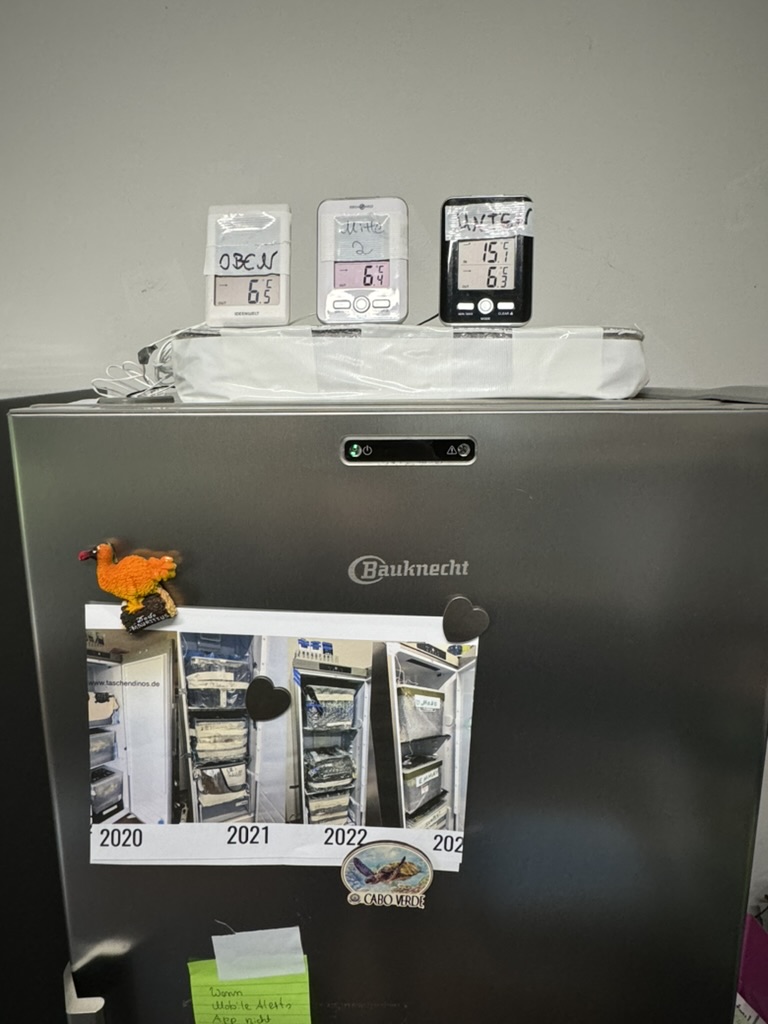
It is important not to tape over the sensor area by mistake. Write on the box with a permanent marker which sensor is in it, to avoid mix-ups. These sensors can then easily be assigned to the animals later.
So we start stabilising at the refrigerator’s warmest setting and gradually approach the optimum range of 4.5–7.5 °C by adjusting the refrigerator, with the ideal range being 5–6 °C.
Bear in mind the temperature of the substrate: it can take several days to adjust to the temperature in the refrigerator. When it is cool enough outside, it can therefore make sense to pre-cool the brumation boxes outdoors.
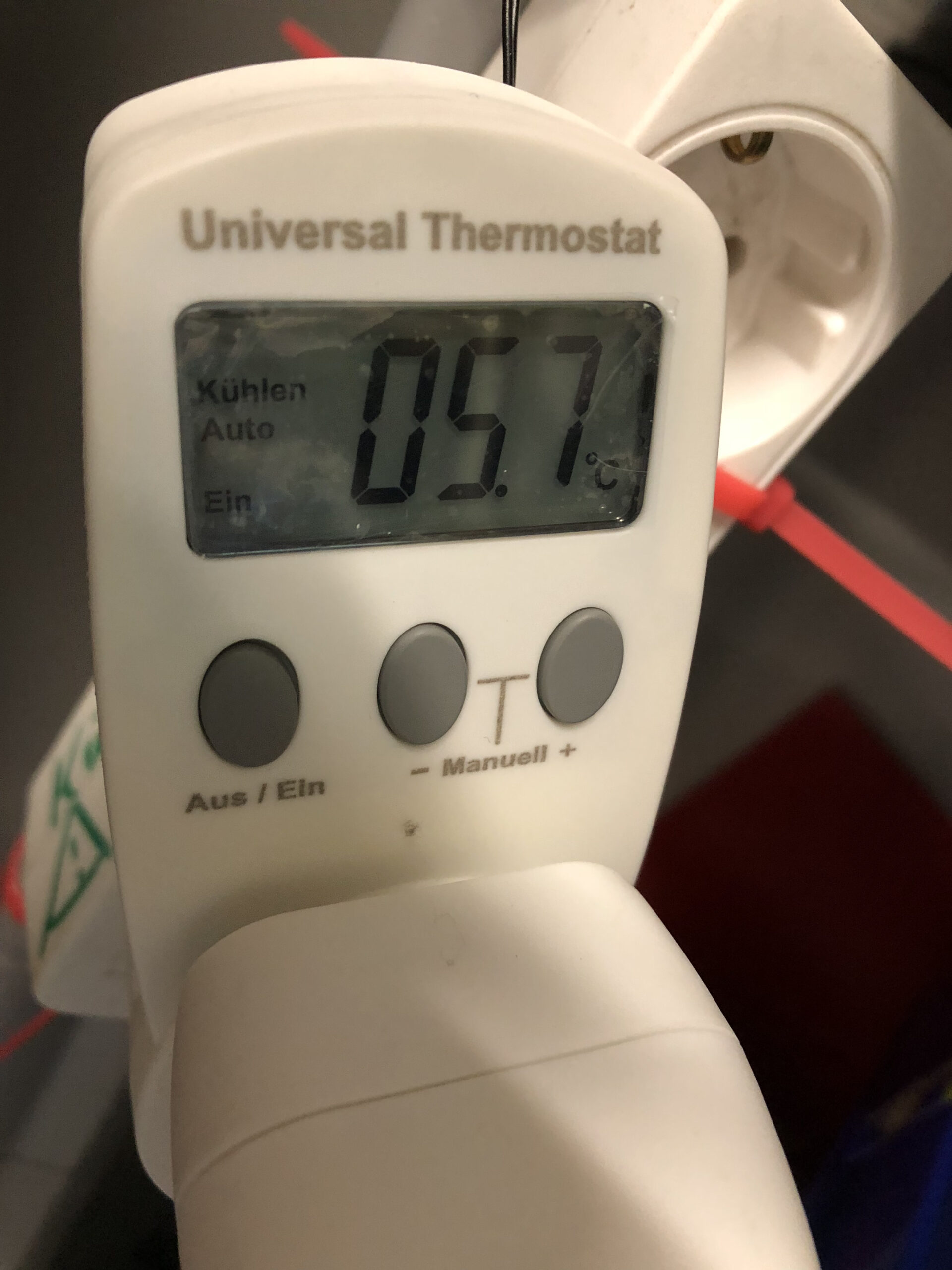
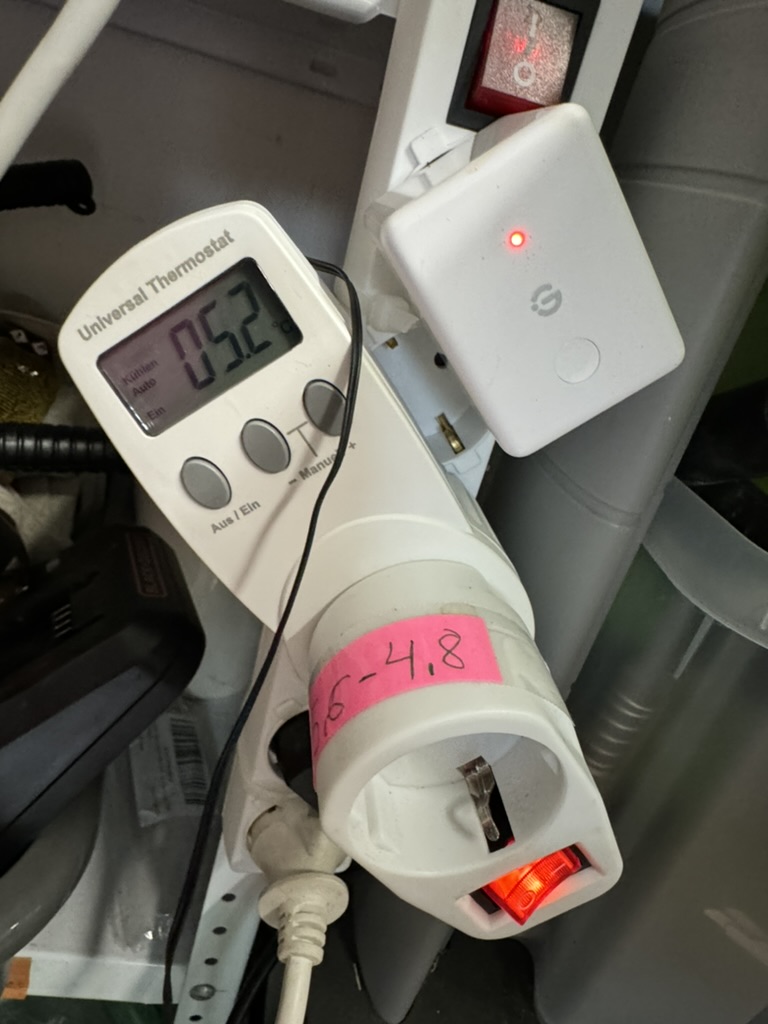
The universal thermostat, the UT300 from Equiva, is not yet connected at this stage. The refrigerator itself should generally stay within the optimum range, with the UT300 serving only as an “emergency cut-off”.
All the information, in a handbook you can refer to at any time: the Refrigerator Brumation Handbook.