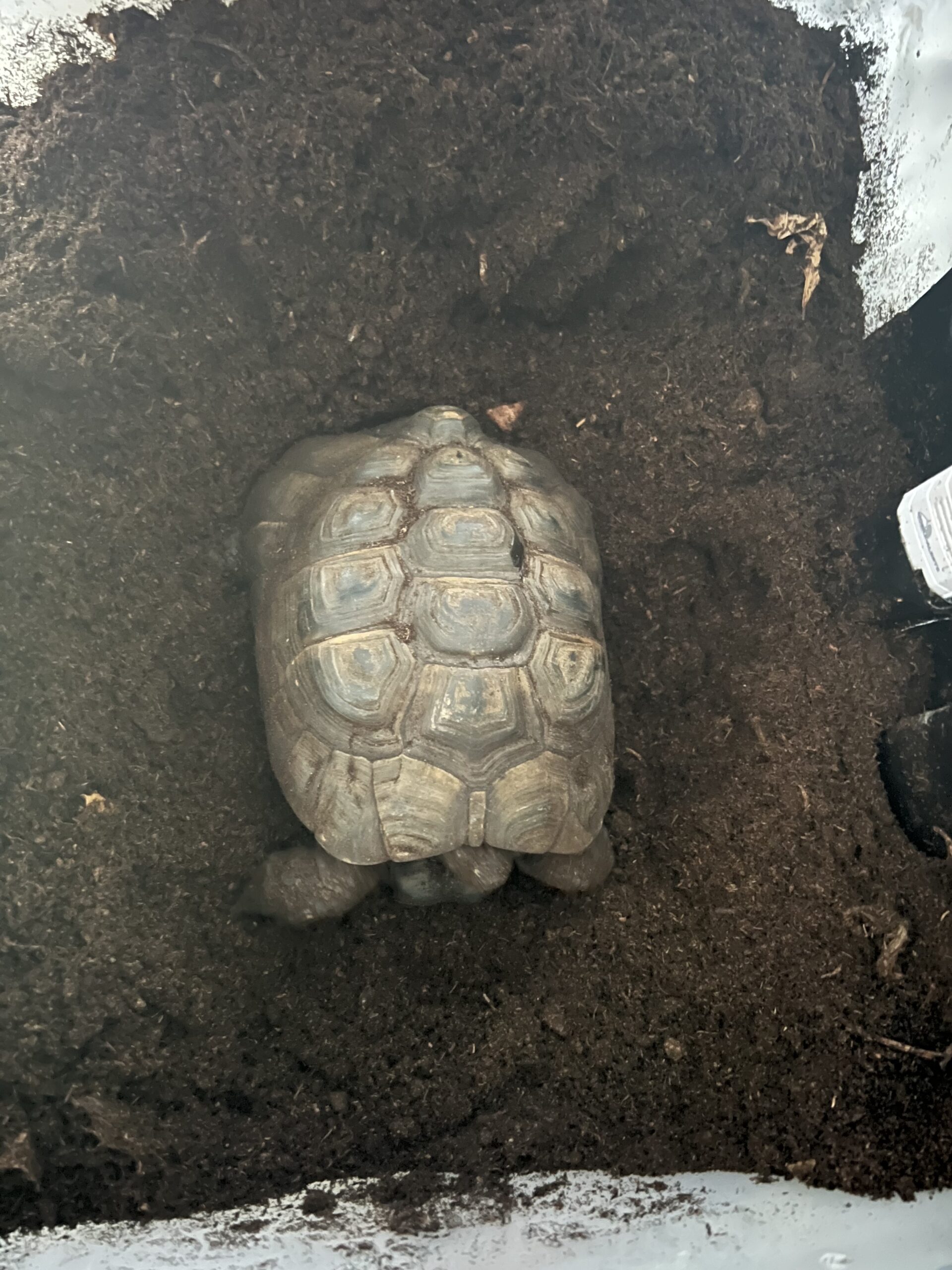
Editorial note: Weeks 1–4 constitute the usual gradual temperature-reduction period. Weeks 5–6 concern resting and established brumation in the cold frame. Testudo graeca ibera from warmer southern habitats may require a slower individual schedule.
The final stage: stable brumation conditions
By Week 6, the usual four-week reduction has finished and the basic ambient temperature should generally be around 5–6 °C. This week focuses on allowing the tortoises to rest and enter established brumation, rather than continuing a routine six-week cooling programme. Weather conditions must support suitably low temperatures. Patience is essential; unnecessary interventions should be avoided.

Individual exception: spur-thighed tortoises
Some keepers reduce temperatures later for Testudo graeca from warmer parts of southern Spain or southern Turkey, reflecting the climate of the origin region. These tortoises may only now be reaching the brumation range of 5–6 °C. If still above that range, reduce by no more than 1 °C per day. While animals remain active, keep the warm UV basking lamp available for five hours daily at 35 °C at shell height, and continue to offer food and fresh bathing water. Once all have remained buried and inactive for about a week, the lamp can be switched off. This represents an exception to the standard timetable.

Resting, occasional emergence and brumation
As ambient temperatures remain below 8 °C, activity decreases and tortoises withdraw into a resting phase before established brumation. Some may reappear to bask, bathe or pass faeces and urates even after a few quiet days. Do not switch the basking lamp off too early. Give animals time to follow their own pace, while reliably maintaining safe environmental conditions.

Check temperatures at the tortoises, not only at the thermostat
Thermostats alone do not establish the actual temperatures experienced by the animals. A heater must have sufficient capacity to maintain the set temperature, especially during frost. Insufficient heating can lead to severe cold injury. A properly controlled greenhouse heater may be necessary.
- For buried animals, position a probe in the soil between the tortoise and the cold external wall.
- For animals at the surface, measure at the side of the shell with an infrared thermometer and at tortoise height with a separate probe.
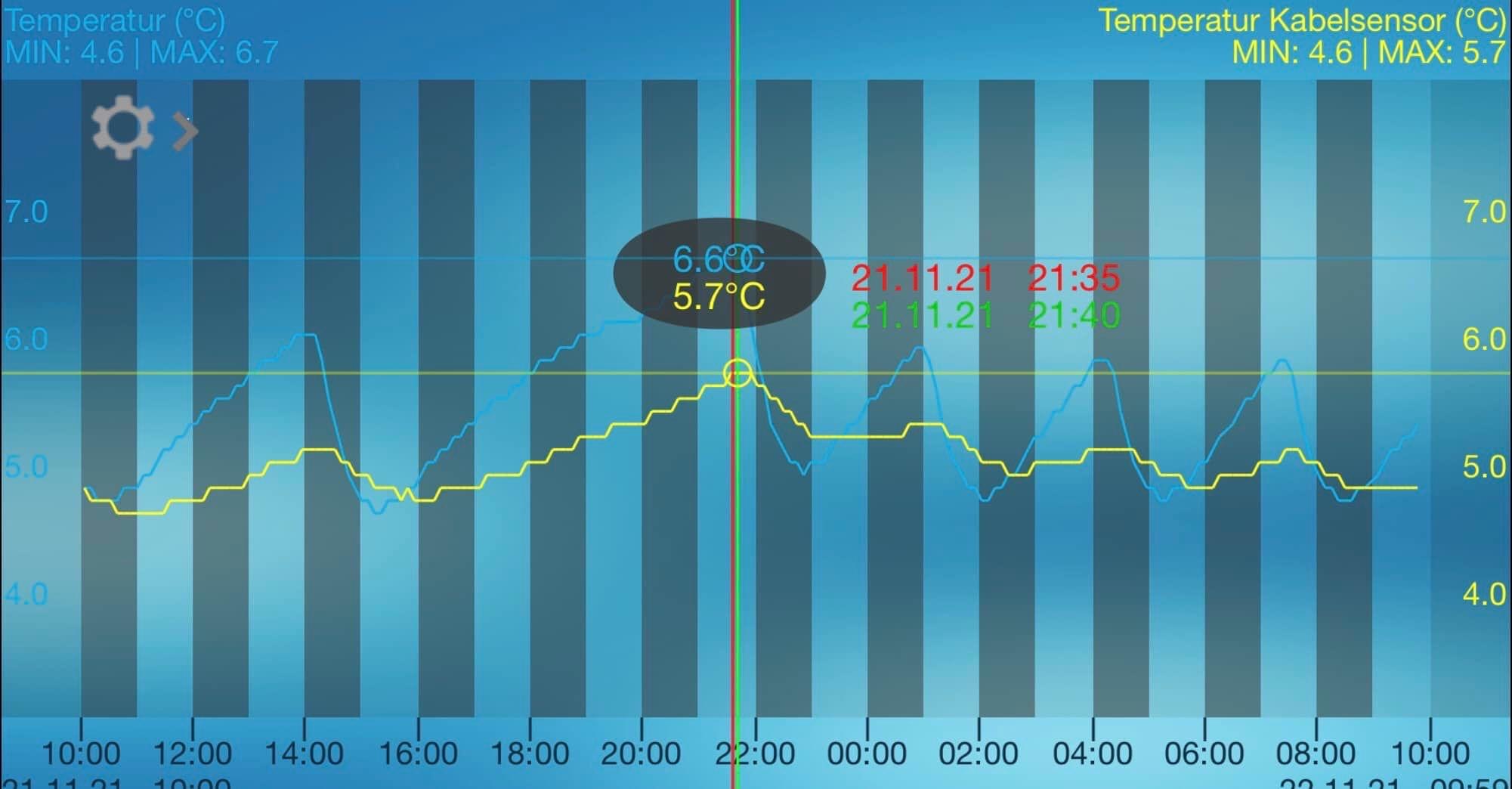
- Monitor soil and air temperatures, preferably with independent smart temperature sensors and alarms.
WeatherHub and Mobile Alerts systems can transmit measurements to a gateway and smartphone app, allowing temperature alarms to be configured. Infrared thermometers are also useful for substrate surfaces and animals resting above ground, but measurements should be interpreted carefully in cold conditions.
Positioning the thermostat and thermometer sensors
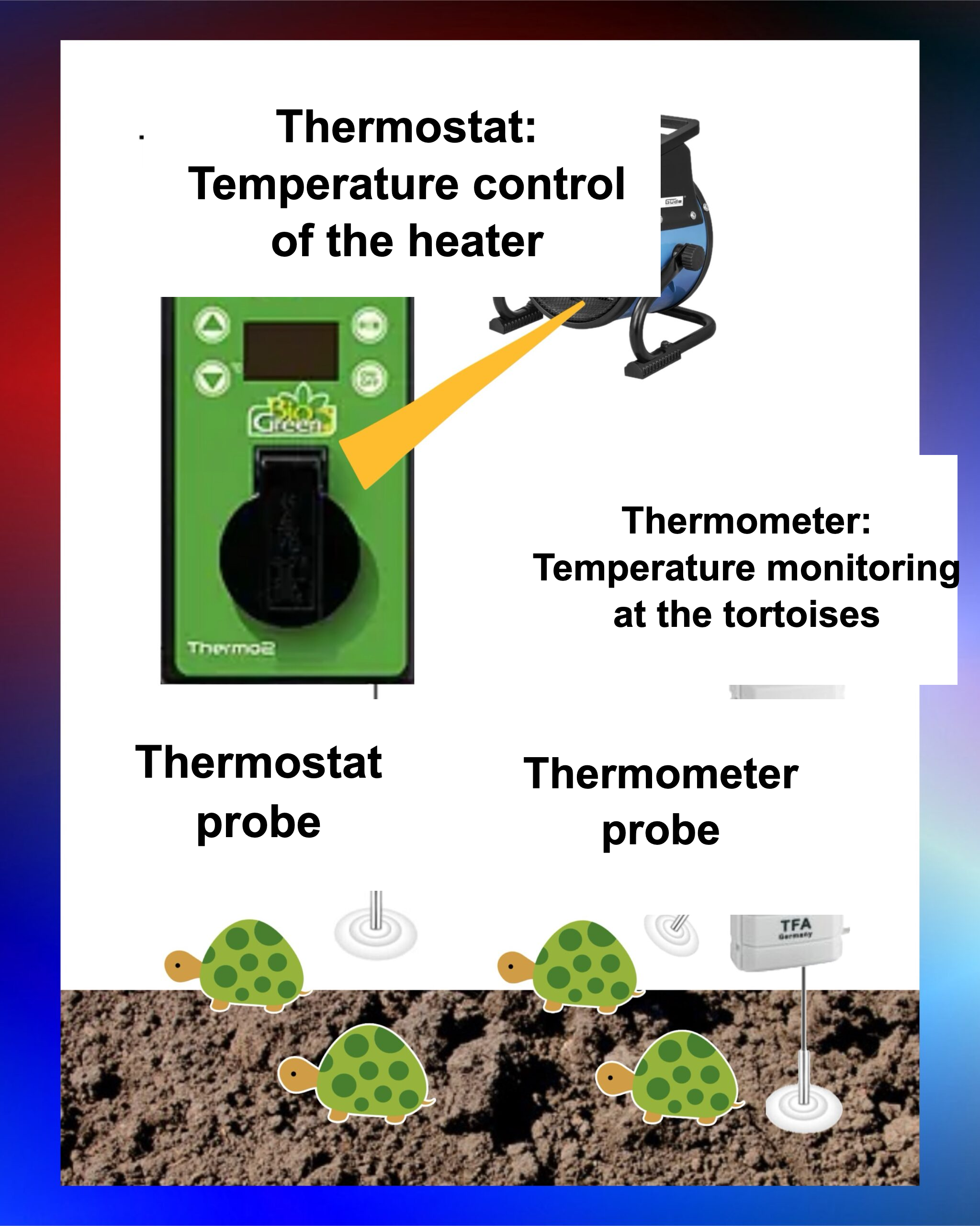
Place the thermostat sensor controlling the heater just above the soil surface, rather than burying it. Temperature-monitoring probes, by contrast, can follow the tortoises down into the substrate. Monitor the temperature at the surface while any animals remain there.
Pit brumation: what should be done?
For tortoises brumating in a pit protected against frost and predators, the basking lamp can be switched off after all animals have been inactive for about a week. The pit area may then be filled with loose beech leaves. Beech leaves retain their structure and are relatively resistant to mould. Remember that insulation works in both directions: a thick leaf layer may also reduce the heat reaching the animals from a heater.
Protect temperatures around 5–6 °C and allow for thermostat hysteresis. In a sleeping shelter, make sure the tortoises remain within the heated area. A two-stage system using a lid heater backed up by a greenhouse heater may provide additional security where appropriate.
After at least one week, preferably two, at continuously below 8 °C, a cold frame can be insulated with rigid foam boards and bubble wrap to stabilise temperatures and reduce the greenhouse effect. A motion-alert camera can assist with monitoring tortoises and potential predators.

Fire safety: If using a ceramic or other dark radiant heater, keep all combustible material, including straw, leaves and timber, well away from the heated area. Greenhouse fan heaters may be preferable. Check nearby temperatures regularly and keep spare heating and thermostat equipment.

Finish testing and securing the refrigerator
The refrigerator should already remain reliably within 4.5–7 °C at all occupied positions, measured at the back of the boxes under the leaves and slightly into the substrate. Before connecting the emergency cut-off, compare simultaneous readings from independent thermometers and the UT300 probe in the coldest box. Test the system without animals and confirm it operates as a safety cut-off rather than a routine refrigerator controller. Specific settings require final verification against the current English handbook.
Refrigerator Brumation Handbook
Refrigerator Brumation Checklist
Transfer only animals in established brumation
When tortoises have been firmly in brumation in the cold frame at consistently below 8 °C for about one to two weeks, they may be transferred to the thoroughly tested and independently safeguarded refrigerator. Before transfer, weigh and briefly check each animal. Place it in a shallow hollow in the substrate, cover the carapace with substrate while leaving the head area well clear, then add the leaves on top.
Around 6 December may be a useful seasonal reference but is not a fixed date; the temperature record and animals’ condition determine the appropriate time. A suitable traditional vaulted cellar may be an alternative only if its winter temperature conditions have been verified over an extended period and appropriate safety precautions are in place. Modern insulated cellars, lofts, garden sheds and barns generally do not provide the required stable conditions.
Moving Tortoises into the Refrigerator
Final reminder
The complete programme is four weeks of gradual temperature reduction followed by approximately one to two weeks of resting and established brumation in the cold frame. Warm-origin populations may need a slower individual transition. Never transfer an awake animal simply because a particular date has arrived.