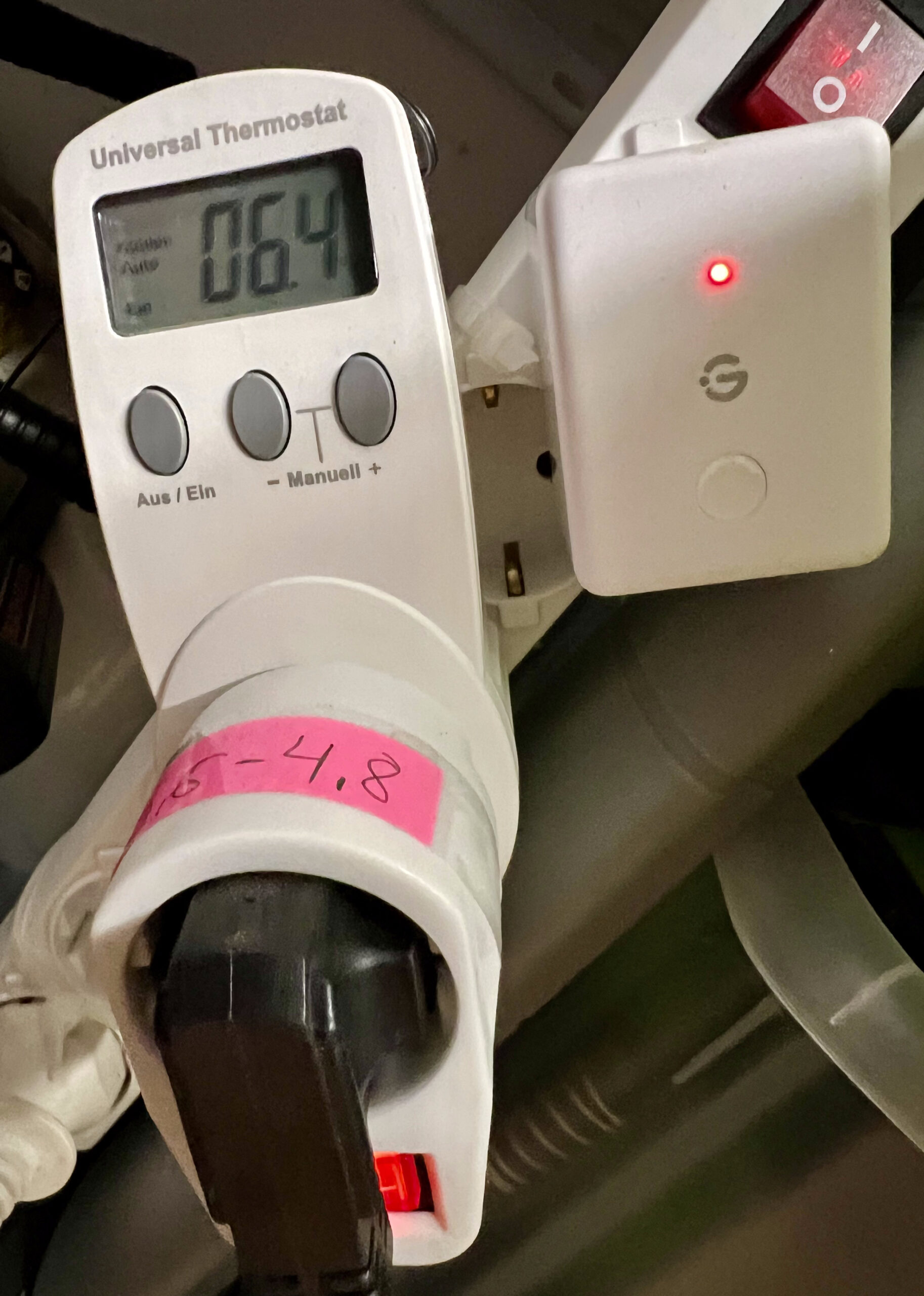
The hysteresis of a thermostat refers to the band, or difference, between its switch-on and switch-off temperatures. In tortoise husbandry it is generally used to reduce the frequency with which a greenhouse heater’s cycles switch on and off, which can both increase efficiency and reduce wear on mechanical parts. Hysteresis is also called a „switching delay“. On some thermostats the hysteresis is fixed and cannot be changed, so it is worth checking before buying whether the thermostat you want offers this option, and, if not, how wide its preset hysteresis is.
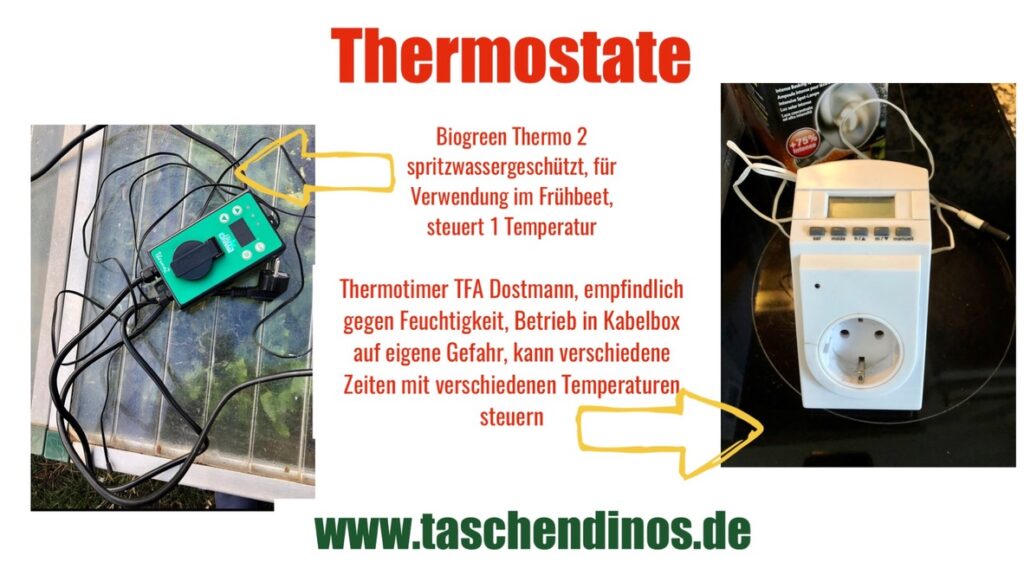
For safety reasons, cheap thermostats from unreliable sources are strongly discouraged. Wherever possible, a thermostat that is fully splash-proof should be bought for use in a cold frame. Otherwise, the thermostat must be housed in a waterproof dry box outside the cold frame, to protect it from heat and moisture.
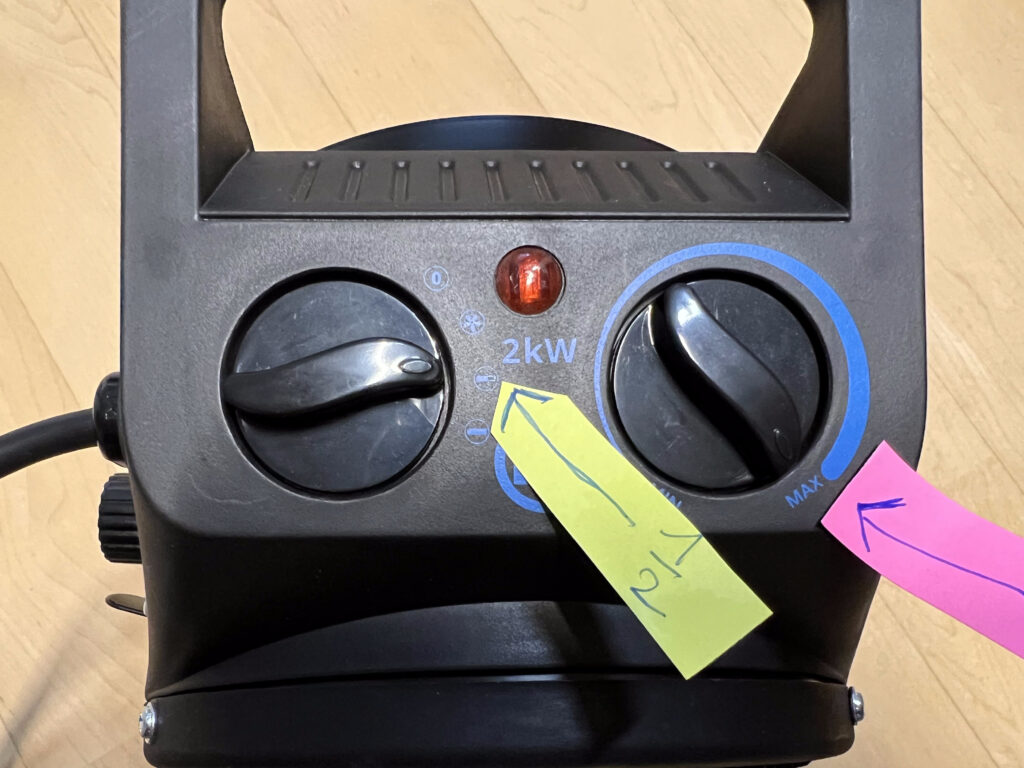
It is important to know that UV lamps, whether self-ballasted combination lamps or HID lamps (with an external ballast), can never be controlled via thermostats.
1. Switch-on/switch-off point: a thermostat without hysteresis would switch on and off constantly as soon as the setpoint temperature is reached or deviates even slightly. With a set hysteresis, however, there is a „buffer zone“.
2. Stability and efficiency: hysteresis means the heating system runs for longer but switches on and off less often. This can result in a more stable temperature and improve the system’s efficiency, since frequent switching often uses more energy and increases wear on mechanical parts. Overall, hysteresis contributes to system stability by preventing unwanted, rapid cycling, which in turn allows for a steadier room temperature.
Greenhouse heating: small hysteresis
If the setpoint temperature is, for example, set to 20 °C and the hysteresis is 1 °C, the heating system might switch on at 19.5 °C and already switch off again at 20.5 °C. This narrow hysteresis requires frequent switching, which can significantly shorten the service life of the controlled device.
Greenhouse heating: larger hysteresis
A larger hysteresis on a thermostat means the heater switches less often. The reason lies in the wider temperature band the system allows before switching on or off.
1. A larger buffer zone
When the hysteresis is increased, the gap between the switch-on and switch-off temperatures becomes wider. For example, a system with a 4 °C hysteresis and a setpoint of 20 °C might switch on at 18 °C and switch off at 22 °C.
2. Less frequent switching
With this wider temperature band, the heater is activated and deactivated less often. This means it runs for longer once switched on, and also stays off for longer before switching on again.
3. Advantages and trade-offs
While less frequent switching extends the service life of system components, too large a hysteresis can cause the base temperature in the cold frame to fluctuate more. This could jeopardise the tortoises‘ welfare, and when safeguarding brumation it could lead to dangerous temperatures. Temperatures during pit brumation for European tortoises must never fall below 4 °C.
Choosing the right hysteresis is therefore a compromise between protecting the equipment and the comfort level provided. For this reason, a moderate hysteresis band of around 2 °C is often chosen for heating control in tortoise husbandry, to protect both comfort and equipment in roughly equal measure.
Hysteresis on a thermostat used as an emergency cut-off
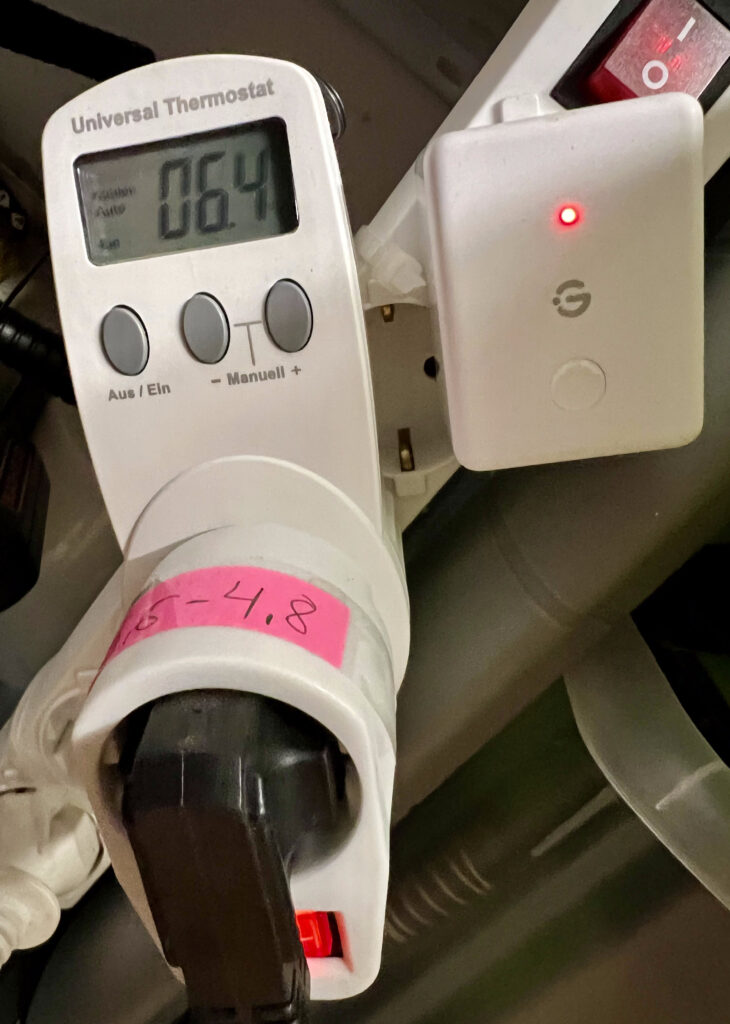
When a thermostat is used as an emergency cut-off for a refrigerator at a particular temperature, such as below 4 °C, the choice of hysteresis is important for the safe and efficient operation of the refrigerator. In this case, the ideal hysteresis depends on several factors. Generally, the minimum and maximum temperatures should be measured at the back of the coldest box in the refrigerator. The switch-on („ON“) temperature should sit within the measured maximum, but no higher than 5.8 °C. The switch-off („OFF“) temperature should be set below the measured minimum, but not below 4.3 °C. More on programming the UT300 can be found here.
1. Safety and sensitivity requirements:
Since this is an emergency cut-off, it is important that the refrigerator is switched off reliably as soon as the temperature falls below a certain point, to prevent frost damage, for example. A smaller hysteresis can help here, allowing for precise intervention and minimising temperature swings.
2. System stability: too small a hysteresis, however, could cause the refrigerator to switch on and off too often, which could increase wear and reduce efficiency. The hysteresis should therefore not be set too narrow, to avoid unnecessary cycling.
3. Energy efficiency and temperature accuracy: a medium hysteresis can be a good compromise, reducing switching frequency while still allowing relatively tight temperature control. For cooling systems, temperature consistency is important for safety. Overall, it is often sensible to choose a relatively small to moderate hysteresis to ensure precise temperature control without placing too much strain on the system. The appropriate hysteresis also depends on the specific application and the technical characteristics of the refrigerator. In critical applications it would also be advisable to seek professional advice, to ensure that the device configuration is both optimal and safe.