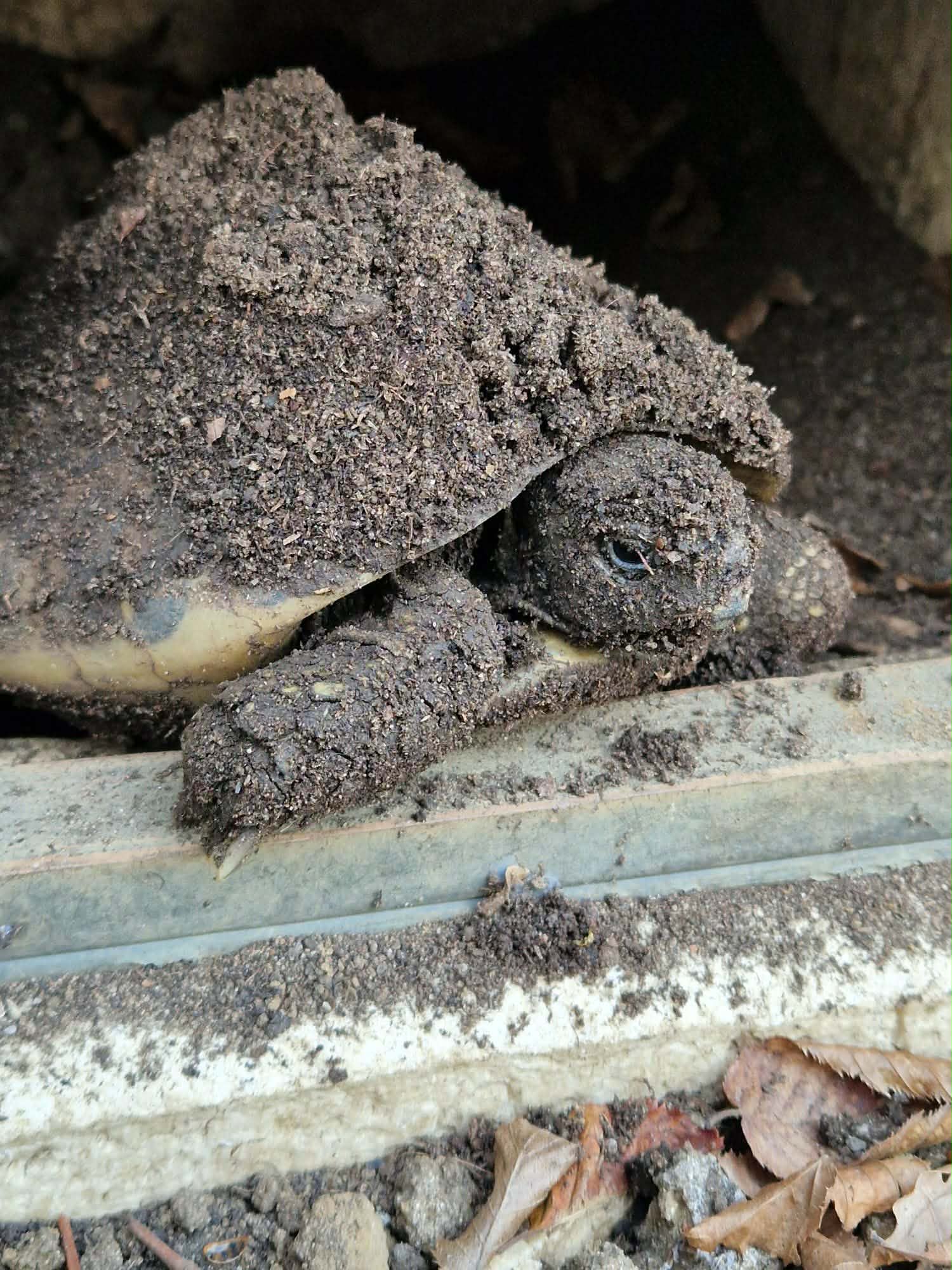
Problems After Brumation
There are several ways in which European tortoises may experience difficulties after emerging from brumation, and some of these require veterinary investigation.
Veterinary sources describe a number of typical post-brumation problems and warning signs that may occur when tortoises wake from brumation. These problems can affect both tortoises emerging from controlled refrigerator brumation and animals that have brumated in a protected outdoor brumation pit.
For more information about controlled brumation, see the TASCHENDINOS guide to controlled hibernation of European tortoises in a refrigerator.
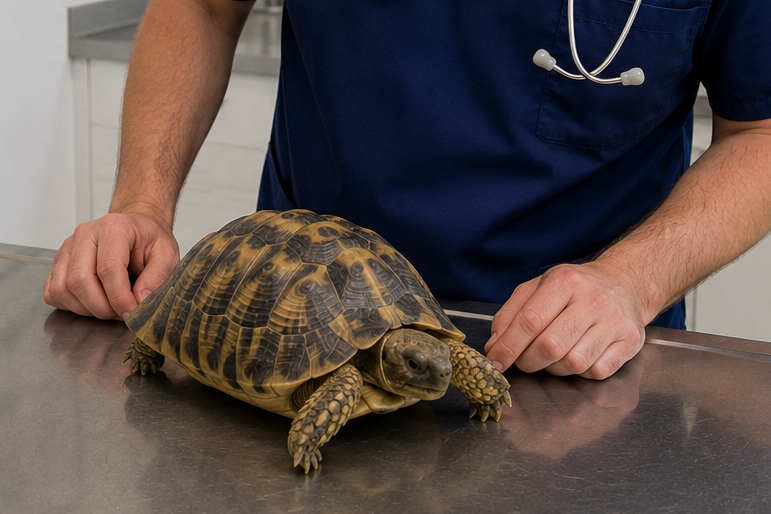
Important Warning Signs
Watch particularly carefully for:
- persistent loss of appetite 7–10 days after waking (1/2)
- no water intake for more than 48 hours (2)
- no or markedly delayed passing of faeces or urine over several days (4)
- lethargy, lack of activity or a delayed response to warmth and light (3)
- weight loss or failure to regain a normal weight pattern compared with the animal’s condition before brumation (5)
- eye problems, redness, breathing difficulties, wounds or unusual mucus or deposits in the mouth, which may indicate infection (4)
Difficulties during recovery after brumation should be assessed by a reptile veterinarian.
Practical Advice After Brumation
During the first one to two weeks after waking, tortoises should be observed every day. Check the whole animal carefully and, if there is any uncertainty about its progress, monitor its weight so that unusual changes can be detected at an early stage.
If a tortoise is not eating, develops redness, fails to pass faeces or urine, or remains noticeably lethargic, veterinary assessment by a reptile veterinarian is strongly recommended.
Appropriate warmth, light and UV provision are particularly important during this phase. Further background information can be found in Technology for the Species-Appropriate Keeping of European Tortoises and Let’s Talk About UV.
Post-Brumation Anorexia
Post-brumation anorexia is recognised in veterinary literature. It describes a condition in which a tortoise fails to resume eating for an abnormally prolonged period after brumation.
One veterinary summary describes affected tortoises as animals that have not drunk for 48 hours or more or have not eaten for one week or more. Tortoises showing these signs will usually require treatment. (See source 2.)
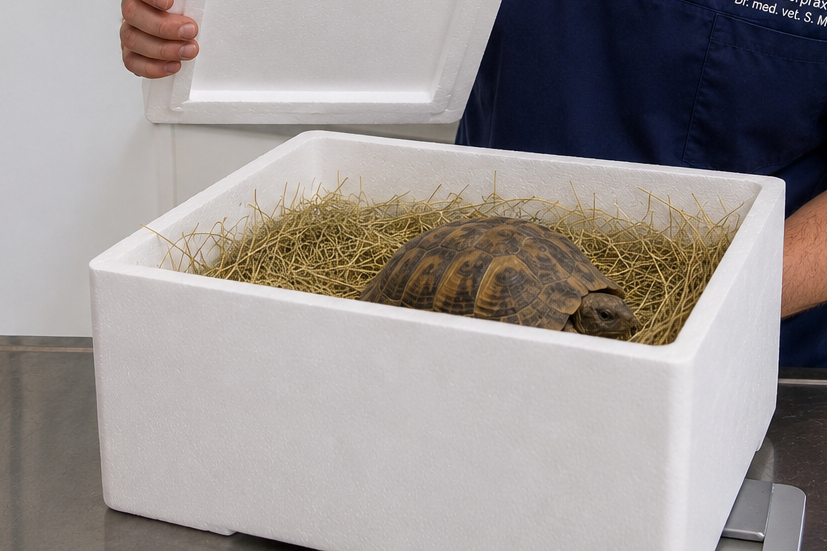
Transporting a Tortoise to the Vet
If a veterinary visit is necessary, ask the practice beforehand to what temperature the tortoise should be warmed for the consultation.
European tortoises can be transported safely in an insulated polystyrene box containing hay.
Online Sources on Post-Brumation Problems in Tortoises
1. Buchsbaum S, et al. – Post-brumation anorexia in tortoises: a case study, Veterinary Record
A veterinary case report dealing with post-brumation anorexia.
PubMed – Post-hibernation anorexia in tortoises
2. The Webinar Vet – Post-Hibernation Anorexia (PHA) in Tortoises
A clinical overview of post-brumation anorexia, its possible causes and practical management.
The Webinar Vet – Post-Hibernation Anorexia
3. Tortoise Trust – Common Post-Hibernation Problems in Tortoises
An overview of common post-brumation problems, including signs to look out for and appropriate responses.
Tortoise Trust – Common Post-Hibernation Problems in Tortoises
4. Royal Veterinary College – Tortoise Post-Hibernation Checks
Veterinary guidance on post-brumation care and important warning signs.
Royal Veterinary College – Tortoise Post-Hibernation Checks
5. Vet Times – Solving Common Hibernation Complications in Tortoises
This article discusses health problems that can occur during or after brumation and how veterinary surgeons diagnose and treat them. It also covers preparation for safer brumation, including pre-brumation health checks and suitable temperatures of approximately 4–7 °C, with the aim of reducing complications such as dehydration, renal problems and stomatitis.
Vet Times – Solving Common Hibernation Complications in Tortoises
Scientific Literature
6. Buchsbaum S, et al. – Post-hibernation anorexia in tortoises: A case study. Veterinary Record
This case series describes the clinical presentation of post-hibernation anorexia and the therapeutic measures used.
More English resources: