Editorial note: Weeks 1–4 constitute the usual gradual temperature-reduction period. Weeks 5–6 concern resting and established brumation in the cold frame. Testudo graeca ibera from warmer southern habitats may require a slower individual schedule.
Night-time temperatures approach the brumation range
Aim: continue the gentle reduction towards winter brumation. This is the third of four standard temperature-reduction weeks, not the beginning of refrigerator brumation.
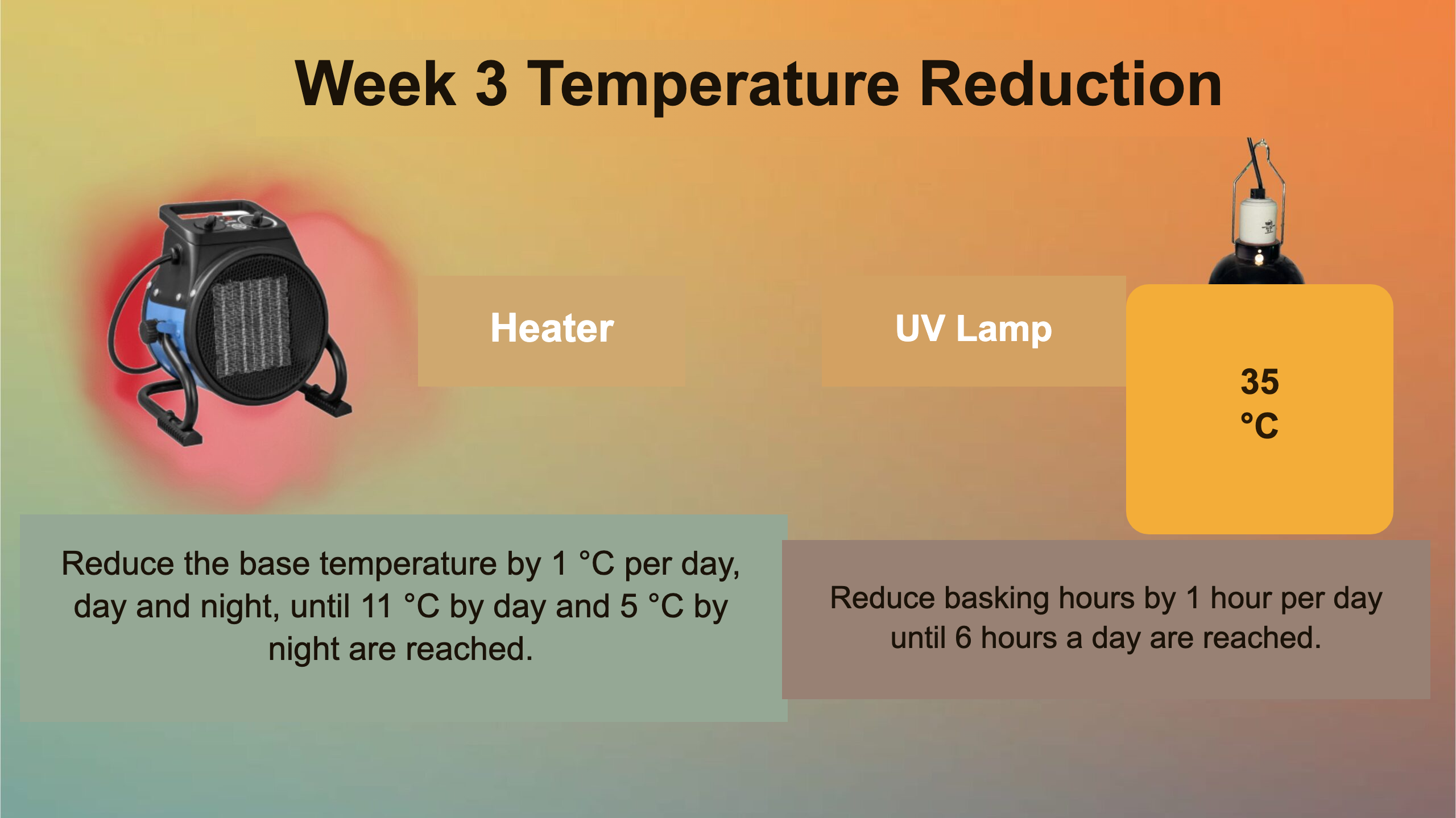
Hermann’s and marginated tortoises
- Testudo hermanni boettgeri, T. h. hermanni and Testudo marginata: approximately 5 °C at night and 11 °C by day.
- Reduce temperatures by no more than 1 °C per day.
- Continue the UV basking spotlight for six hours daily, with a local temperature of 35 °C at shell height.
- Initially lower temperatures each day, then allow several days for the tortoises to adjust.

Spur-thighed tortoises from southern habitats
Testudo graeca ibera from warmer habitats may be reduced more slowly to reflect local climate and the shorter brumation periods often seen in these populations. At this stage, target approximately 10 °C at night and 16 °C by day. Continue the basking lamp for seven hours at 35 °C at shell height, reducing ambient temperature by no more than 1 °C per day. This slower schedule is an explicit exception to the four-week standard.

Forced Bathing – A Former Husbandry Practice
Food and water
Continue to offer food and fresh bathing water to all tortoises. Do not impose fasting or force-bathe them.

Important: do not transfer yet
Withdrawal and sleep are not necessarily established brumation. When the temperature at the tortoises remains consistently below 8 °C, the animals gradually enter brumation. Even animals that have been hidden for some time should not be moved prematurely. Transferring resting rather than fully brumating tortoises can cause stress and lead to waking in the refrigerator.

Wait until the animals have remained consistently below 8 °C, day and night, for approximately one to two weeks, are fully inactive, and the refrigerator has been thoroughly tested and protected with an emergency cut-off thermostat before attempting a transfer.
Preparing the refrigerator at this stage
Complete test-running the refrigerator without animals. Place one probe thermometer at the back of each box, beneath the leaves and slightly into the substrate. Check and record minimum and maximum temperatures daily. Set the refrigerator thermostat gradually to keep all boxes within 4.5–7 °C. Connect an independently tested emergency cut-off thermostat once stable. The emergency device is not the normal controller.

Refrigerator Brumation Checklist
Refrigerator Brumation Handbook
Remember
- Patience avoids unnecessary stress.
- Only fully brumating animals should be transferred to the refrigerator.
- Transferring too early is a common beginner’s mistake.

