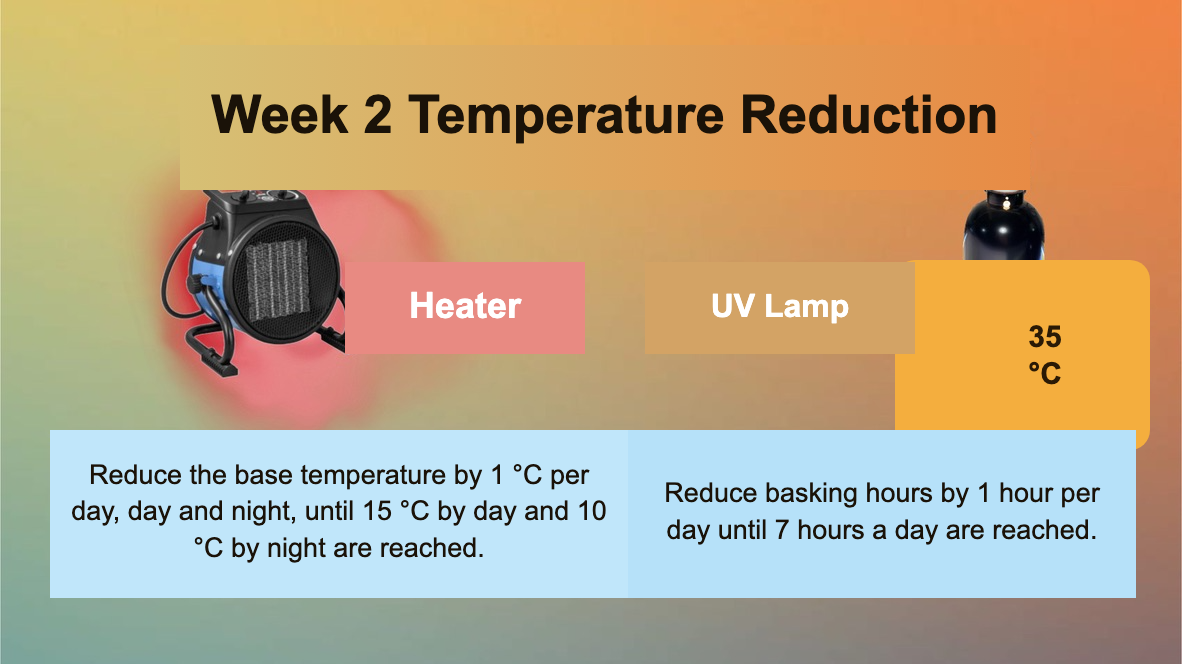
Week 2 of four weeks of gradual temperature reduction. Weeks 5–6 are primarily a period of rest and established brumation in the cold frame, not two additional weeks of routine cooling. Spur-thighed tortoises from warmer habitats may need a slower schedule.
A gentle transition towards the resting phase
As the days grow shorter and sunlight becomes weaker, Mediterranean tortoises begin preparing for winter brumation. A gradual reduction in temperatures allows their bodies to adjust to changing seasonal conditions. If you have only just begun reducing temperatures, start with Week 1.
Long-term climate patterns
Long-term habitat data show a noticeable temperature drop from early November. We therefore continue to lower temperatures gradually, carefully observing each tortoise.
| Location | Average temperatures | Conditions |
|---|---|---|
| THB – Platamonas | 8–14 °C | Noticeable cooling from early November |
| THH – Pollença, Mallorca | 10–17 °C | Mild, but cooler nights |
| TGI – Marmaris | 11–22 °C | Comparatively warm, but cooling |
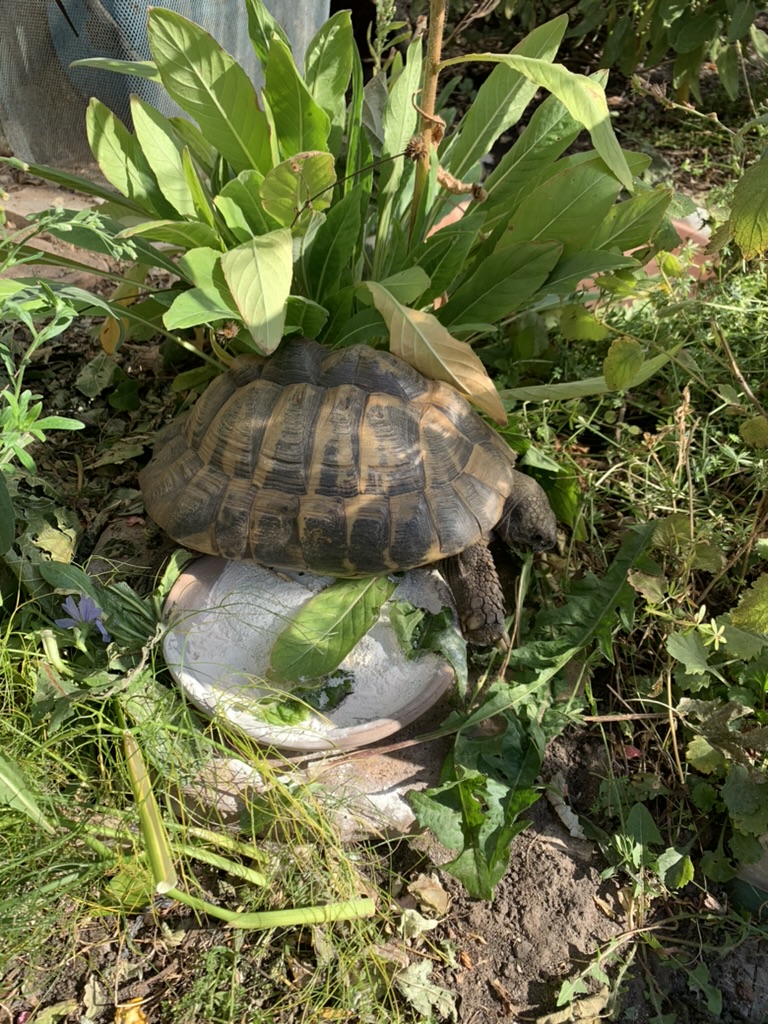
Hermann’s and marginated tortoises
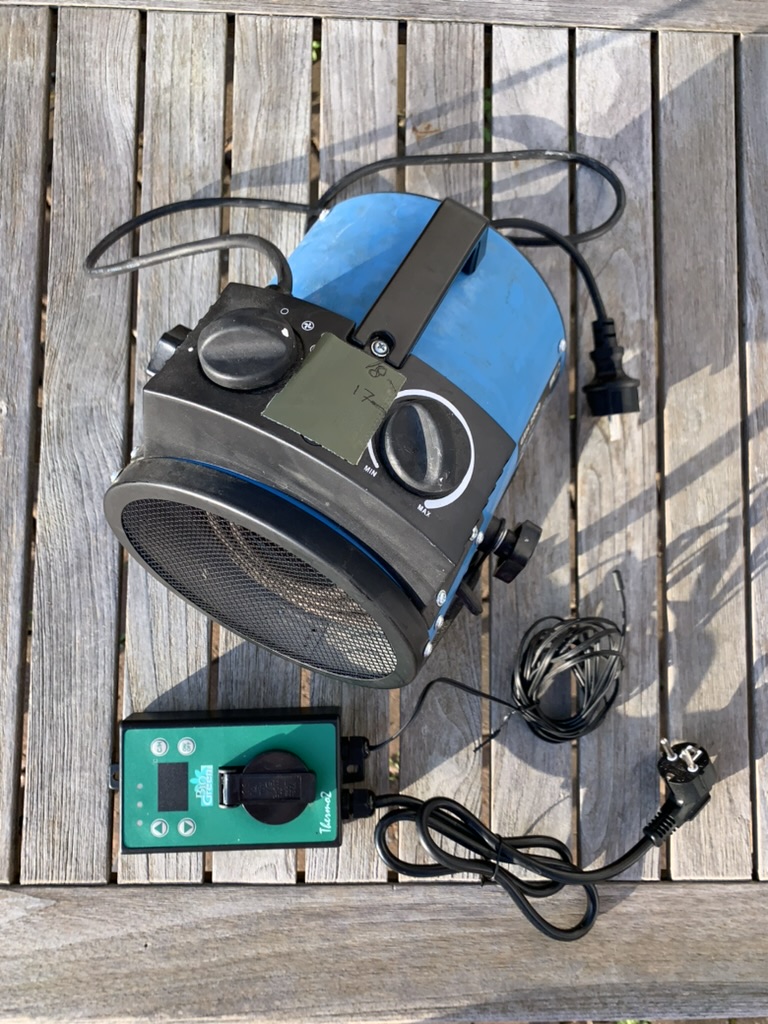
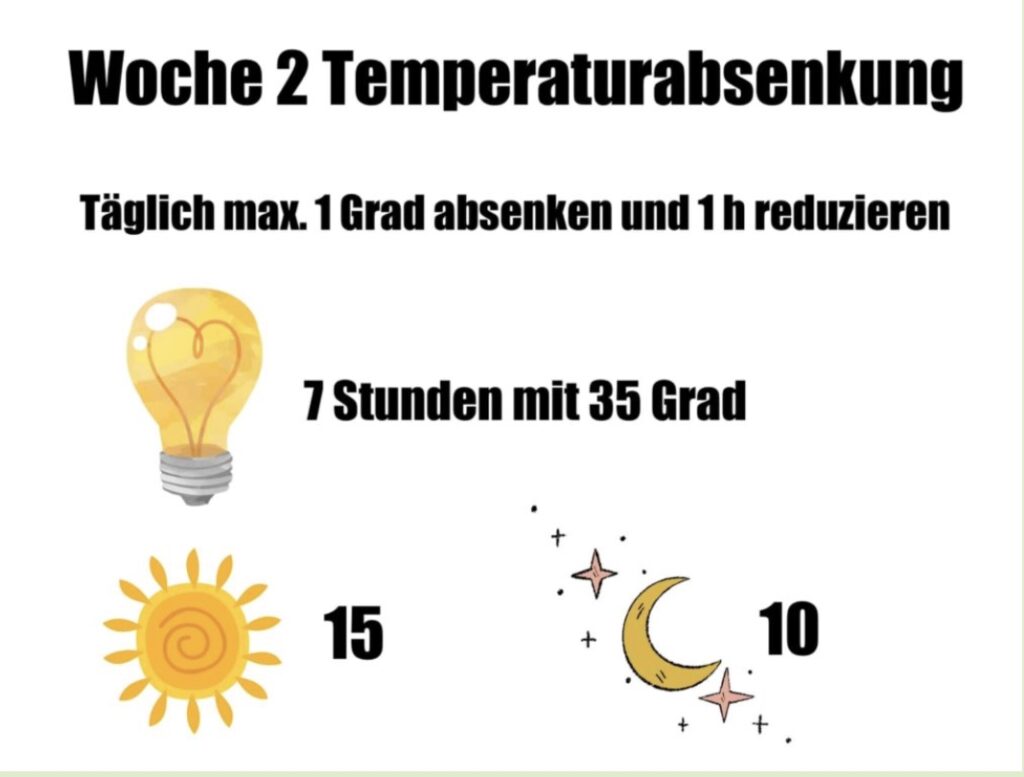
For Testudo hermanni hermanni, T. h. boettgeri and T. marginata, use a thermostat to lower ambient temperatures gradually over several days: approximately 10 °C at night and 15 °C during the day. Do not reduce temperatures by more than 1 °C per day.
Spur-thighed tortoises (Testudo graeca ibera)
For tortoises originating from warmer southern habitats, a gentler schedule may be appropriate: gradually reduce to approximately 15 °C at night and 20 °C by day, again by no more than 1 °C per day. If the precise origin is known, consult the relevant habitat climate tables. This may mean a longer preparation period than the standard four-week temperature reduction.
Light and warmth remain essential
Keep the basking lamp (UV spotlight) available for seven hours per day, providing approximately 35 °C at shell height. This enables tortoises to warm themselves and maintain metabolic activity when needed. Switch the lamp off only towards the end of preparation after all tortoises have remained buried and inactive for several days. Continue offering food and fresh water until they have withdrawn completely.
Bathing: only in exceptional circumstances
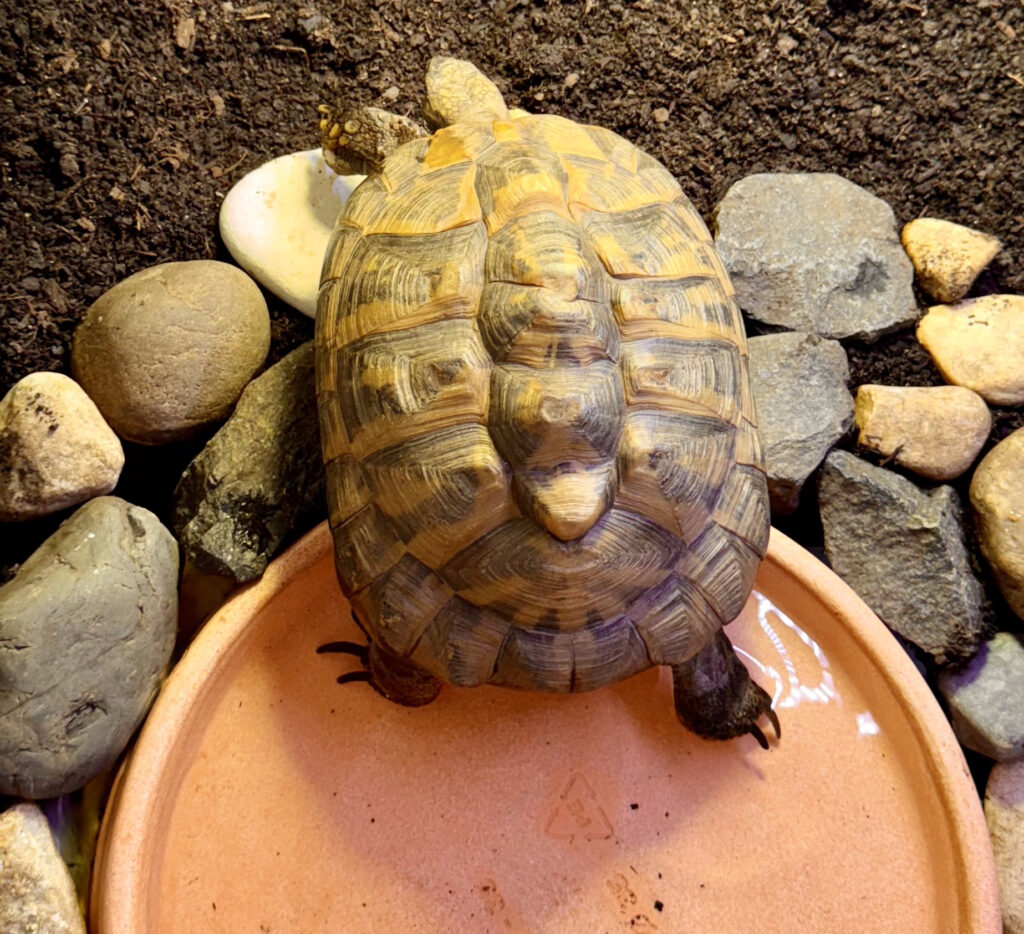
Do not force healthy tortoises to bathe during brumation preparation unless a reptile vet advises it. Animals kept in vivaria may be dehydrated and may occasionally need placing in their bathing dishes, while still being allowed to leave freely. See Forced Bathing – A Former Husbandry Practice.
Safe refrigerator brumation: prepare now
This is the time to obtain a dedicated refrigerator for brumation. Place it in a heated room where the ambient temperature does not fall below 16 °C. Unheated garages, sheds and cellars are unsuitable because temperature regulation may become unreliable. A full-height refrigerator without an icebox or freezer compartment is preferred. Keep the rear drainage channel clear.
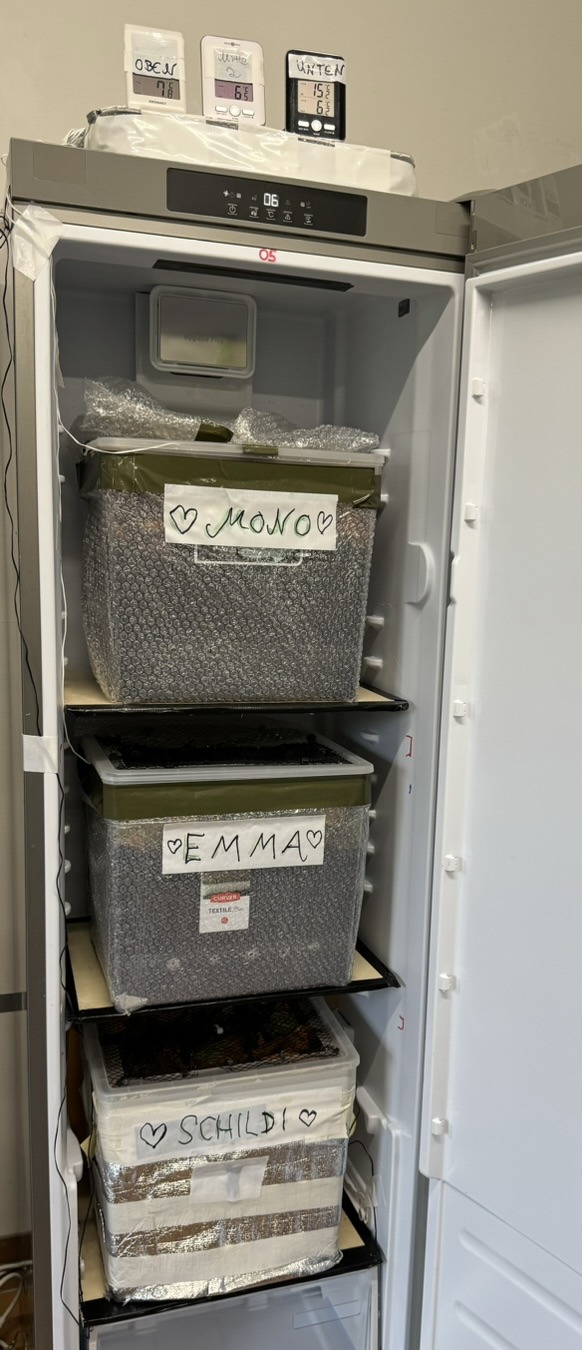
Test-run the refrigerator without animals until all occupied shelves and boxes remain consistently within 4.5–7 °C. Measure towards the back of each box, under the leaves and slightly within the substrate. See Refrigerator Brumation Checklist.
Choosing the right brumation box
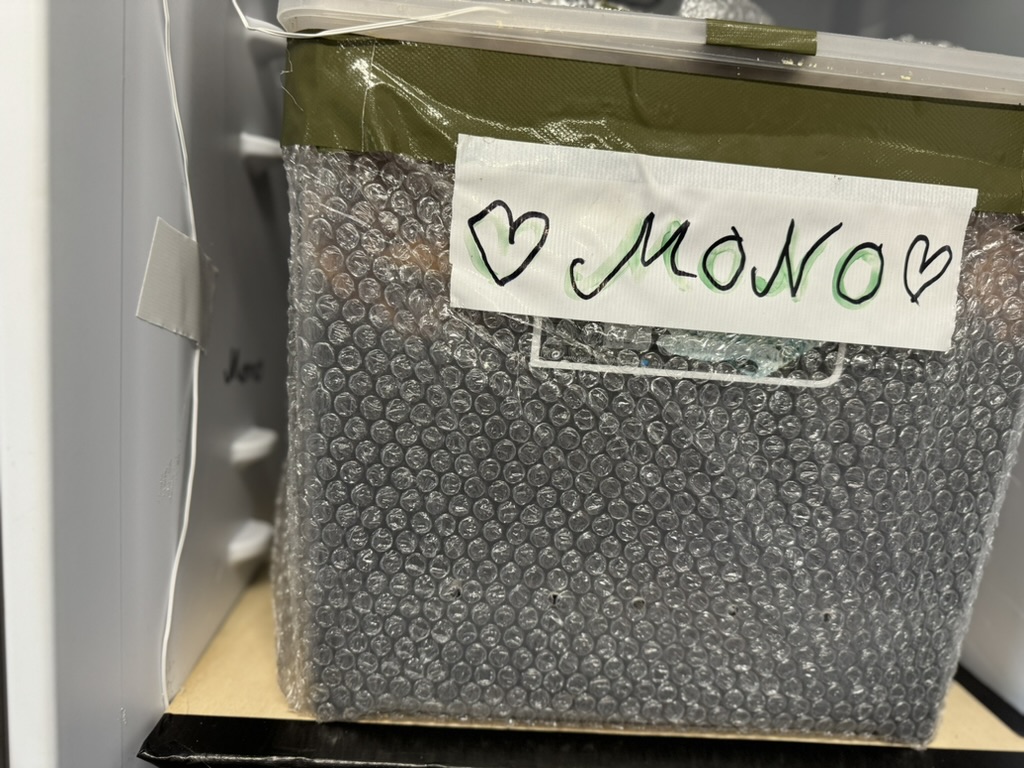
Use a sturdy plastic box in which the tortoise can turn comfortably. Add loose sieved soil or suitable tortoise substrate to a depth of at least three shell heights, then a similarly thick layer of dry beech leaves. Keep the box clear of the refrigerator walls to avoid cold spots and condensation entering the box.
A securely closing lid fitted with mesh prevents escape following a power failure. Small holes in the sides and base help prevent waterlogging. Bubble wrap, foil-backed insulation or polystyrene at the rear can help stabilise temperatures. All equipment must be tested before any animal is transferred.
Further guidance is available in the TASCHENDINOS Refrigerator Brumation Handbook.
Conclusion
Patiently reducing temperatures and daily basking time, while preparing the brumation environment, helps reproduce the seasonal transition. The gradual cooling continues through Weeks 3 and 4. Only afterwards should tortoises be allowed to settle into a period of rest and established brumation in the cold frame before any transfer.