General overview
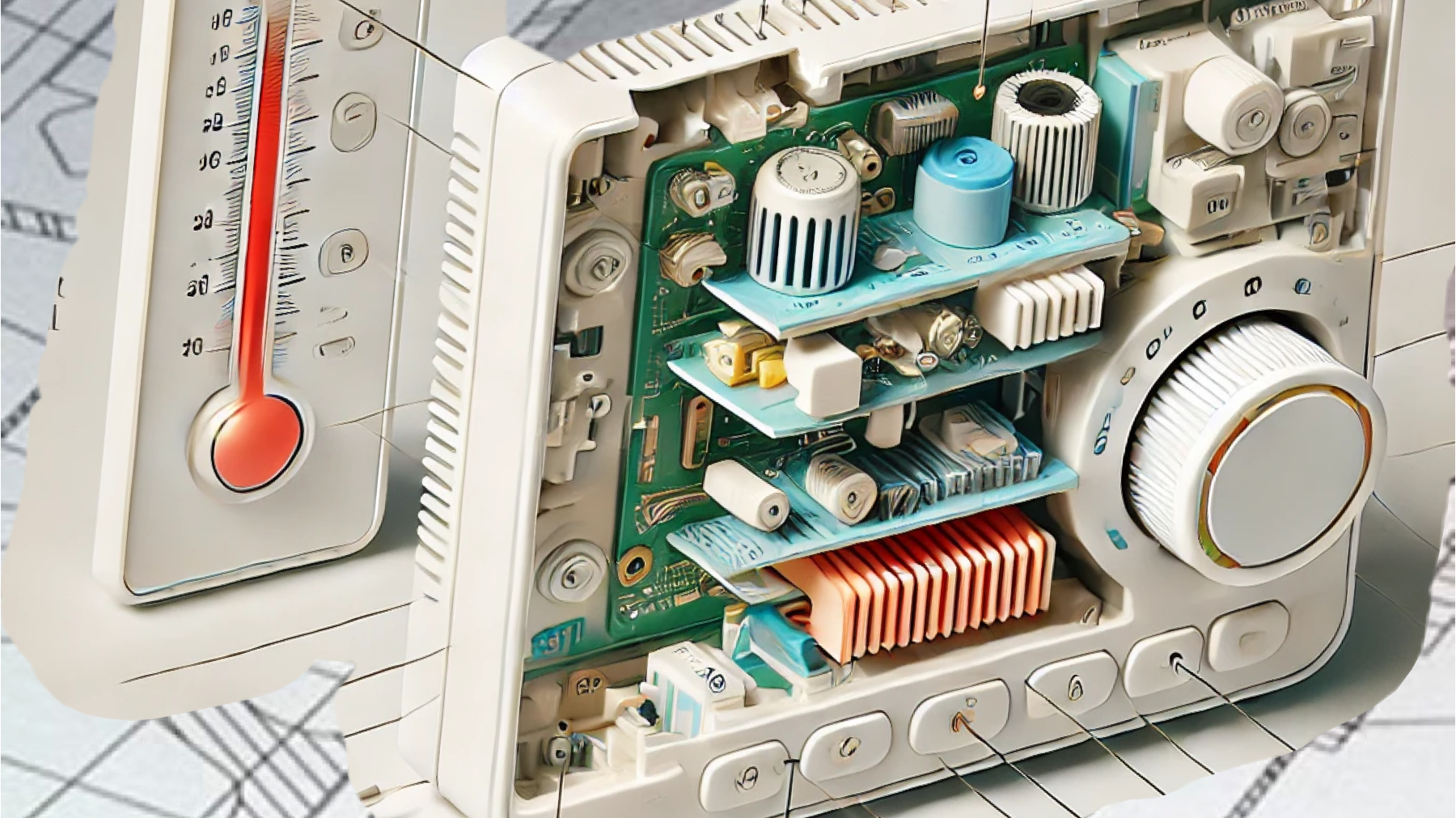
A thermostat is a device used to regulate the temperature in a given space or system. It monitors the current temperature and switches heating or cooling systems on or off to reach and maintain a preset target temperature. Thermostats are widely used in heating, ventilation and air-conditioning systems, in homes, offices, vehicles and industrial plant. In this context, we are naturally interested in their use for controlling the temperature of our cold frames and greenhouses, so that the correct temperature level is always maintained. More on that below.
How a thermostat works can be summarised as follows:
- Temperature sensor: a thermostat contains a sensor that measures the ambient temperature. The sensor may rely on various physical principles, such as the expansion of liquids or solids, changes in resistance in electronic components, or other methods of temperature measurement.
- Setpoint: the user can set a desired temperature, known as the setpoint. This is the target temperature that the thermostat tries to reach and hold steady.
- Comparison and control: the thermostat continuously compares the measured temperature with the setpoint. If the actual temperature is lower than the setpoint, the thermostat activates the heating system. If it is higher, it activates cooling or switches the heating off.
- Switching mechanism: the thermostat uses a switching mechanism to control the heating or cooling device. In older units this might be a mechanical switch, while modern, programmable or smart thermostats generally use electronic switches or relays.
- Additional features: modern thermostats can be programmable, allowing schedules to be set for temperature control. Smart thermostats can be controlled via a smartphone or computer and often learn to optimise heating and cooling patterns.
In essence, a thermostat is a control element that optimises energy use by ensuring that heating and cooling devices run only when necessary to maintain the desired temperature.
What types of thermostat are there?
There are various types of thermostat offering different functions depending on the application and technology. Some of the most common types are:
- Mechanical thermostats:
- These classic thermostats work on a simple mechanical principle, often based on the expansion of materials as temperature changes.
- Bimetallic strips are often used, bending to operate a switch contact that turns heating or cooling systems on or off.
- Electronic thermostats:
- These use electronic sensors, such as thermistors or semiconductors, to measure temperature precisely.
- They often provide more accurate control than mechanical models and have digital displays.
- Programmable thermostats:
- These allow users to set daily or weekly schedules for temperature control.
- They help reduce energy use by switching the heating or cooling system on only when needed.
- Smart thermostats:
- These are internet-enabled and can be controlled via smartphone apps or voice assistants.
- Smart thermostats often learn occupants‘ usage patterns and adjust heating and cooling times accordingly, to optimise comfort and energy savings.
- They often also offer features such as geofencing, automatically adjusting heating or cooling depending on the user’s location.
- Radio-controlled thermostats:
- These systems use radio communication to control the temperature in different rooms from a central unit.
- They are particularly suited to buildings with several zones or rooms where individual room-by-room control is wanted.
- Capillary-tube thermostats:
- Often found in specialist applications such as electric heaters or household appliances.
- They use a capillary system with a sensing bulb to measure the temperature at a particular point and control the system accordingly.
- Floor-temperature thermostats:
- Used for underfloor heating systems, these measure the temperature of the floor and control the heating for optimal comfort.
Choosing the right thermostat depends on the user’s specific needs, the type of heating or cooling involved, and the features required. Modern developments in smart and programmable thermostats are making a significant contribution to improving energy efficiency and comfort.
Which thermostats suit tortoise keeping?
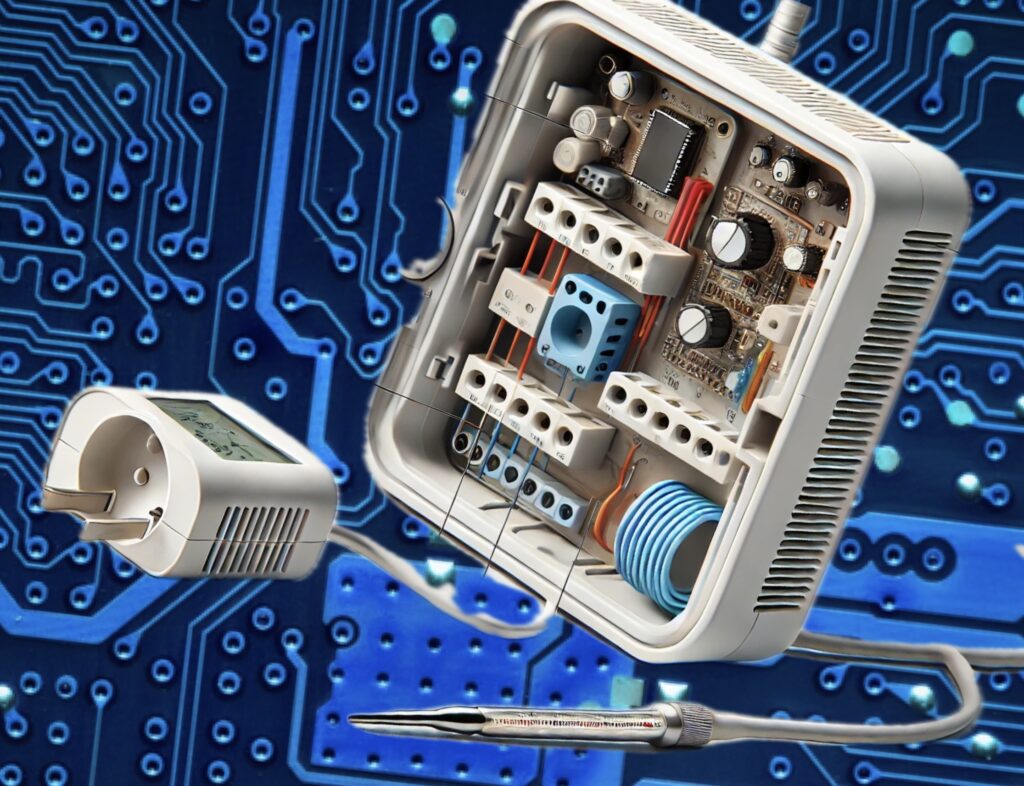
The market offers a wide range of thermostats, including some developed specifically for use in reptile keeping.
For cold frames and greenhouses, which are essential for tortoise husbandry, there is currently only one thermostat we can recommend.
Thermostats for temperature control in the cold frame
- Biogreen Thermo 2 universal thermostat:
The Biogreen Thermo 2 universal thermostat is a robust, well-proven device on the German market, designed specifically for use in cold frames and greenhouses. Its splash-water protection provides a high level of safety. A particular feature is its hard-wearing sensor cable, which is sturdy and not easily damaged. I have used this thermostat successfully for several years; its reliability is especially evident during critical periods such as frost or during tortoises‘ winter dormancy, when stable temperature control is essential. Combined with a greenhouse heater, the Thermo 2 reliably maintains the required base temperature. One notable drawback is that it can control only a single constant temperature, so a night-time reduction has to be adjusted manually. However, the device’s user-friendly programming makes this a quick adjustment to make. - TFA Dostmann Thermotimer:
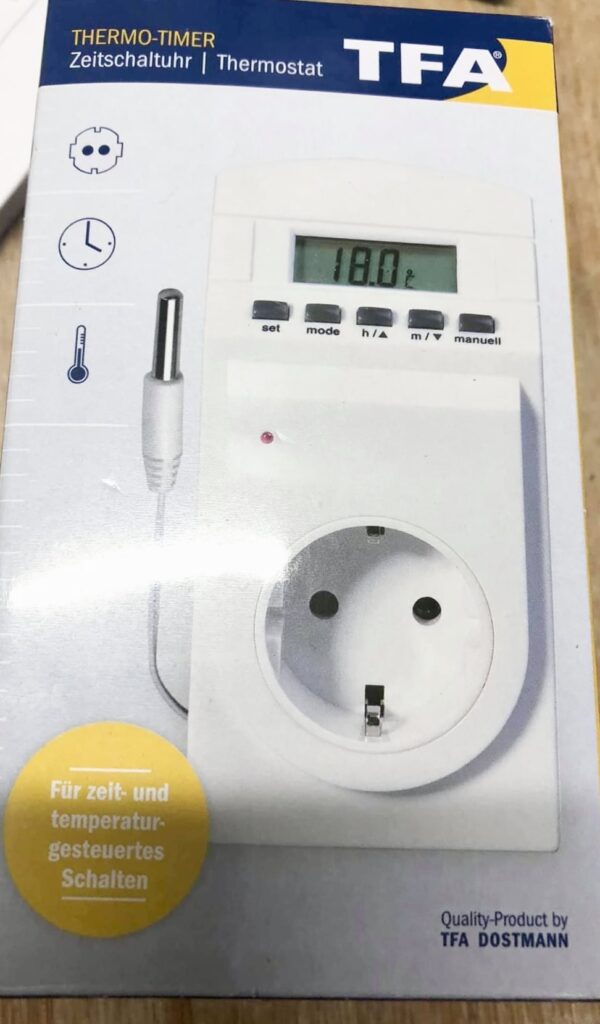
The Thermotimer from TFA Dostmann makes it possible to set different temperatures for different periods, which is why it is preferred for regulating the base temperature. Although the device is not officially rated for use in cold frames, it can be used there with precautions, such as housing it in a weatherproof cable box with a moisture-absorbing pad, to extend its service life. Users should carefully protect the Thermotimer’s delicate cable from damage.
Conclusion:
Both thermostats have specific advantages for temperature control in tortoise husbandry under glass. The Biogreen Thermo 2 stands out for its safety, robustness and reliability, while the TFA Dostmann Thermotimer scores points for its versatility in temperature programming. Both devices, however, need to be installed and monitored carefully to achieve the best results.
Thermostat for refrigerator brumation
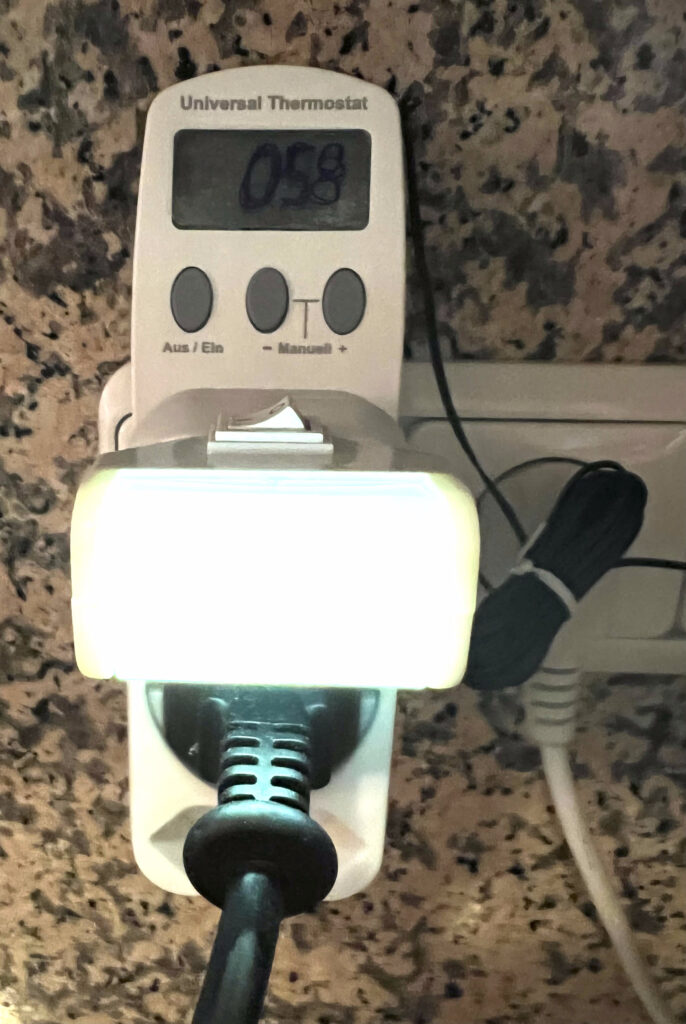
3. UT 300 Equiva universal thermostat
This thermostat has been used in tortoise-keeping circles for decades to safeguard refrigerator brumation. More on this topic can be found here.
Further information can be found in the Facebook group „Technik für Europäische Landschildkröten“ (in German).