Why Algae Lime Is Ideal for Tortoises
An adequate calcium supply is vital for tortoises. It is the basis for a stable shell, healthy bones, a well-functioning metabolism, and normal muscle and nerve function. Alongside classic calcium sources such as cuttlebone, algae lime can also be offered as a natural supplement to the mineral supply.
What Is Algae Lime?
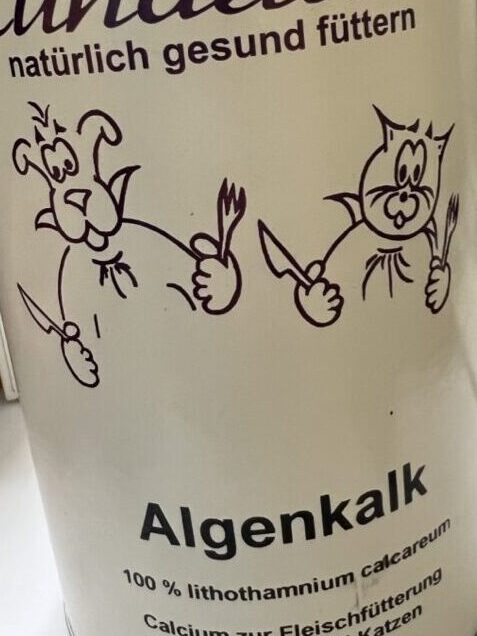
Algae lime is a natural mineral product made from the deposits of fossilised red algae, mainly Lithothamnion calcareum. As these algae grow, they absorb minerals and trace elements from seawater and store them in their cell structure. After they die, mineral-rich calcareous deposits build up over long periods, which are then dried and finely ground.
Typical composition:
- Calcium carbonate: approx. 70–80%
- Magnesium carbonate: approx. 6–10%
- Trace elements such as boron, iodine, iron, zinc, and selenium
Algae Lime in Tortoise Keeping
For herbivorous tortoise species, a calcium-rich, low-phosphorus diet is essential. Wild forage plants and suitable food plants grown on limestone chippings (in German) in the enclosure generally have a favourable mineral profile, but it’s still worth offering additional calcium sources. Growing juveniles and egg-laying females need especially large amounts of calcium.
Free-Choice Calcium: Algae Lime and Cuttlebone
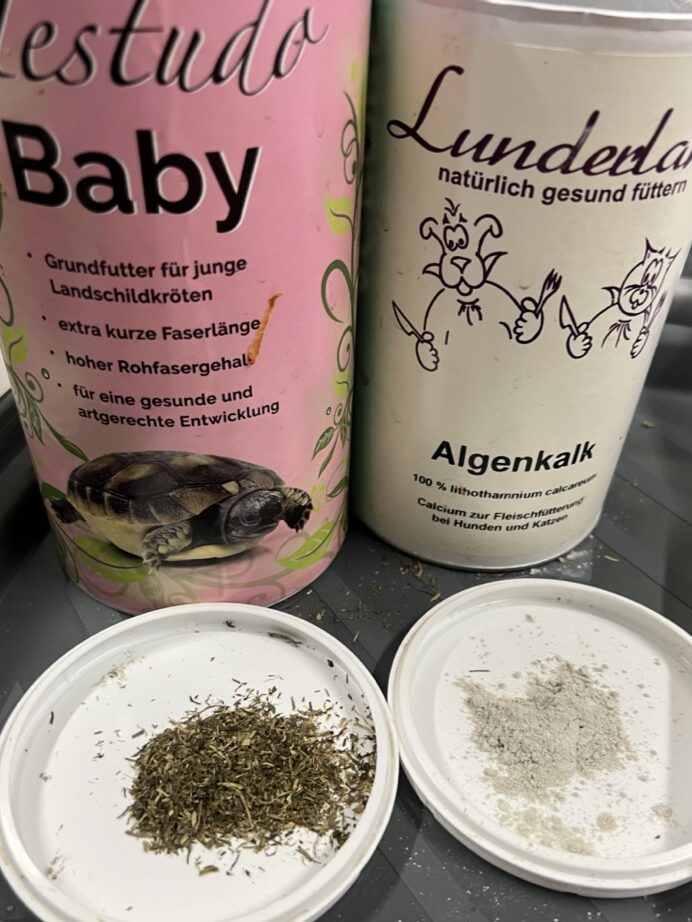
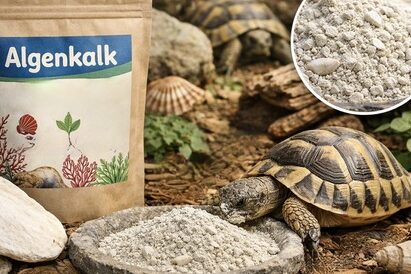
In tortoise keeping, algae lime is not mixed into or dosed with the food, but instead offered permanently alongside cuttlebone for free access. This lets the tortoise regulate its own individual calcium needs.
This way of offering it has several advantages:
- calcium intake matched to the animal’s actual needs
- natural support for a favourable calcium-to-phosphorus ratio
- avoiding over-supply through forced dosing
While cuttlebone mainly provides pure calcium carbonate, algae lime also contains magnesium and trace elements. Combining both calcium sources gives a broader mineral supply that comes closer to natural conditions.
Algae lime should be:
- offered dry and clean
- available in a shallow dish or on a suitable surface
- freely accessible at all times
The Calcium-to-Phosphorus Ratio
A key criterion in tortoise nutrition is the calcium-to-phosphorus ratio (in German) (Ca:P). It should be at least 2:1, ideally 3:1. Phosphorus-rich or unsuitable foods can impair calcium uptake and lead to deficiencies over the long term. Calcium sources such as cuttlebone and algae lime help to balance this ratio. It’s important to know that calcium can only be deposited into the body with the help of UV light (in German). Without it, calcium cannot strengthen bone and shell, and MBD and rickets can develop.
Conclusion
Algae lime is a high-quality natural product with a high calcium content and valuable trace elements. Offered alongside cuttlebone for free access, it makes a worthwhile addition to a tortoise’s mineral supply. The foundation of any healthy husbandry, though, remains a species-appropriate, wild-forage-based diet, adequate UVB provision (in German), and the opportunity for the tortoise to regulate its own mineral intake.