All about species-appropriate nutrition for tortoises
The diet of European tortoises should consist exclusively of long-fibred wild herbs grown on nutrient-poor soils, together with suitable leaves from trees, shrubs and flowering plants. They are herbivorous dietary opportunists (in German), meaning that they are primarily plant-eaters.
Nutrition presentation
The new presentation offers a well-founded introduction to the basic principles of tortoise nutrition. It is aimed at keepers who would like to explore the subject in greater depth.
Contents of the presentation:
- herbivorous and omnivorous nutrition
- digestion in tortoises
- metabolism
- calcium-to-phosphorus ratio
- calcium supply
- selection of suitable plants
- sources of information
- poisonous plants
- food plants
- options for growing food plants yourself
The digestive system
The entire digestive system of European tortoises is adapted to digesting long-fibred wild herbs. The tortoise stomach is relatively small and designed to process small amounts of food. As grazing animals, tortoises may walk up to 3 km a day to meet their food requirements. They usually eat one leaf here, one leaf there, and in this way take in small quantities of a wide variety of plants.
Nevertheless, as so-called dietary opportunists, our animals are not strictly plant-eaters. When the opportunity arises, they may eat faeces, known as coprophagy (in German), and carrion. Slugs and worms are also eaten occasionally. When eating slugs, there is a risk of suffocation due to mucus. Any remaining mucus should therefore be removed with a lint-free cloth, and the mouth can be rubbed with tomato or raspberry. The fruit acid they contain helps loosen the mucus.
If breathing difficulties occur, help should be sought from a reptile vet as quickly as possible.
In herbivores, the caecum and large intestine are particularly important. They form fermentation chambers in which the gut flora breaks down and utilises tough crude fibre.
Suitable food for European tortoises should therefore contain only small amounts of easily digestible components such as sugar and other carbohydrates. Instead, a high proportion of structured crude fibre is important, combined with a low protein content of up to around 8%.
If structured crude fibre is lacking in the diet, or if it is replaced by easily digestible substances such as starch or sugar, faulty fermentation can occur in the intestine. This leads to a greatly shortened passage time of the food and a disturbed gut flora. Parts of the bacterial flora are displaced or die off. As a result, tortoises lose fluid and often develop diarrhoea that is difficult to treat. Parasitic infections are also encouraged by this.
Because water is scarce for long periods in their natural habitats, European tortoises are adapted to excreting the end products of protein metabolism in the form of water-insoluble uric acid salts, known as urates. In this way, valuable water is retained in the body. However, this adaptation only works with a low-protein diet. If excessive protein intake leads to excessive urate formation, these urates can no longer be fully excreted.
The result may be kidney damage, complete kidney failure and painful, often fatal gout.
For the effective digestion of fibre-rich food, it is essential that the animals have access to drinking water at all times and that they are able to reach their optimal body temperature, with a preferred temperature of 35–38 °C. In nature, this is achieved through basking. In captivity, it should be simulated with a strong, warm UV light source that locally warms the basking area. At the same time, it is important to provide the animals with cooler retreats.
Light and radiant heat from heating in a warm-husbandry setup promote activity and appetite. Different thermometers can be used to keep an eye on the temperatures around the animals. The gut passage time before metabolic end products are excreted as faeces can easily be two weeks, and even longer with very tough wild herbs such as thistles.

Fruit and vegetables?
Fruit and vegetables cannot be digested well and contain too much sugar and too little crude fibre. They should therefore generally not be fed. Sugar can cause an explosive increase in intestinal parasites.
Bitter salads as an emergency solution
As a rule, it is not difficult to find wild herbs throughout the year. It becomes more challenging when there is a thick layer of snow. If animals are not allowed to hibernate because of illness, it can then become difficult to gather the necessary herbs. In such cases, it is acceptable to feed organic bitter salads for a short time as a substitute. After washing, they can be sprinkled with dried wild herbs to enrich them with more crude fibre.
Suitable options for this purpose include romaine lettuce, chicory, rocket and lamb’s lettuce in organic quality. Giant dandelion, which is often available from Mediterranean greengrocers, is also very well accepted. For sprinkling over the salad, home-dried, crumbled herbal hay, Agrobs Fibre and dried flowers can be used. As soon as possible, feeding should be switched back to pure wild herbs.


A self-sufficient enclosure all year round
Ideally, the animals feed themselves in their enclosure. This is called a self-sufficient enclosure. Here, the animals can graze as they would in their habitat. Fresh food is provided by sowing mixed wild herb seeds several times a year. A good example of a self-sufficient enclosure can be seen here:


These informative enclosure photographs were kindly provided by Susi Ristow. Many thanks for this.
Food selection
Common, easy-to-find food plants for beginners
Some of the suitable food plants for tortoises are widespread in Central Europe, especially in arable and meadow landscapes. Common species include:
- Corn salad, 𝘝𝘢𝘭𝘦𝘳𝘪𝘢𝘯𝘦𝘭𝘭𝘢 𝘭𝘰𝘤𝘶𝘴𝘵𝘢, also known as lamb’s lettuce, which is commonly found in fields and gardens.
- Common nettle, 𝘜𝘳𝘵𝘪𝘤𝘢 𝘥𝘪𝘰𝘪𝘤𝘢, which is very widespread in Europe and thrives well on nutrient-rich soils.
- Dandelion, 𝘛𝘢𝘳𝘢𝘹𝘢𝘤𝘶𝘮 𝘰𝘧𝘧𝘪𝘤𝘪𝘯𝘢𝘭𝘦, which is widespread in meadows and gardens and is known for its bright yellow flowers.
- Sow thistle, 𝘚𝘰𝘯𝘤𝘩𝘶𝘴 𝘢𝘴𝘱𝘦𝘳, which is found especially along roadsides and on disturbed ground.
- Chickweed, 𝘚𝘵𝘦𝘭𝘭𝘢𝘳𝘪𝘢 𝘮𝘦𝘥𝘪𝘢, which is very common in gardens, fields and beds and is known for its rapid growth.
- Shepherd’s purse, 𝘊𝘢𝘱𝘴𝘦𝘭𝘭𝘢 𝘣𝘶𝘳𝘴𝘢-𝘱𝘢𝘴𝘵𝘰𝘳𝘪𝘴, which is often found along paths, in fields and on fallow land.
All these plants are adaptable and thrive in different environments. For this reason, they are often referred to as “wild herbs” or, more dismissively, as “weeds”, although many of them have useful properties or applications.
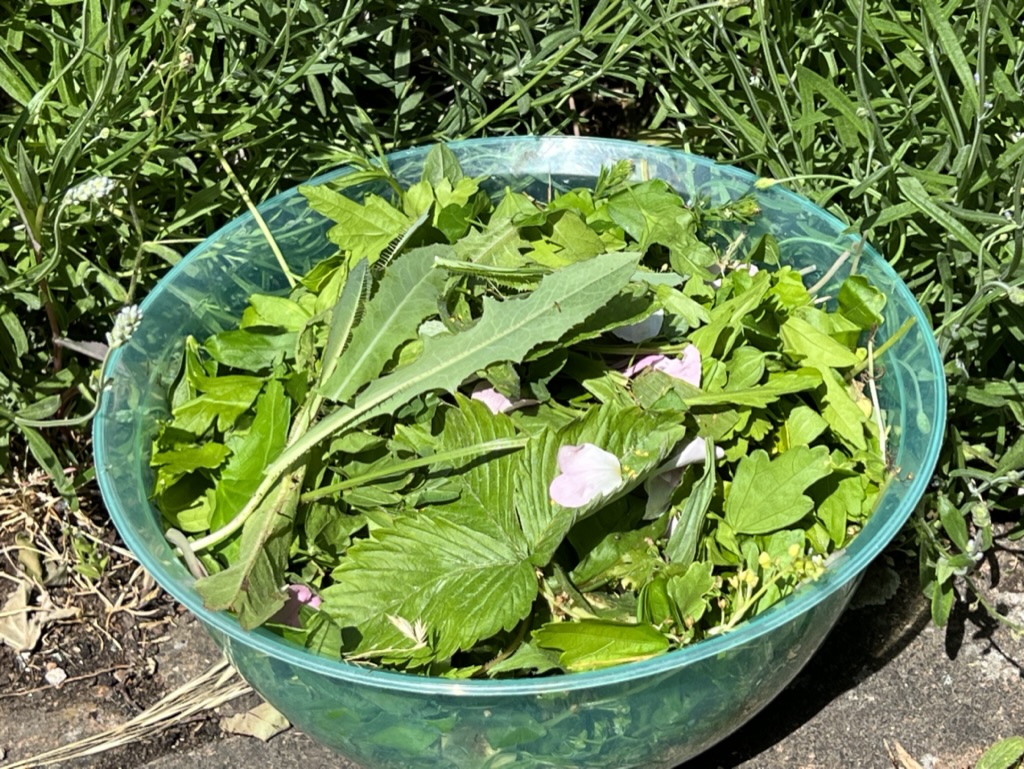
Popular food plants for herbivorous tortoises
Corn salad, 𝘝𝘢𝘭𝘦𝘳𝘪𝘢𝘯𝘦𝘭𝘭𝘢 𝘭𝘰𝘤𝘶𝘴𝘵𝘢
Eyebright, meadow eyebright, 𝘌𝘶𝘱𝘩𝘳𝘢𝘴𝘪𝘢 𝘰𝘧𝘧𝘪𝘤𝘪𝘯𝘢𝘭𝘪𝘴
Field or garden marigold, 𝘊𝘢𝘭𝘦𝘯𝘥𝘶𝘭𝘢 𝘰𝘧𝘧𝘪𝘤𝘪𝘯𝘢𝘭𝘪𝘴
Common nettle, 𝘜𝘳𝘵𝘪𝘤𝘢 𝘥𝘪𝘰𝘪𝘤𝘢
Dead-nettle, 𝘓𝘢𝘮𝘪𝘶𝘮
Cotton thistle, 𝘖𝘯𝘰𝘱𝘰𝘳𝘥𝘶𝘮
Common cat’s-ear, 𝘏𝘺𝘱𝘰𝘤𝘩𝘰𝘦𝘳𝘪𝘴 𝘳𝘢𝘥𝘪𝘤𝘢𝘵𝘢
Creeping cinquefoil, 𝘗𝘰𝘵𝘦𝘯𝘵𝘪𝘭𝘭𝘢 𝘳𝘦𝘱𝘵𝘢𝘯𝘴
Gallant soldier, 𝘎𝘢𝘭𝘪𝘯𝘴𝘰𝘨𝘢 𝘱𝘢𝘳𝘷𝘪𝘧𝘭𝘰𝘳𝘢
Lady’s mantle, 𝘈𝘭𝘤𝘩𝘦𝘮𝘪𝘭𝘭𝘢
Knapweed, 𝘊𝘦𝘯𝘵𝘢𝘶𝘳𝘦𝘢
Bellflowers, 𝘊𝘢𝘮𝘱𝘢𝘯𝘶𝘭𝘢
European goldenrod, 𝘚𝘰𝘭𝘪𝘥𝘢𝘨𝘰 𝘷𝘪𝘳𝘨𝘢𝘶𝘳𝘦𝘢
Hawkweed, 𝘏𝘪𝘦𝘳𝘢𝘤𝘪𝘶𝘮
Shepherd’s purse, 𝘊𝘢𝘱𝘴𝘦𝘭𝘭𝘢 𝘣𝘶𝘳𝘴𝘢-𝘱𝘢𝘴𝘵𝘰𝘳𝘪𝘴
Coltsfoot, 𝘛𝘶𝘴𝘴𝘪𝘭𝘢𝘨𝘰 𝘧𝘢𝘳𝘧𝘢𝘳𝘢
Nasturtium, 𝘛𝘳𝘰𝘱𝘢𝘦𝘰𝘭𝘶𝘮 𝘮𝘢𝘫𝘶𝘴
Burdock, 𝘈𝘳𝘤𝘵𝘪𝘶𝘮
Sow thistle, 𝘚𝘰𝘯𝘤𝘩𝘶𝘴
Dandelion, 𝘛𝘢𝘳𝘢𝘹𝘢𝘤𝘶𝘮 𝘰𝘧𝘧𝘪𝘤𝘪𝘯𝘢𝘭𝘦
Mallows, 𝘔𝘢𝘭𝘷𝘢
Milk thistle, 𝘚𝘪𝘭𝘺𝘣𝘶𝘮 𝘮𝘢𝘳𝘪𝘢𝘯𝘶𝘮
Evening primrose, 𝘖𝘦𝘯𝘰𝘵𝘩𝘦𝘳𝘢
Yarrow, 𝘈𝘤𝘩𝘪𝘭𝘭𝘦𝘢 𝘮𝘪𝘭𝘭𝘦𝘧𝘰𝘭𝘪𝘶𝘮
Cranesbill, 𝘎𝘦𝘳𝘢𝘯𝘪𝘶𝘮
Marigold, 𝘛𝘢𝘨𝘦𝘵𝘦𝘴
Jerusalem artichoke, 𝘏𝘦𝘭𝘪𝘢𝘯𝘵𝘩𝘶𝘴 𝘵𝘶𝘣𝘦𝘳𝘰𝘴𝘶𝘴
Chickweed, 𝘚𝘵𝘦𝘭𝘭𝘢𝘳𝘪𝘢 𝘮𝘦𝘥𝘪𝘢
Chicory, 𝘊𝘪𝘤𝘩𝘰𝘳𝘪𝘶𝘮 𝘪𝘯𝘵𝘺𝘣𝘶𝘴
Vetches, 𝘝𝘪𝘤𝘪𝘢
Rough hawk’s-beard, 𝘊𝘳𝘦𝘱𝘪𝘴 𝘣𝘪𝘦𝘯𝘯𝘪𝘴
Woundwort, marsh woundwort, 𝘚𝘵𝘢𝘤𝘩𝘺𝘴 𝘱𝘢𝘭𝘶𝘴𝘵𝘳𝘪𝘴
This is only a small selection. It is advisable to learn and collect with the help of a good food-plant handbook.


Caution, poisonous plants!
Unfortunately, poisonous plants do occasionally end up in the enclosure or in the food. For example, highly toxic rhododendron flowers can blow hundreds of metres in a storm. Knowing the most important poisonous plants is therefore essential, both when gathering forage and when checking the enclosure.
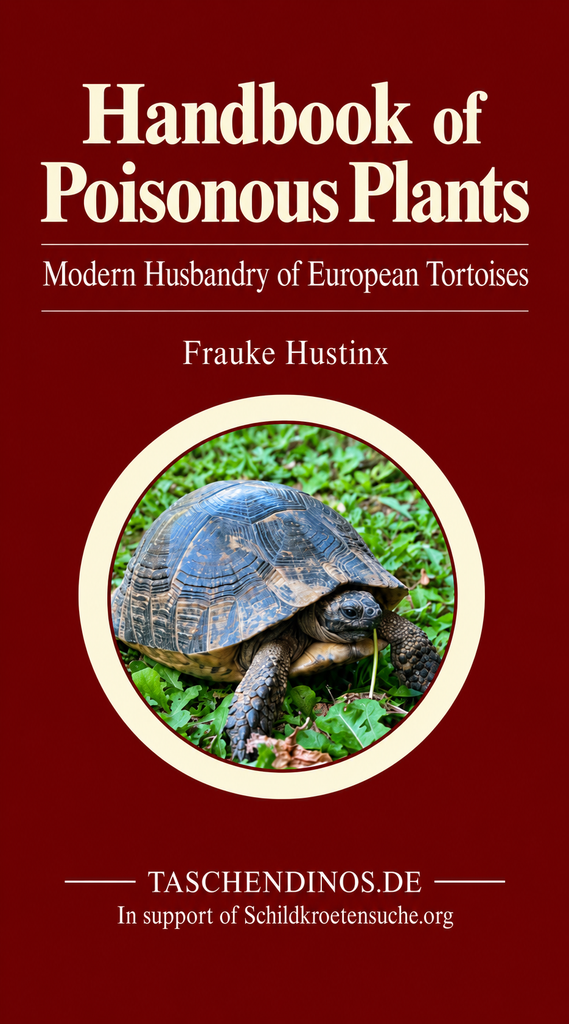
A useful resource here is the Taschendinos Poisonous Plants Handbook, newly published in August, which is compact enough to easily carry in your pocket as a practical field guide.
Edible tree foliage
Leaves from unsprayed fruit trees, such as apple, pear, cherry and plum, can also be used as food. Mulberry leaves are eaten with great enthusiasm and are also said to be very healthy for our tortoises. With all fruit trees, only the leaves are fed, not the fruit. Fruit trees should therefore not be planted inside the enclosure, or they should be fitted with catch nets and harvested early.
Leaves of raspberry, strawberry and blackberry can also be fed. Willow foliage is also very suitable. When feeding tree foliage, it is important that it is completely unsprayed.

Flowering times of food plants
Many common food plants have specific flowering times, which may vary depending on climatic conditions. Here is a general division into early, mid-season and late flowering periods:
Early-flowering plants:
- Dandelion, 𝘛𝘢𝘳𝘢𝘹𝘢𝘤𝘶𝘮 𝘰𝘧𝘧𝘪𝘤𝘪𝘯𝘢𝘭𝘦: often flowers from April. It has an ideal calcium-to-phosphorus ratio, but should not be fed too frequently because of the oxalic acid it contains.
- Prickly sow thistle, 𝘚𝘰𝘯𝘤𝘩𝘶𝘴 𝘢𝘴𝘱𝘦𝘳: may begin flowering as early as spring.
- Cuckooflower, 𝘊𝘢𝘳𝘥𝘢𝘮𝘪𝘯𝘦 𝘱𝘳𝘢𝘵𝘦𝘯𝘴𝘪𝘴: typically flowers in spring.
- Corn salad (in German), 𝘝𝘢𝘭𝘦𝘳𝘪𝘢𝘯𝘦𝘭𝘭𝘢 𝘭𝘰𝘤𝘶𝘴𝘵𝘢: may flower from late winter to early spring.
Mid-season flowering plants:
- Mallows, 𝘔𝘢𝘭𝘷𝘢: the flowering period of mallow is long and usually extends from June to October, although depending on the species and variety it may begin as early as May or continue into November.
- Dog rose (in German), 𝘙𝘰𝘴𝘢 𝘤𝘢𝘯𝘪𝘯𝘢: flowers from May to June.
- Chickweed, 𝘚𝘵𝘦𝘭𝘭𝘢𝘳𝘪𝘢 𝘮𝘦𝘥𝘪𝘢: flowers from spring into summer.
- Common nettle (in German), 𝘜𝘳𝘵𝘪𝘤𝘢 𝘥𝘪𝘰𝘪𝘤𝘢: usually flowers from June to September.
- White clover, 𝘛𝘳𝘪𝘧𝘰𝘭𝘪𝘶𝘮 𝘳𝘦𝘱𝘦𝘯𝘴: flowers from late spring to autumn. Note that white clover is very rich in protein and should therefore only be offered in small amounts.
Late-flowering plants:
- Gallant soldier (in German), 𝘎𝘢𝘭𝘪𝘯𝘴𝘰𝘨𝘢 𝘱𝘢𝘳𝘷𝘪𝘧𝘭𝘰𝘳𝘢: typically flowers throughout summer and into autumn.
- Chicory, 𝘊𝘪𝘤𝘩𝘰𝘳𝘪𝘶𝘮 𝘪𝘯𝘵𝘺𝘣𝘶𝘴: tends to flower from July to October.
- Marigold (in German), 𝘊𝘢𝘭𝘦𝘯𝘥𝘶𝘭𝘢 𝘰𝘧𝘧𝘪𝘤𝘪𝘯𝘢𝘭𝘪𝘴: flowers from summer into autumn.
- European goldenrod, 𝘚𝘰𝘭𝘪𝘥𝘢𝘨𝘰 𝘷𝘪𝘳𝘨𝘢𝘶𝘳𝘦𝘢: usually flowers from July to September.
- Pansy, 𝘝𝘪𝘰𝘭𝘢 spp.: after planting in autumn, from September into late spring or early summer, around June, and again from March the following year. If sown in early summer, flowering begins from October.
These flowering times are general and may vary depending on the region and specific weather conditions. Nevertheless, they provide an overview of when certain plants grow and flower. This can be helpful when planning the plant stock throughout the growing season and ensuring that fresh food is always available. In any case, at least part of the basic food supply should be grown at home.
Selecting food plants according to different criteria
Diversity
Offer a broad range of plants to ensure that tortoises receive all the necessary nutrients. Different plants provide different secondary plant compounds, vitamins and minerals, making a varied diet essential for good health.
Calcium-to-phosphorus ratio
An optimal calcium-to-phosphorus ratio is important. A balanced calcium-to-phosphorus ratio is crucial. Plants such as nettle and plantain are particularly valuable because of their high calcium content and favourable calcium-to-phosphorus ratio. More on this below.
Vitamin-rich plants
Sources of vitamins A and C: plants such as dandelion and corn salad provide plenty of vitamins A and C, which are important for the immune system and eyesight. See also below.
Protein and energy content
Feed protein-rich plants in moderation. Plants such as white clover and lucerne are rich in protein and should only be offered in moderation to avoid overfeeding or health problems.
Caution with certain plants
Limit certain plants. Some plants, such as winter cress and gallant soldier, are rich in specific nutrients, but are not ideal in larger amounts. With toxic or less suitable plants, such as flat pea because of its mildly poisonous seeds, caution is advised.
Important: seed pods should generally be removed before feeding.
Rare use and the conservation of protected species
Protected plants and seasonality: some plants are protected or rare, for example marigold, lungwort and primrose. Legal regulations must be taken into account when feeding such plants, and alternatives should be preferred. If something is nevertheless to be fed, only a few leaves should be used, while the rest of the plant and the flower heads should definitely be left standing in the interests of sustainability.
It should also be remembered that some threatened insects depend on specific flowers for survival. For this reason, only the bare minimum should be used.
Fibre-rich plants
Include sources of fibre. Plants such as hawk’s-beard and knapweed are rich in fibre and support healthy digestion. During dry feeding in summer, see below, nettle is often used because, once dried, it is also eaten as herbal hay.
These recommendations are intended to help create a balanced and healthy selection of food plants that meets the nutritional needs of European tortoises.

All about vitamin content and the calcium-to-phosphorus ratio
Information on vitamin content and the calcium-to-phosphorus ratio, Ca:P, of food plants is not always fully available or comprehensively documented. Nevertheless, it is often known which plants are recognised for specific nutrients. Here is some information on selected food plants:
- Corn salad, 𝘝𝘢𝘭𝘦𝘳𝘪𝘢𝘯𝘦𝘭𝘭𝘢 𝘭𝘰𝘤𝘶𝘴𝘵𝘢: contains vitamin A, vitamin C and folic acid. The Ca:P ratio is fairly balanced.
- Common nettle, 𝘜𝘳𝘵𝘪𝘤𝘢 𝘥𝘪𝘰𝘪𝘤𝘢: very rich in calcium, with a Ca:P ratio of about 3–5:1. It also contains vitamins A, C and K.
- Dandelion, 𝘛𝘢𝘳𝘢𝘹𝘢𝘤𝘶𝘮 𝘰𝘧𝘧𝘪𝘤𝘪𝘯𝘢𝘭𝘦: has a good Ca:P ratio of 2–3:1 and is rich in vitamins A, C and K. However, it contains quite a lot of oxalic acid and should always be mixed with other food.
- Gallant soldier, 𝘎𝘢𝘭𝘪𝘯𝘴𝘰𝘨𝘢 𝘱𝘢𝘳𝘷𝘪𝘧𝘭𝘰𝘳𝘢: known for its high calcium and vitamin content, although specific values are difficult to find.
- White clover, 𝘛𝘳𝘪𝘧𝘰𝘭𝘪𝘶𝘮 𝘳𝘦𝘱𝘦𝘯𝘴: has a moderate Ca:P ratio and is very rich in protein, so it should only be fed in moderation.
- Plantain, 𝘗𝘭𝘢𝘯𝘵𝘢𝘨𝘰: very rich in calcium, with a remarkably high Ca:P ratio of 21.9:1.
Many of these plants are suitable as additions to the main diet of tortoises because of their versatility and nutritional profile. It is important to offer a wide variety of plants to ensure balanced nutrient intake.
In general, a balanced diet is achieved through variety and diversity, which supports healthy growth and the wellbeing of the tortoises.


Dry feeding with herbal hay and Agrobs in midsummer
In midsummer, more dried food should be offered, for example herbal hay and Agrobs Testudo hay cobs soaked in water. As a rule, both can be offered together or alternatively in midsummer, from July to August. Agrobs Testudo consists of herbal hay adapted to the diet of tortoises, dried and pressed into pellet form. When mixed with water, it becomes a healthy food mash for tortoises.


The mixture should be offered fresh once a day. For tortoises from arid regions, there are Testudo Herbs, which do not need to be soaked. For hatchlings, there is Testudo Baby, with a slightly higher protein content. High-quality Timothy hay can also be offered, although it is not always accepted. Hay should be replaced daily, as otherwise mould may develop.
What exactly is herbal hay?
Quite simply, herbal hay consists of dried wild herbs that are mixed according to the preferences and needs of the animals.
I always include plenty of nettle, as my females have poor uric acid values. I also dry plantain, mulberry, dandelion, chicory, dead-nettle, sow thistle, camomile, hibiscus and milk thistle, for example. As a treat, I add a few dog rose petals. Everything is spread out in the morning on the swept terrace. It should be allowed to dry thoroughly there on a sunny day.


At midday, the herbal hay should be turned. Once dry, it can be stored in an airy pillowcase or fabric bag until midsummer.
In midsummer, during July and August, herbal hay and soaked Agrobs are then fed in addition to the food the animals find in the self-sufficient enclosure.
Growing food plants yourself
To ensure a supply of high-quality food throughout the season, food plants should be cultivated at home. In spring, it is helpful to start food plants on the windowsill, in a raised bed with a cold-frame attachment, or in a greenhouse. Outdoors, early in the year, this can be supported, for example, by placing a large clay pot with a grave candle inside it as an inexpensive source of heat.
A low-cost solution for growing food plants is to use fabric raised beds together with pop-up greenhouses.
Particularly stable raised beds with cold-frame attachments are very suitable for growing food plants. Early cultivation also works very well in a cold frame or greenhouse. A hydroponic system can also be built for growing food plants.
Food plant seeds can be harvested in autumn from plants that have finished flowering, or bought from seed suppliers or tortoise shops.
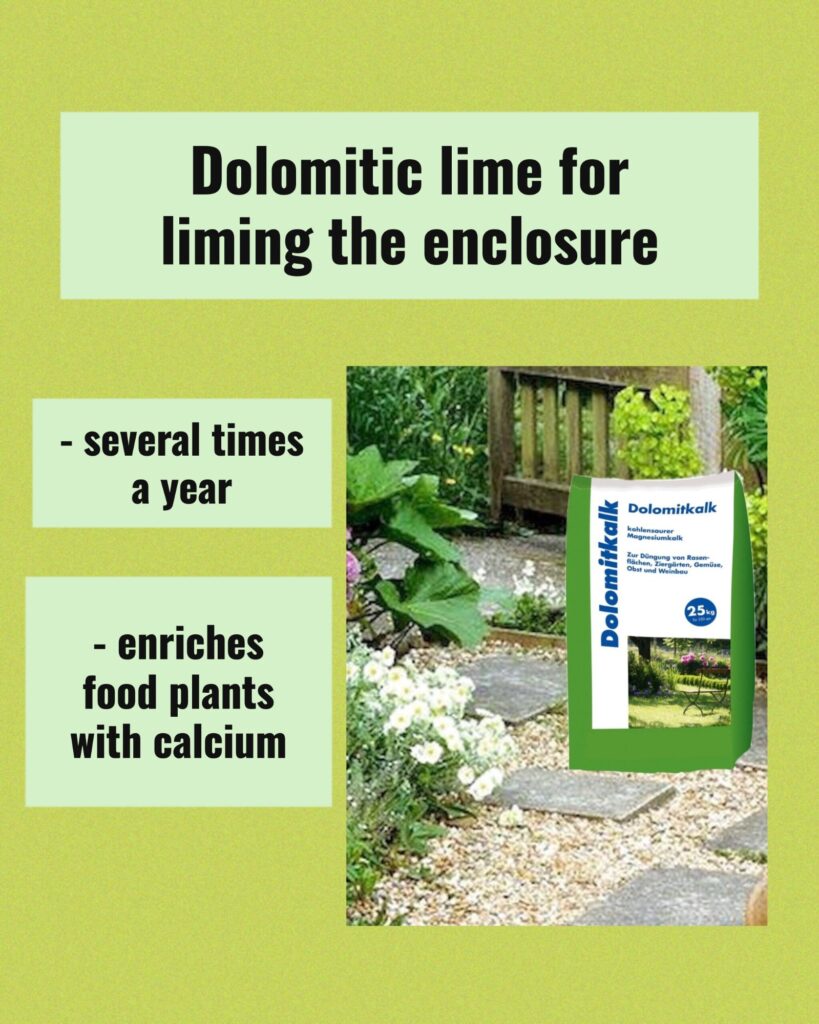
Any soil on which wild herbs are grown should be thoroughly limed with dolomitic lime, so that the plants growing on it are rich in calcium. In the enclosure, the limestone chippings that have been added also help ensure a good calcium supply for the plants growing there. Food plant seeds are sown in the enclosure several times a year.
Seeds should also be scattered regularly in the cold frames, so that the tortoises have something to eat during transitional periods and in poor weather. When selecting seeds, the following topics should be considered:
Food plant cultivation
Light germinators
Dark germinators
Cold germinators
Stratification
Scarification
Dormancy
Seed harvesting
Food plants


Harvesting food plant seeds in late summer
As a rule, moderate pruning should take place in the enclosure of European tortoises in late summer in order to create natural basking spots. Much of the vegetation has dried out over the summer months. At the same time, some fresh limestone chippings can be added, and this is a good opportunity to harvest some food plant seeds.
When pruning, it should be remembered that this should only take place after the plants have finished flowering, and that only part of the perennials should be cut back to create basking areas. This ensures that insects, birds and small animals continue to have food and places of refuge.
Food plant seeds grow easily and quickly directly on limestone chippings. The soil can also be made leaner and the food plants well supplied with calcium by fertilising twice a year with dolomitic lime. Externally grown food plants, for example in beds, greenhouses and raised beds, should likewise be supplied generously with dolomitic lime.
Video about sowing and propagating food and enclosure plants.
Calcium
All about calcium supply

What kind of lime does my tortoise need?
Calcium supply in the habitat
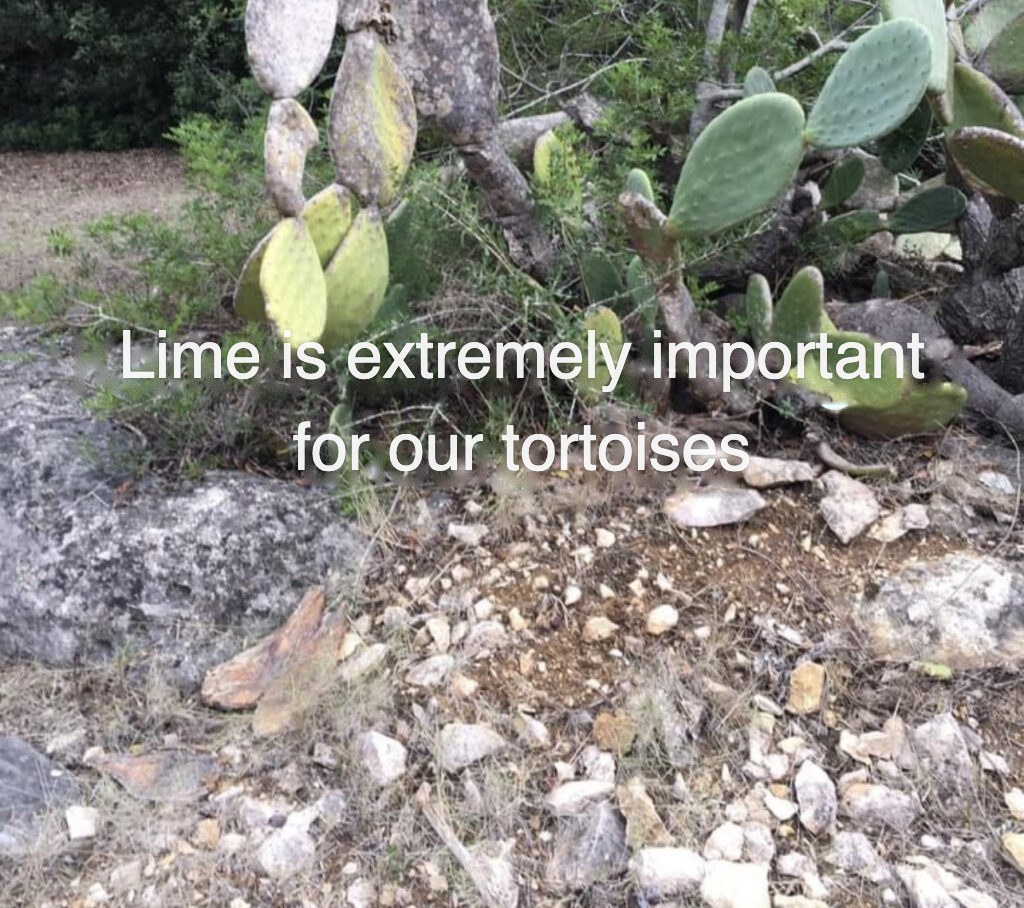
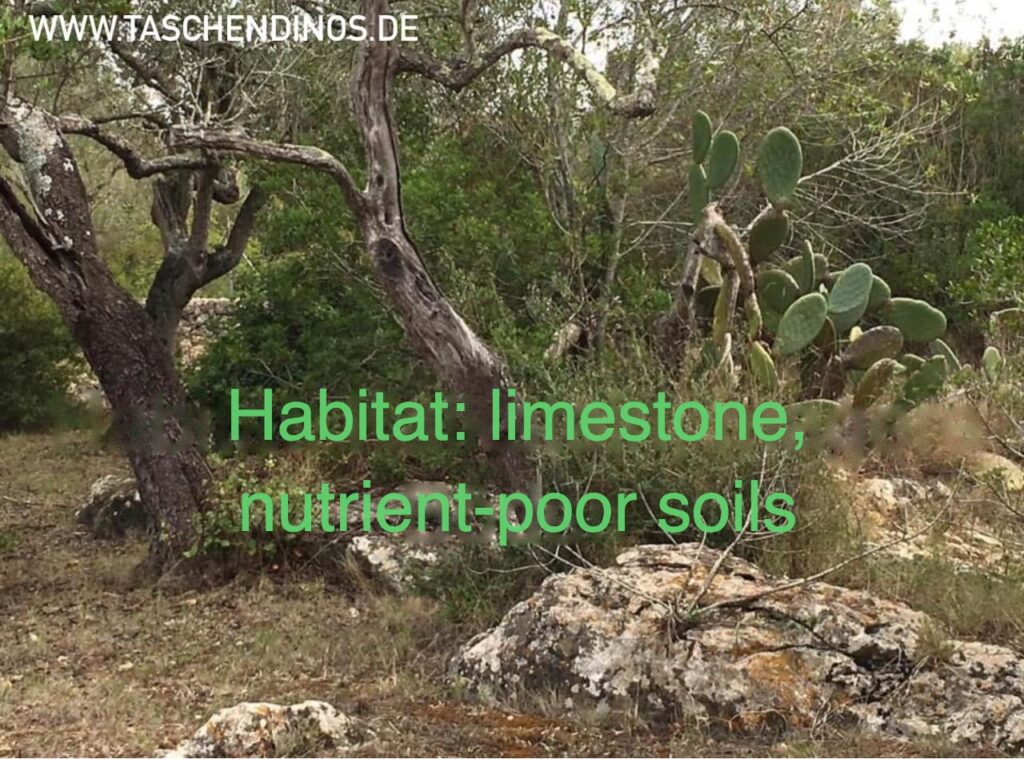
In their natural habitat, wild tortoises largely meet their calcium needs from the abundant presence of limestone. Calcium is taken in through food plants that grow on calcareous soils and through drinking calcareous water. Small pieces of limestone, snail shells and washed-up cuttlebones also contribute to calcium supply.
Algae lime, cuttlebone and eggshell meal
In human care, this natural process is substituted, with cuttlebone and algae lime serving as the best sources.
Tortoises should therefore always have free access to calcium in the form of algae lime, suitable for animal nutrition, and cuttlebone. So-called calcium caves, for example laterally positioned and fixed flowerpots, offer an attractive way to protect algae lime and crushed cuttlebone from moisture, while the tortoises readily consume it inside.
Cuttlebone, the reduced internal shell of cuttlefish, consists mainly of calcium carbonate and is used as a dietary supplement to provide calcium. Similarly, algae lime is a powder made from marine algae deposits and is an excellent source of calcium. Products should be chosen without added vitamins, specifically suitable as dietary supplements for animals and subject to quality control.
Eggshells as a calcium source are only usable for tortoises when they are extremely finely ground, according to Dr Blahak 2024. Eggshell meal, like algae lime, is available from pet food suppliers as a dietary supplement for raw-fed dogs, for example from Lunderland as shown below. Cuttlebone and algae lime are, of course, also available from the usual tortoise shops.
The importance of calcium and UV radiation
Calcium is urgently needed to keep the shell and bones stable and strong, and it is incorporated during exposure to UV-B light, either natural sunlight or UV-B lamps. Calcium is particularly important for young, growing animals and, in females, for the proper formation of eggshells. Egg-laying females take in large amounts of algae lime and cuttlebone before laying.
If, in cases of severe undersupply, they do not have enough calcium available, it is withdrawn from the bones and shell. This can lead to instability and ultimately to bone fractures. In this context, tortoise keepers should also inform themselves about the calcium-to-phosphorus ratio (in German).

Limestone chippings
Integrating limestone chippings into the enclosure has beneficial effects, as the food plants growing on them absorb additional calcium. In addition, the limestone chippings create a pleasant Mediterranean microclimate, drying quickly after rain, warming up faster and storing heat.
The regular use of powdered dolomitic lime, distributed in the enclosure twice a year, offers an additional source of calcium. Thoroughly watering it in afterwards ensures that this mineral is optimally made available.