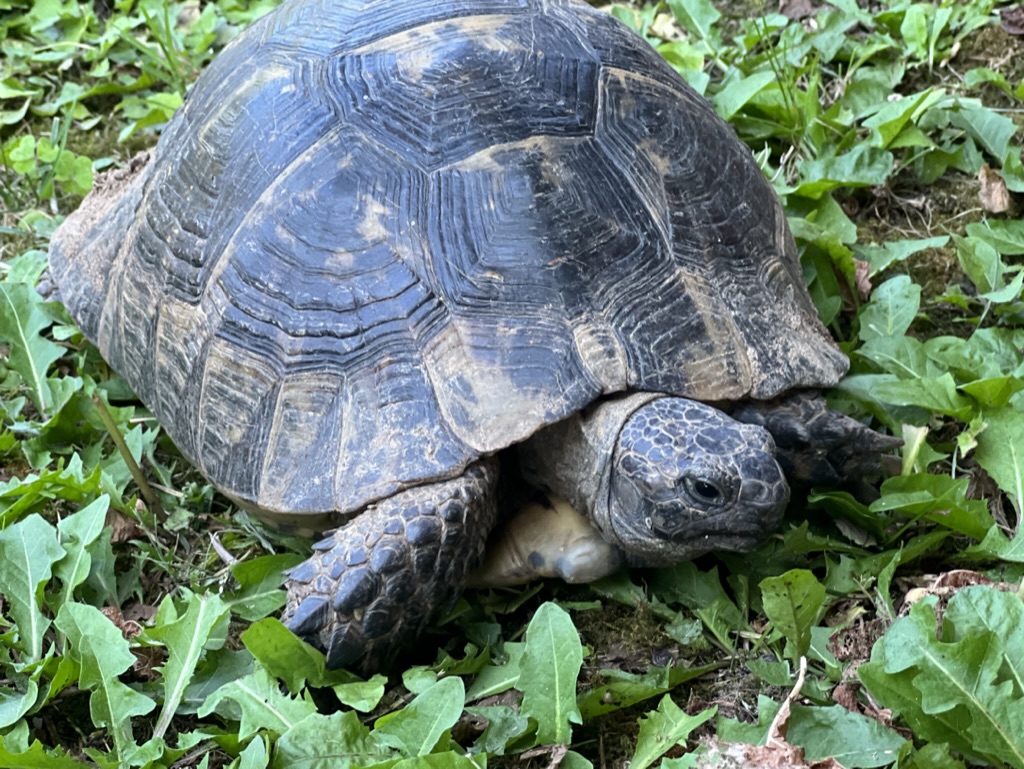
European Tortoises in Autumn: Preparing for Brumation
When does preparation for brumation begin? When are temperatures lowered, and when is the right time to move the tortoises into their brumation quarters? What should temperature management look like now?
For European tortoises in their regions of origin, autumn begins considerably later than our Central European weather sometimes suggests. What matters is not the odd cold night here, but the seasonal conditions in the natural habitat.
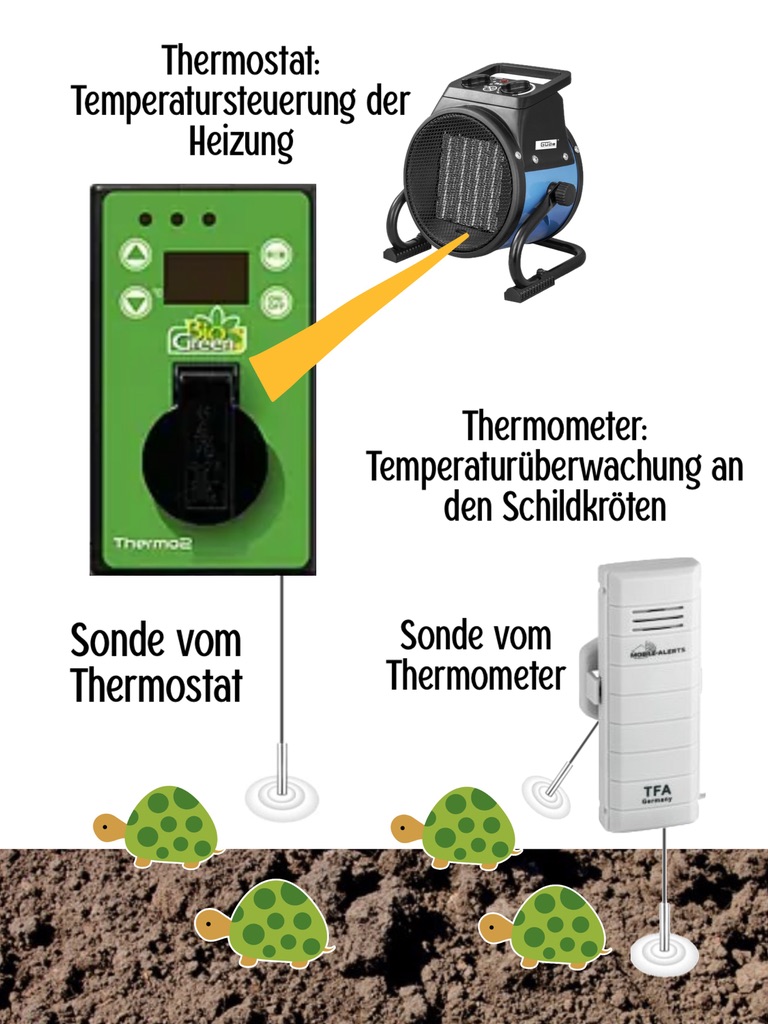
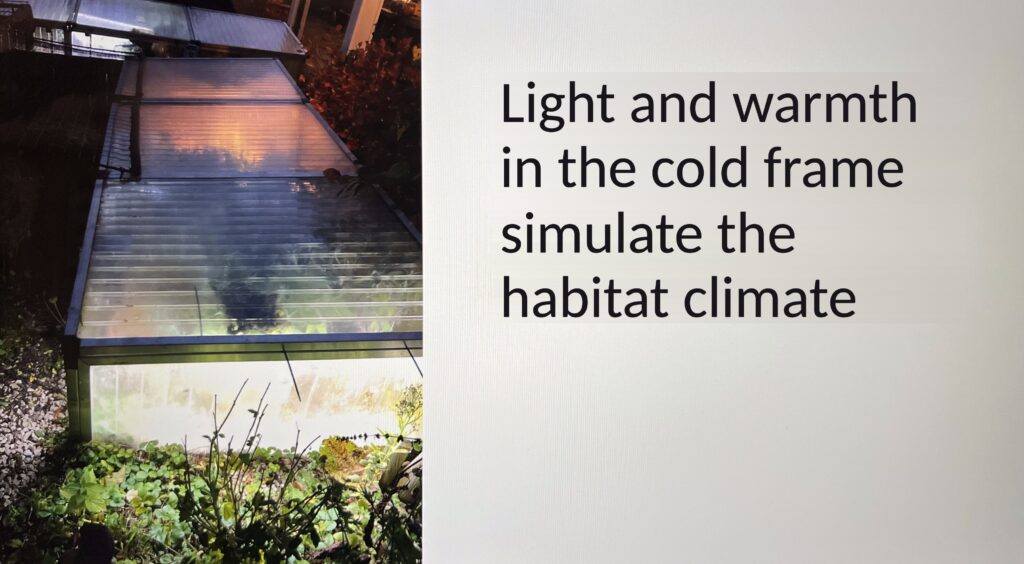
That is why, for temperature, light and hours of sunshine, we follow the climate data of the regions of origin as closely as possible and support the tortoises in the cold frame or greenhouse with the appropriate technology.
Contents
- Early September: Staying active as in the habitat
- Early October: No temperature reduction yet
- Mid-October: Resting is not yet brumation
- End of October: Start of the controlled temperature reduction
- End of November: Brumation proper now begins
- Early December: Moving into brumation quarters around St Nicholas’ Day
- Key points at a glance
🌞 Early September: Staying active as in the habitat
In their natural habitat, European tortoises are still very active in September and October. After the dry summer period and aestivation, some populations even become considerably more active again with the changing conditions than they were in the dry summer heat.
In captivity, too, the tortoises should therefore not be allowed to slip prematurely into a resting phase now. The aim is to simulate a Mediterranean late summer and autumn with the help of light and warmth.
Warmth and light
With nights becoming increasingly cool, the technology in the cold frame or greenhouse becomes particularly important:
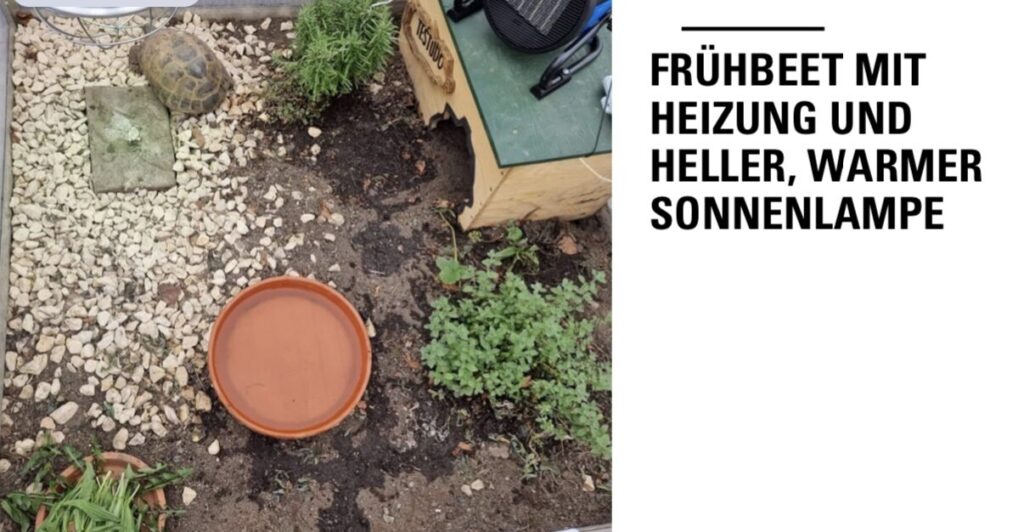
- A thermostatically controlled heater provides the necessary ambient temperature.
- A warm, bright UV basking spot allows the tortoises to bring themselves up to activity temperature.
- At the shell height of the largest tortoise, the basking spot should reach about 35 °C.
- Reptile LEDs can supplement the general lighting.
Lighting times can follow sunrise and sunset in the habitat. If you know the exact origin of your tortoises, you can make particularly targeted use of the corresponding climate data. For Corfu, for example, the basking spot can still be offered from roughly 7 a.m. to 8 p.m. at this time of year.
Even in autumn, the natural radiation intensity in the habitat is considerably higher than here and can only be approximated, even with good technology. On suitable warm days, the tortoises should therefore continue to have access to the outdoor enclosure and thus to natural sunlight.
Now is also a good time, while harvesting food plant seeds, to cut back tall or heavily shading plants and clear the basking spots again.
Time to think about health and brumation
September is also the time to check that the tortoises are healthy enough for the coming brumation.
If this has not yet been done, a faecal sample should be tested for intestinal parasites as soon as possible. A pre-brumation check-up with a reptile vet should also take place now.
At the same time, the planned brumation quarters should be prepared:
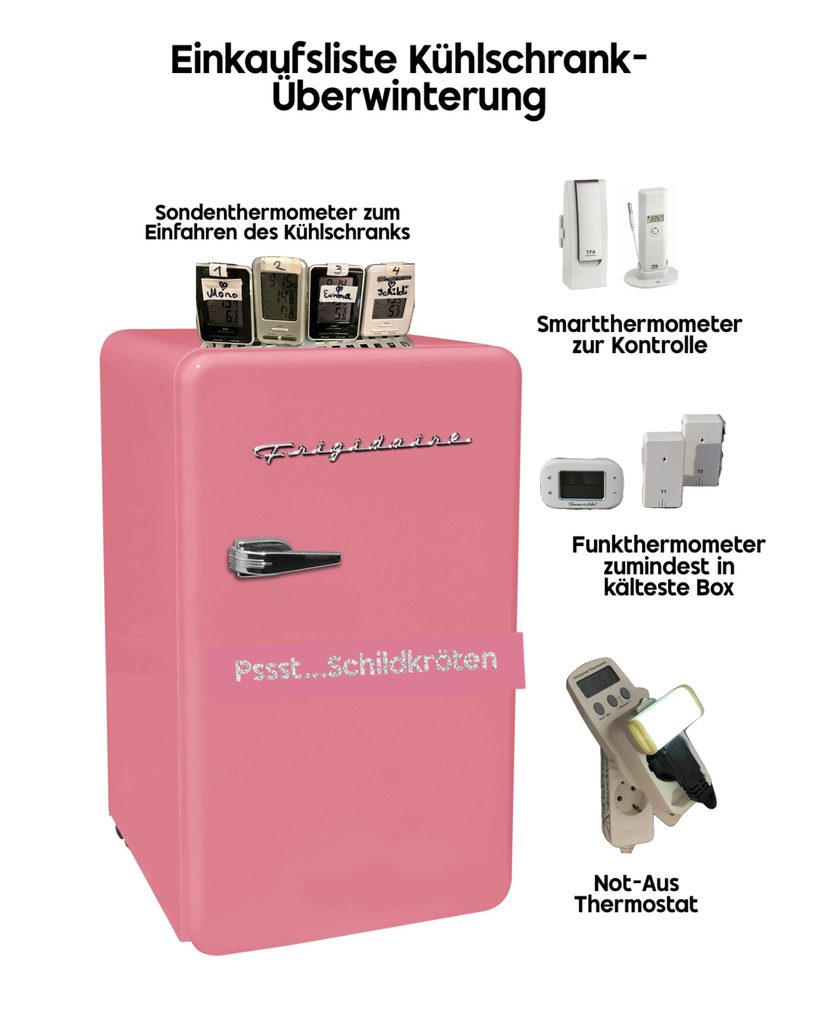
- a refrigerator for controlled refrigerator brumation
- a suitable vaulted cellar
- a brumation pit secured against frost and predators
If you do not yet have suitable technology in your cold frame or greenhouse, you should upgrade now as well. The necessary reserve equipment should also be checked now.
Rule of thumb: Tortoises are never moved into their brumation quarters in September or October. For many tortoises, the time comes later, roughly around St Nicholas’ Day (6 December). The prerequisite is that the tortoise has previously spent 1–2 weeks at temperatures permanently below 8 °C.
🍂 Early October: No temperature reduction yet
Even in early October, European tortoises are often still active in their habitats. In many places there, the first autumn rains cause fresh food plants to sprout.
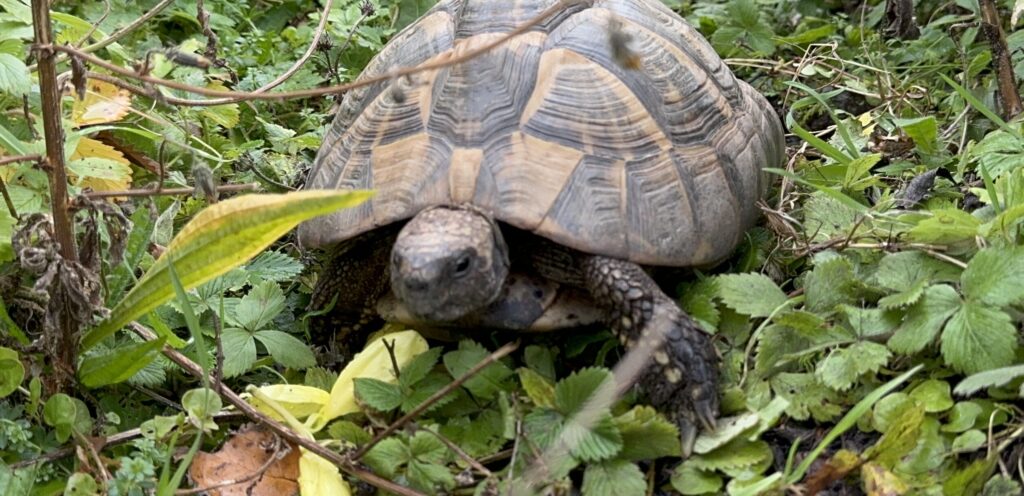
Afterwards, they warm up under the warm, bright basking spot.
Further reading
Especially when food is still being gathered in autumn or the enclosure is being replanted, reliable plant identification is important. The TASCHENDINOS Poisonous Plants Handbook helps you recognise problematic and poisonous plants in the tortoise enclosure and when gathering food.
That is why we keep the tortoises active here too and simulate a Mediterranean autumn with the help of light and warmth.
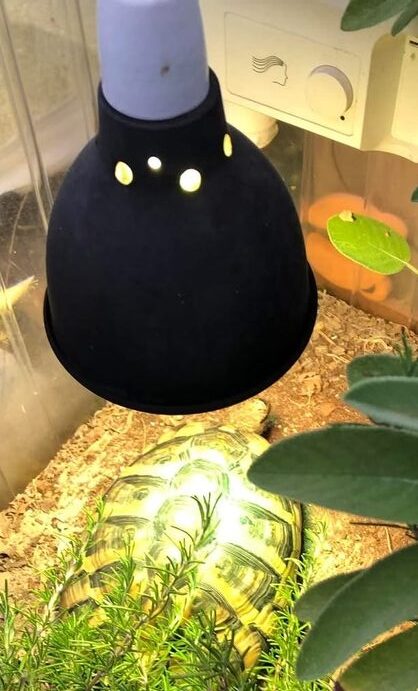
For Hermann’s tortoises, ambient temperatures at this point can still be roughly
- 20 °C at night
- 25–27 °C during the day
For spur-thighed, or Greek tortoises (Testudo graeca), temperatures about 2–3 °C higher may be appropriate, depending on their origin.
A marked reduction as early as the beginning of October would be counterproductive. In many regions of origin, night-time temperatures of around 15 °C occur only considerably later, and there they form part of the seasonal signal towards brumation.
Food and water remain available
Food continues to be offered, and fresh water is also available.
The tortoises should be able to decide for themselves whether they want to drink or bathe. Forced bathing is not necessary.
This requires suitable warm husbandry in a heated cold frame or greenhouse, so that the tortoises can bring their metabolism up to activity temperature when they need to.
In mild weather, they can continue to use the outdoor enclosure and then warm up again under the warm, bright basking spot.
Why we support autumn with technology
We want to avoid tortoises being kept for long periods at temperatures that allow neither normal activity nor genuine brumation. To this end, we make targeted use of technology in the cold frame or greenhouse in autumn:
- ambient warmth
- bright daylight
- UV radiation
- a warm basking spot
- sufficiently long lighting periods
Heating and lighting are used in a controlled way. Thermostats regulate the ambient temperature, while thermometers and correctly placed sensors make monitoring possible.
Further reading
If you want to understand the cold frame, heating, lighting, UV provision and temperature control in more detail, or plan your technology safely for autumn and winter, you will find the connections explained in full in the TASCHENDINOS Technology Handbook. It also covers technical safeguards as well as refrigerator and pit brumation.

🍁 Mid-October: Resting is not yet brumation
As outdoor temperatures fall, some tortoises now become quieter at times or dig themselves in more often.
This does not yet mean, however, that they are already in brumation.
Genuine brumation only takes place at temperatures permanently below 8 °C. The ideal brumation range for European tortoises is roughly 4.5–7 °C.
What matters are the temperatures exactly where the tortoises are, especially in the soil or brumation substrate.
So if the tortoises dig in in mid-October, they are initially only resting.
Keep securing tortoises in the outdoor enclosure
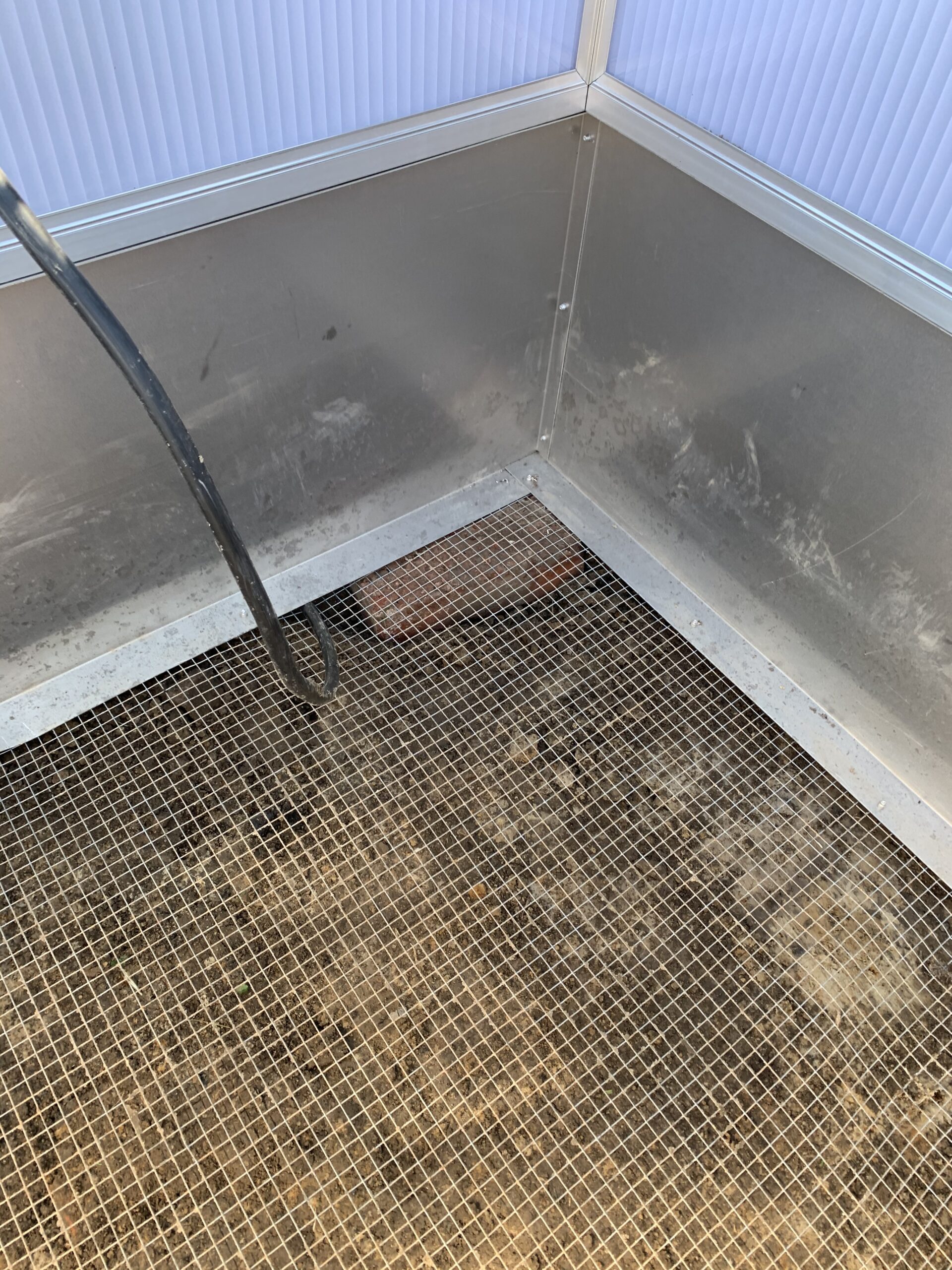
If you find it difficult to locate your tortoises in the evening, you should now make the outdoor enclosure considerably smaller and bring the tortoises in earlier.
Areas where the tortoises should not disappear can be secured against deep digging with paving slabs or limestone gravel.
In the evening, before dark, all the tortoises should be safely back in the protected cold frame or greenhouse, so that they are protected from predators and night-time temperatures that are too cold.
🍁 End of October: Start of the controlled temperature reduction
Only towards the end of October do conditions change markedly in many natural habitats.
Temperatures and hours of sunshine decrease. In the regions of origin of Hermann’s tortoises, seasonal preparation for brumation now increasingly begins.
Climate data show that the decisive autumn change coincides, among other things, with falling night-time temperatures and a marked decrease in hours of sunshine. In the climate data used so far, this threshold lies at fewer than about 150 hours of sunshine per month, with night-time temperatures falling steadily towards 15 °C.
Depending on the habitat, this marked drop in temperature can set in from the end of October to mid-November. This is exactly what we base our husbandry on.
Gradually, not suddenly
Temperatures are not lowered abruptly, but reduced step by step over several weeks.
Depending on species, origin and initial conditions, the controlled temperature reduction can take roughly four to six weeks.
You will find a compact step-by-step overview of all six weeks here: Temperature Reduction Weeks 1–6.
For Hermann’s tortoises, it can often begin at the end of October. For brumating Greek tortoises (Testudo graeca), the start can be somewhat later, depending on their origin.
The preparation is basically the same whichever form of brumation you choose – whether the tortoises will later brumate in the refrigerator, in a protected brumation pit or in a suitable vaulted cellar.
The basking spot remains available to the very end
Throughout the temperature reduction, a warm, bright basking spot must still be available every day.
Right up to the end, it should be offered for at least about five hours a day.
This allows the tortoises to reactivate their metabolism if needed, digest food and pass faeces and urates.
Important: The basking lamp is not switched off during the temperature reduction. It is only switched off once preparation is complete and all the tortoises have been fully dug in for several days.
Week by week to brumation
The detailed overview of the six-week temperature reduction to brumation guides you through the preparation step by step. Note that the actual temperature reduction usually takes place over 4 weeks, after which the tortoises brumate in the cold frame for 1–2 weeks before they can be moved into their brumation quarters. For tortoises from warmer southern habitats, the reduction can be correspondingly slower.
- Week 1 – Temperature Reduction
- Week 2 – Temperature Reduction
- Week 3 – Temperature Reduction
- Week 4 – Temperature Reduction
- Week 5 – Temperature Reduction
- Week 6 – Temperature Reduction
If you are planning refrigerator brumation, you can prepare the refrigerator during these weeks and run it in with the boxes you will use later.

Further reading
The complete process of refrigerator brumation, from the controlled temperature reduction and running in and safeguarding the refrigerator to checks and emergence, is explained step by step in the TASCHENDINOS Refrigerator Brumation Handbook.
❄️ End of November: Brumation proper now begins
At the end of the temperature reduction, the temperatures in the cold frame are secured at about 5–6 °C.
Among other things, the hysteresis of the thermostat used, the control of the heater and the correct placement of the temperature sensors must be taken into account.
The tortoises should now first brumate for at least one, preferably two weeks permanently below 8 °C.
Only now is it genuinely brumation.
This also explains why a tortoise that dug itself in back in October is by no means automatically „in brumation“.
❄️ Early December: Moving into brumation quarters around St Nicholas’ Day
A proven rule of thumb: move the tortoises into their brumation quarters roughly around St Nicholas’ Day (6 December).
The exact timing always depends on the actual temperatures and the condition of the tortoises. What matters is not the calendar date alone, but that the tortoises are already brumating reliably and permanently at temperatures below 8 °C.
Refrigerator brumation
Tortoises that are to brumate in a controlled way in the refrigerator are only moved once they have been reliably in brumation for at least one, preferably two weeks.
By this time, the refrigerator should be fully run in with the brumation boxes, hold stable temperatures and be properly safeguarded. Further information on the refrigerator and brumation boxes and on the additional safeguard provided by the UT300 Equiva can be found in the linked articles.
Ideally, the tortoises notice as little as possible of the move.
Detailed information can be found in the articles on controlled refrigerator brumation and moving tortoises into the refrigerator, and on the page „Refrigerator Brumation Checklist„.
The TASCHENDINOS Refrigerator Brumation Handbook covers the entire process, from preparation to emergence, in even greater detail.
Pit brumation
Brumation in a pit should only take place in a facility secured against frost and predators.
There, too, stable temperatures within the suitable brumation range must be guaranteed. Depending on the design, appropriate insulation and technical safeguards are needed.
Further information is available in the article on pit brumation and on the page Outdoor Enclosure, Cold Frame and Brumation Pit.
The TASCHENDINOS Technology Handbook also describes in detail the technology for the whole tortoise year and how to build and safeguard a brumation pit.
✅ Key points at a glance
Preparing European tortoises for brumation does not begin with the first cold autumn day in Central Europe. What matters is the seasonal rhythm in the natural habitat.

- September and early October: The tortoises remain active. Warmth, light, UV and a warm basking spot support the Mediterranean autumn.
- Mid-October: The tortoises may become quieter at times or dig themselves in. This is not yet brumation.
- From the end of October: Temperatures and lighting duration are reduced gradually and in a controlled way.
- End of November: The tortoises reach temperatures permanently below 8 °C and genuinely begin to brumate.
- Early December: After at least one to two weeks of stable brumation, the tortoises can be moved into their final brumation quarters. A useful reminder is the time around St Nicholas’ Day.
Ambient temperature, light, hours of sunshine and the course of temperatures set the rhythm. Good technology and close observation of the tortoises make it possible to reproduce the seasonal conditions of the natural habitat as sensibly as possible, even in our climate.
Food continues to be offered, along with fresh bathing water. In species-appropriate husbandry, the tortoises should be able to decide for themselves whether they want to bathe. This approach does, however, absolutely require species-appropriate warm husbandry in a heated cold frame or greenhouse.