
The new tortoise season begins in March
by Anke ROTZLER
No matter when the tortoises dig in, by early to mid-March at the latest the procedure starts again in reverse – always depending on the weather outside, of course.
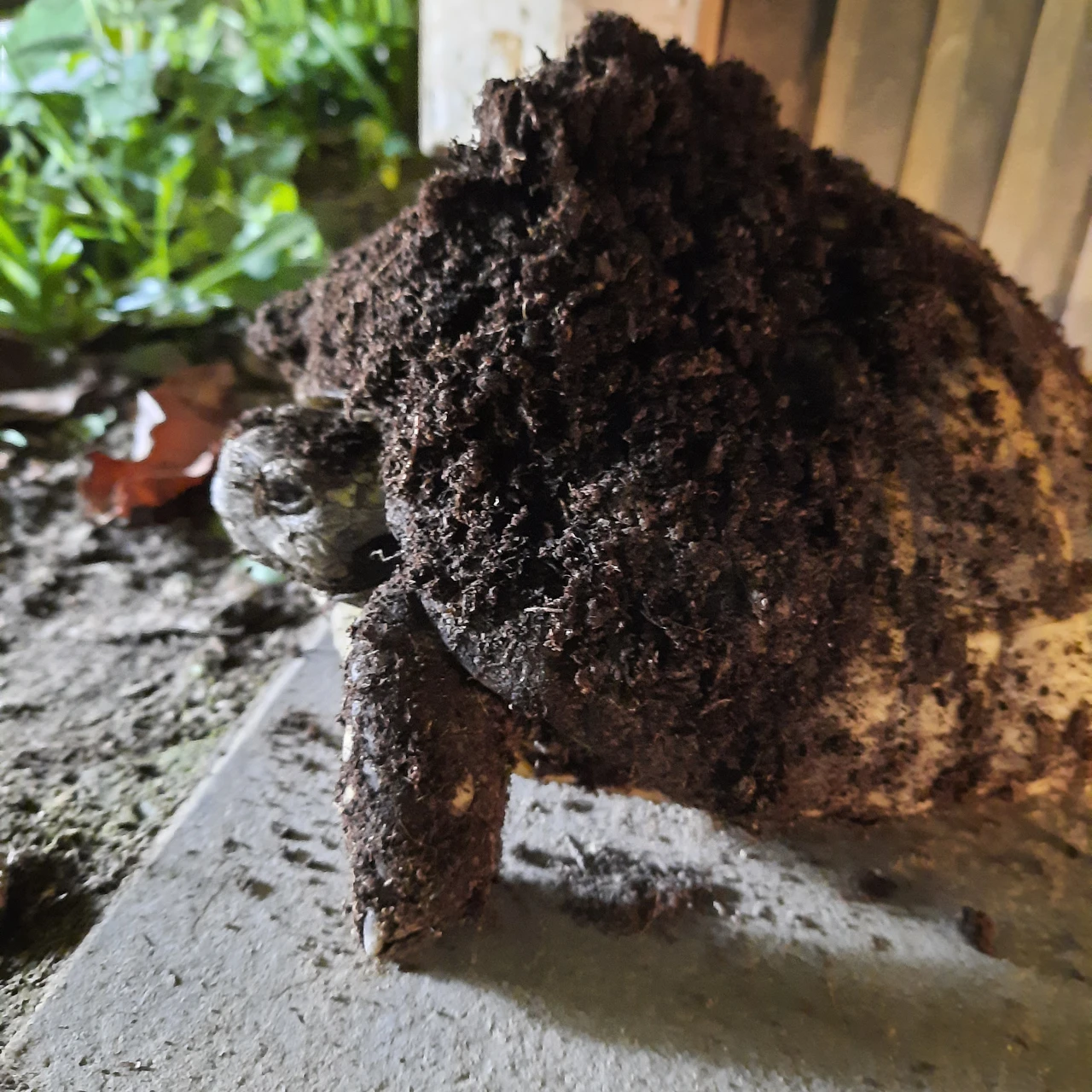
I remove the leaves and raise the night-time temperature to 10–12 °C, then continue to increase it. The change in air pressure and the March sun usually do the rest to bring the tortoises up. And so, one by one, usually within two to three weeks, the „clods of earth“ appear at the surface. The tortoises that had not buried themselves are, of course, the first.

As soon as the first tortoise is awake, the bright, warm basking lamp is offered again, and it is usually used straight away. The ambient temperature in the greenhouse is then raised promptly to get the tortoises feeding quickly too.
All my tortoises start feeding within one to two days. This should be watched closely so that post-brumation anorexia can be recognised quickly.


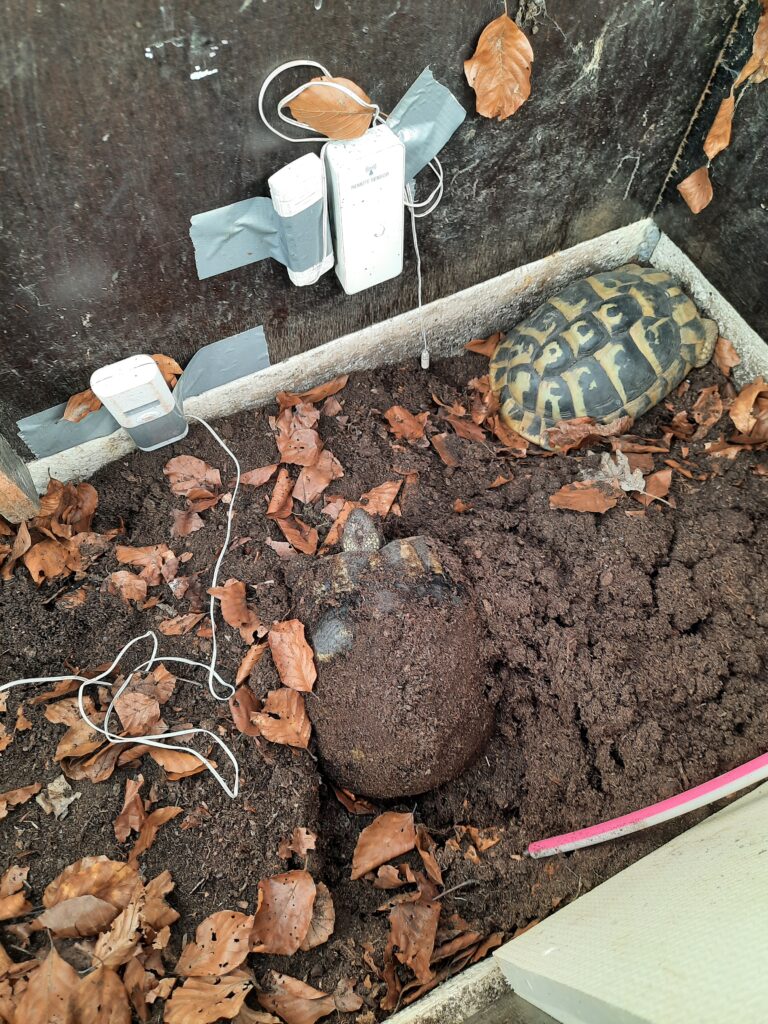
To sum up, having tried both brumation methods, I can say that pit brumation is very relaxed for keeper and tortoise alike, as each tortoise can prepare and dig in at its own pace.
Of course, tortoises in the pit can only be monitored technically, not visually. But after the first nerve-racking winter, I now trust that the tortoises, guided by their natural instincts, will do the right thing.

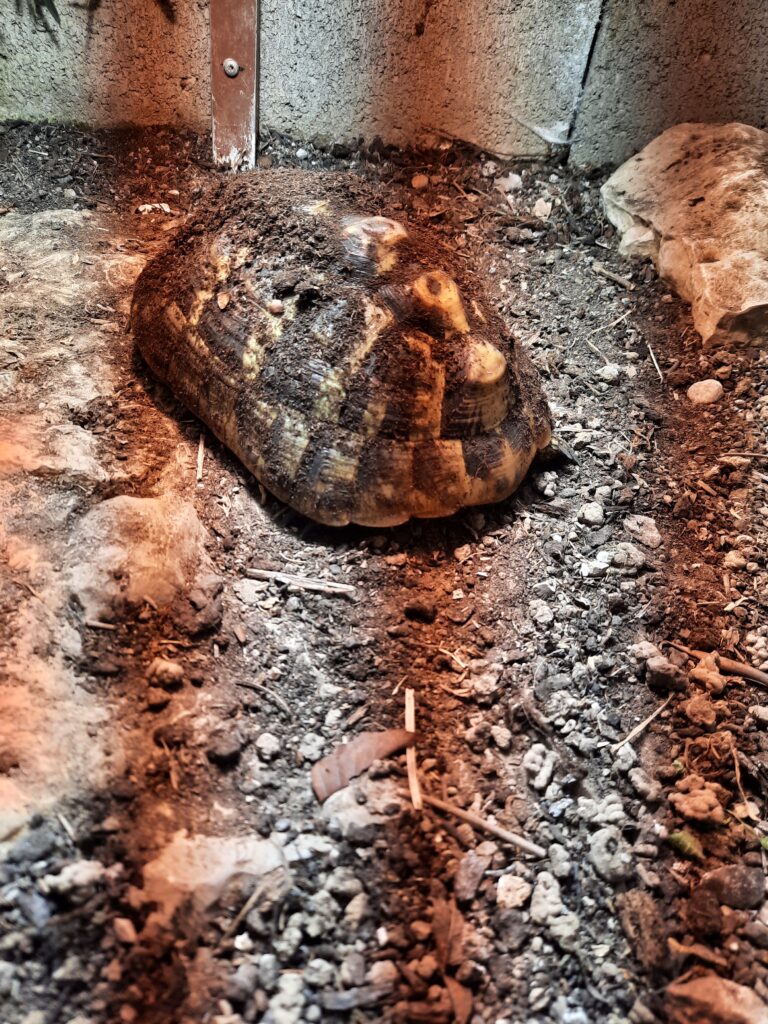
Even my Sophie, who came from vivarium husbandry and had never been allowed to brumate before, managed brilliantly from her very first winter with me, and emerged from the depths in spring completely covered in soil.
And yes, it is still exciting every year – the suspense and joy grow with every tortoise that finally emerges healthy.
Nature is simply fascinating 🙂
About the author
Anke Rotzler, a mother of two, has kept European tortoises for 19 years. Anke is an expert on food plants for herbivorous tortoises.
For many years she has been active in the Facebook group „Futterpflanzen für Schildkröten“ and in voluntary husbandry advice on Facebook, including in the groups „Technik für Europäische Landschildkröten“ and „Hege und Pflege griechischer Landschildkröten“ (all German-language groups).

Slides from the talk (in German)
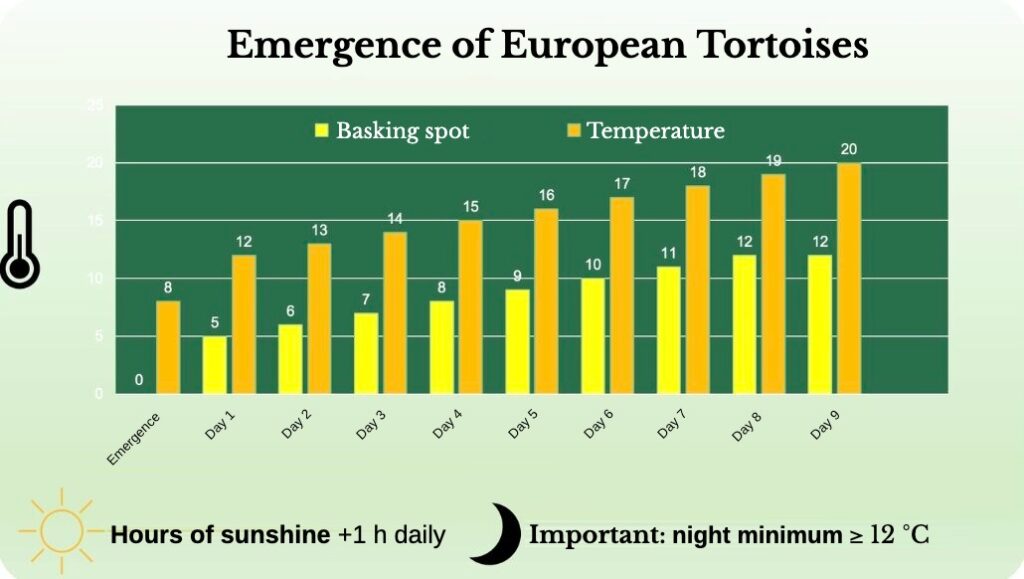
All the information on the technology needed for species-appropriate warm husbandry in the cold frame, together with a description of bringing the tortoises back up to temperature and instructions for pit brumation and refrigerator brumation, can be found in the Taschendinos Technology Handbook.
What to do if the tortoise is slow to get going?
After brumation, European tortoises quite often have difficulty getting going again. If the tortoise does not start feeding, appears lethargic or continues to lose weight, post-brumation anorexia may be present, for example.
The article Warning Signs After Brumation in European Tortoises explains the physiological processes of adjustment, distinguishes between the normal reactivation phase and disorders requiring treatment, and describes the most important warning signs that call for early veterinary assessment, with scientific sources for further reading.
