(Photo: Schildkrötenhilfe Witten e.V.)
Modern husbandry replaces old habits
With more than 360 species, turtles and tortoises form a large and ancient group of reptiles, yet many of their secrets have still not been uncovered. Even so, we now know a great deal about their basic needs.
Tortoises are ancient creatures, but our husbandry methods do not have to be.
They endure a great deal in silence, including husbandry mistakes that are decades old.
Some of these date back a long way; others are unfortunately still being passed on.
Our knowledge of modern tortoise husbandry continues to grow, and with it the responsibility to put it into practice.
This page aims to clear up some of these outdated practices.
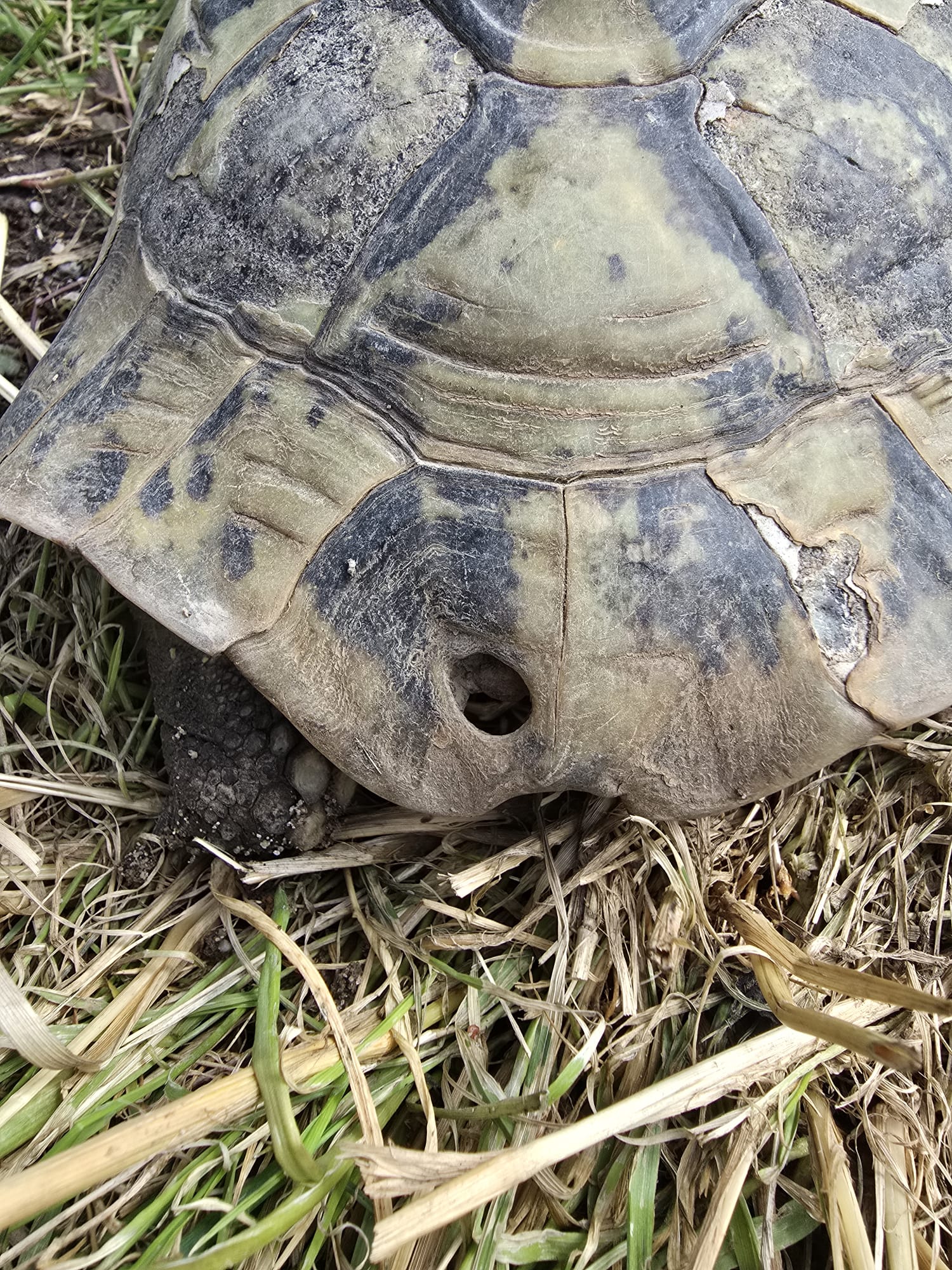
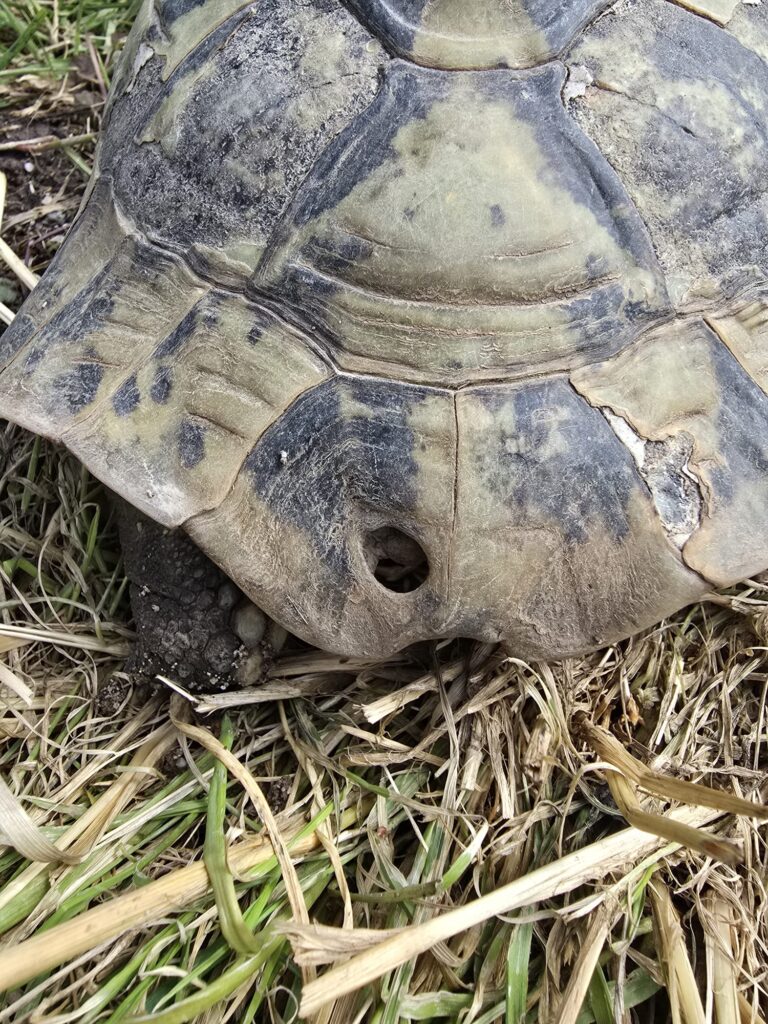
Holes drilled in the shell
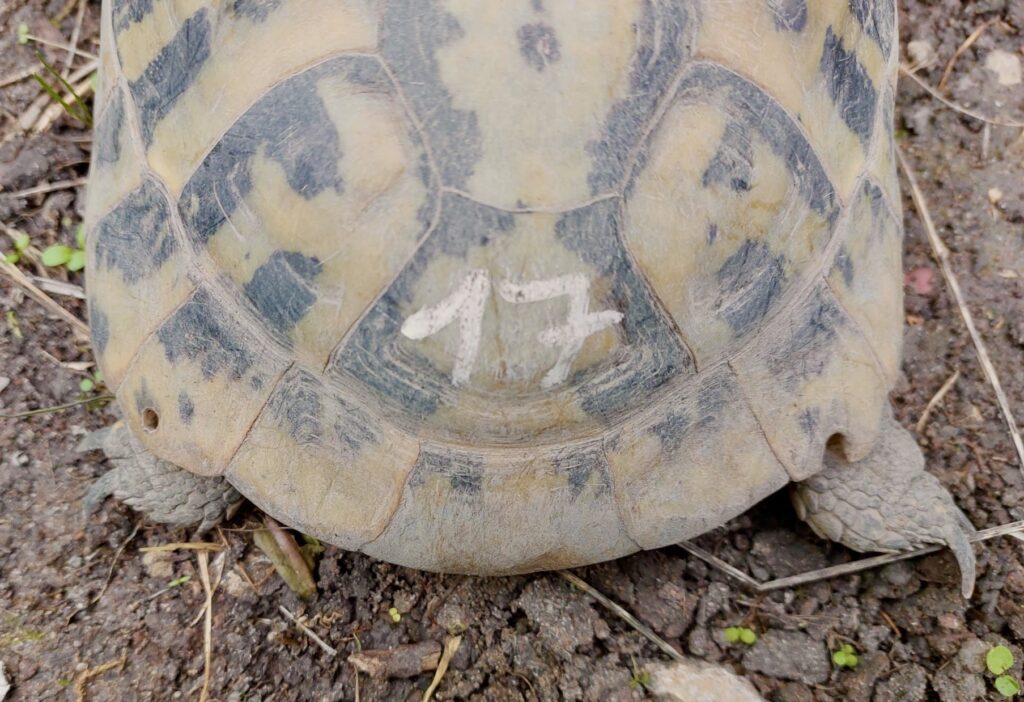
A tortoise’s shell is as sensitive as our shinbone. The former custom of drilling holes into the marginal scutes in order to “tether” tortoises and stop them from escaping therefore appears in a truly barbaric light. Such tortoises are often found in species-appropriate care today, after years of suffering. Over the decades, the holes sometimes grow outwards or even close up again. It goes without saying that a tortoise should be given an escape-proof outdoor enclosure.
Cold husbandry
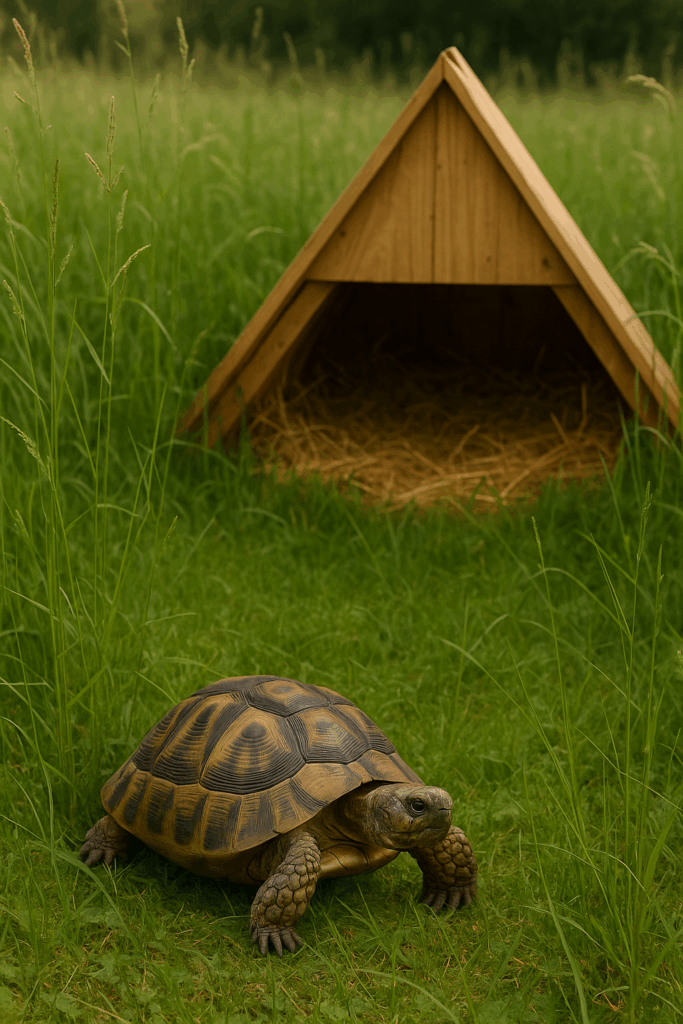
Many husbandry practices are long outdated. Our knowledge has grown considerably, paving the way for modern warm husbandry. Cold husbandry without heat sources is harmful to European tortoises from the Mediterranean. During their active season, they always need an area in which they can reach their preferred body temperature of 35 °C. Without it, their organs suffer, because their metabolism can only run on a low flame. Organ damage and serious diseases such as gout and liver and kidney failure lead to a slow, painful death. A look at the climate data of their natural habitats is enough to understand that, in our latitudes, tortoises cannot survive without a heated cold frame. By comparison, our climate is too cold and too wet, the hours of sunshine are too few and the radiation is too weak. In modern, species-appropriate husbandry, we compensate for this with warm husbandry in high-quality cold frames equipped with technology, meaning heating and a basking spot. The Taschendinos Technology Handbook explains in detail what the climate in the habitat looks like and how we can simulate it in the cold frame.
Withholding food and bathing tortoises empty before brumation
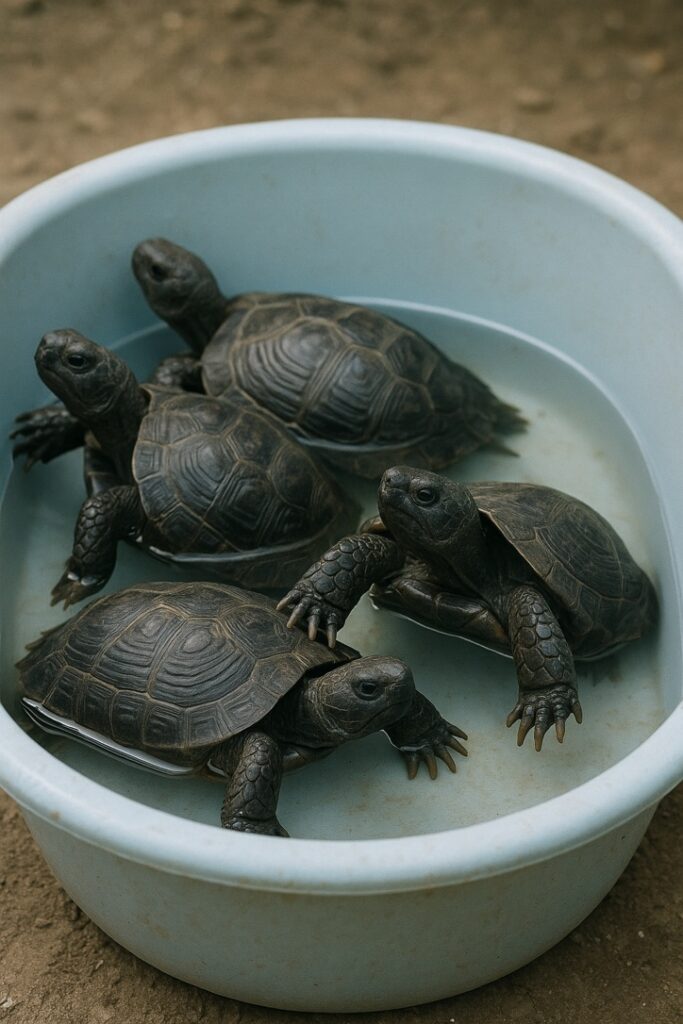
Other practices that are incompatible with modern, species-appropriate husbandry are withholding food and bathing tortoises until their gut is empty in preparation for brumation. In species-appropriate husbandry, we gradually lower the ambient temperature in the cold frame over several weeks from the end of October and shorten the basking hours. Once there are fewer than 150 hours of sunshine a month, the tortoises receive the same signal as in their habitat: the season is coming to an end. They then visit their water dishes more often, pass large amounts of urates and faeces, and stop eating of their own accord. Withholding food and forced bathing, as practised in the past, are therefore unnecessary. It is important to provide a warm, bright UV basking lamp with 35 °C at shell height until even the last tortoise has stopped basking for several days.
The idea that tortoises must completely empty their gut is also outdated. It is now even assumed that a completely emptied gut lacks the important gut flora in spring after brumation, which could lead to problems such as post-brumation anorexia.
Nevertheless, for tortoises with metabolic problems it can make sense to place them in the water dish in their cold frame from time to time, in consultation with a reptile vet. The same applies to tortoises from unsuitable previous husbandry, for example from a vivarium, as they are often severely dehydrated. However, the tortoises should always be able to leave the water dish whenever they wish. This reduces stress.
Shell “care”
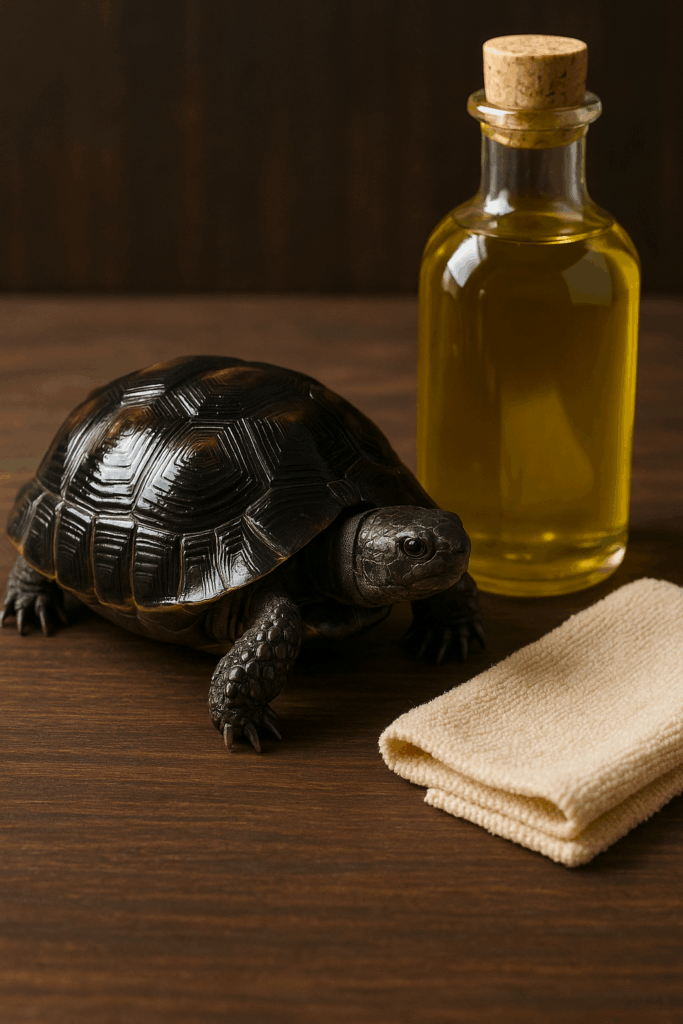
It used to be thought that a tortoise’s shell needed to be cared for with oils or a rind of bacon. Dubious “shell care” products are still on sale today.
The instructions for a “shell care product for tortoises” sold in pet shops seem bizarre:
“… Tortoise Shine keeps the shell surface of tortoises well cared for. It prevents brittleness and gives the shell surface a well-groomed appearance. The product is non-toxic, but contact with the eyes should be avoided. Easy to use: bathe the tortoise in lukewarm water (approx. 25 °C) and dry it well. Soak a cotton pad in Tortoise Shine and rub a thin layer onto the shell.” (our translation)
First of all, tortoises are only bathed on veterinary advice, for example in the case of metabolic problems. Naturally, nobody oils tortoises in the wild. At most, they lie hidden beneath fragrant Mediterranean herbs, which is in no way comparable to “oiling”.
This practice is strongly discouraged, because the shell is important for warming the tortoise evenly. As an ectothermic reptile, a tortoise depends on being able to reach its preferred body temperature.
Oiling can hinder this important process, as can painting or marking the shell. The latter are suspected of causing shell necrosis. Oil also encourages fungal infections and clogs the pores. The oily layer can impair the oxygen supply through the pores of the shell and, after a fall combined with reduced blood flow, create ideal conditions for anaerobic bacteria, which in the worst case can lead to severe necrosis.
As early as 2000, Ulrike Eggenschwiler showed in “Die Schildkröte in der tierärztlichen Praxis” (The Tortoise in Veterinary Practice) that the decomposition of vegetable oils on the shell and the reduced oxygen supply can cause inflammatory changes in the growth zones. The photographic documentation of this damage in the book underlines the urgent need to abandon this practice once and for all.
Instead, we recommend planting Mediterranean herbs such as lavender, sage or rosemary in the outdoor enclosure. Tortoises like to rub against these plants, which cares for the shell naturally and without any harmful side effects.
Tortoise rescue centres often take in tortoises that have been oiled for decades, and removing the old, thick layers of oil in a tortoise-friendly way is very difficult and laborious.
Forced growth and keeping tortoises in a vivarium
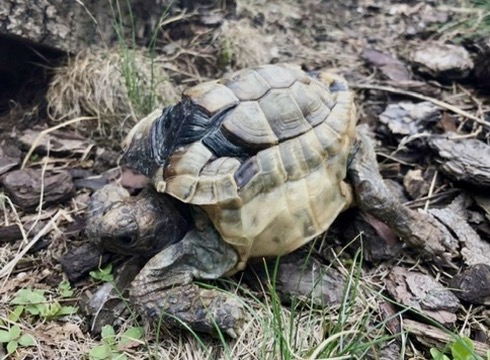
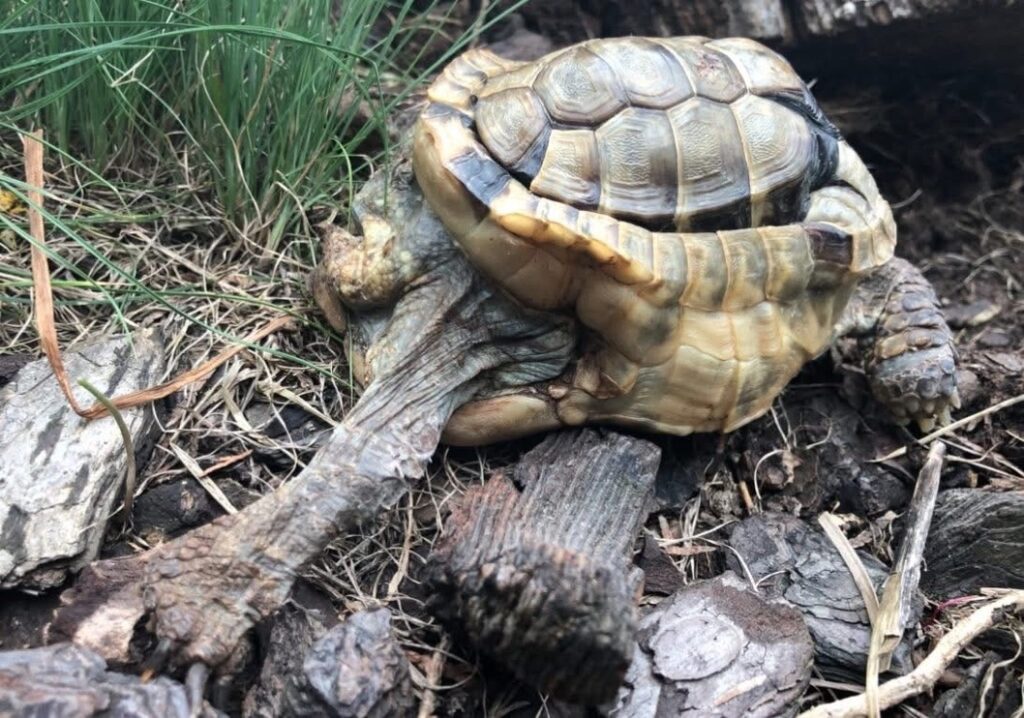
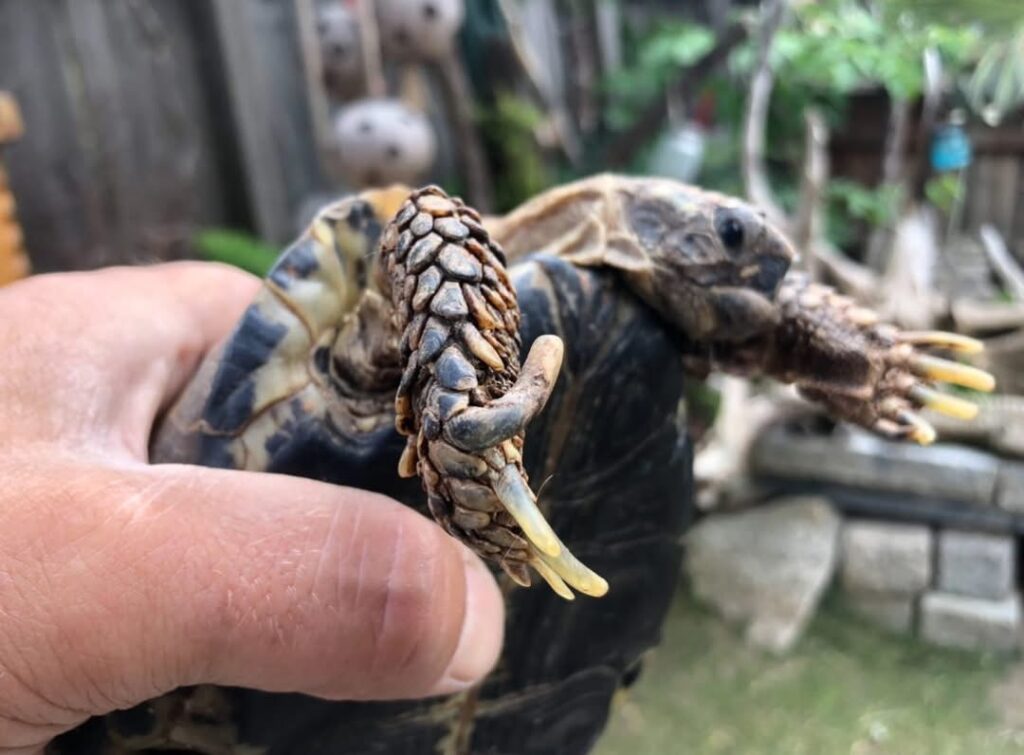
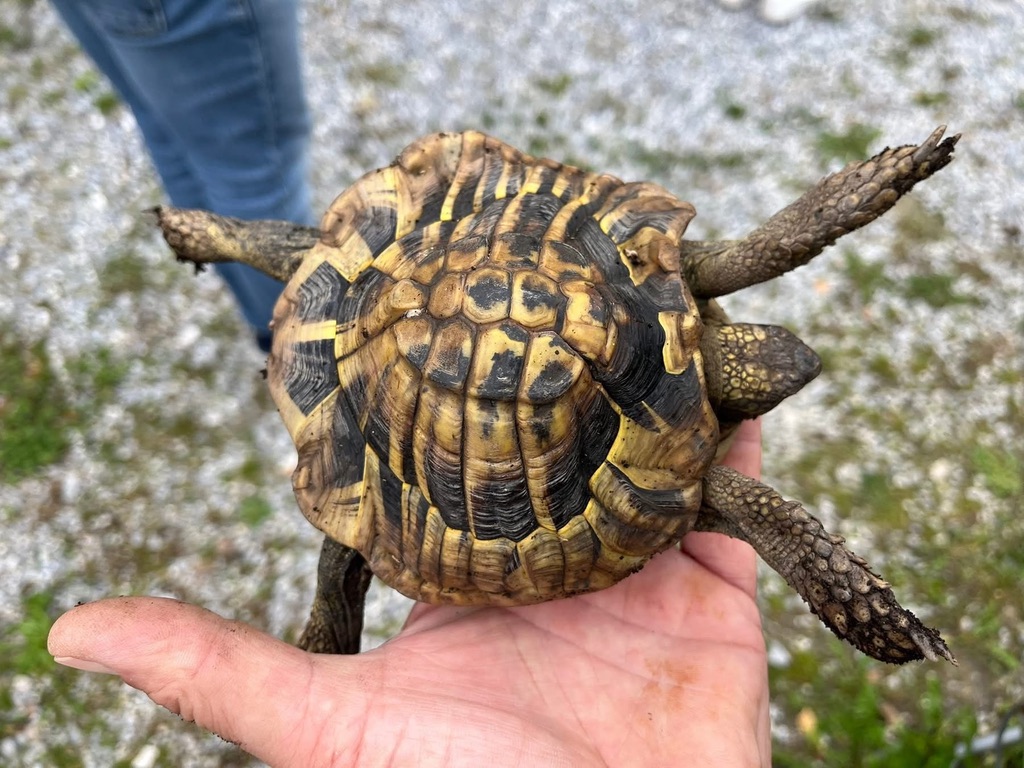
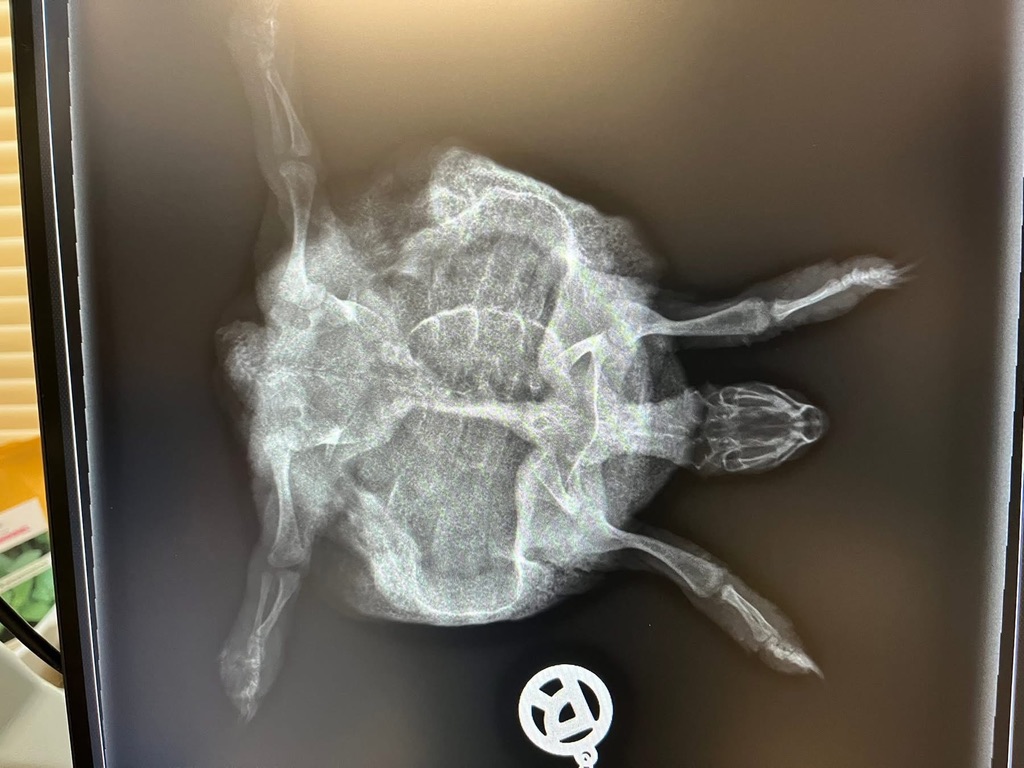
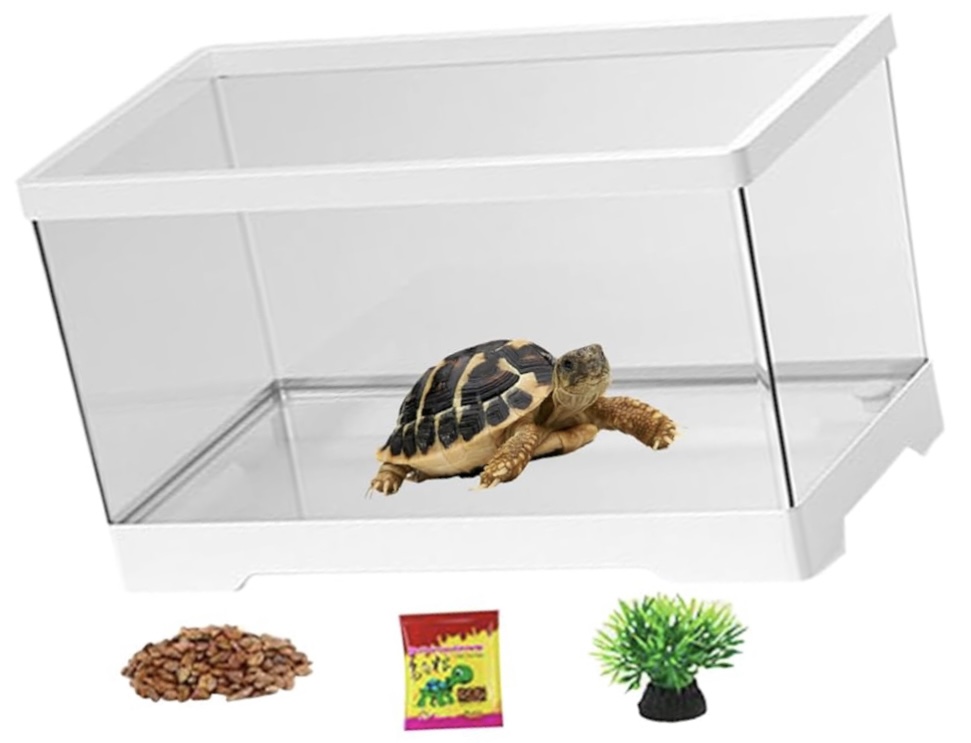
In the past, many tortoises were kept in cold conditions, and hatchlings were usually reared in a vivarium for their first years. These tortoises often had to go without brumation altogether or, to maximise breeders’ profits, were only allowed a shortened brumation. As brumation is always also a period of natural selection, tortoises survived that would otherwise not have survived a normal brumation. The health problems and early deaths of these young tortoises, known in German as “Dampfaufzuchten” (literally “steam-reared”), were then conveniently passed on to new keepers, with whom they often survived only a short time.
Why are young tortoises reared in a vivarium called “steam-reared”?
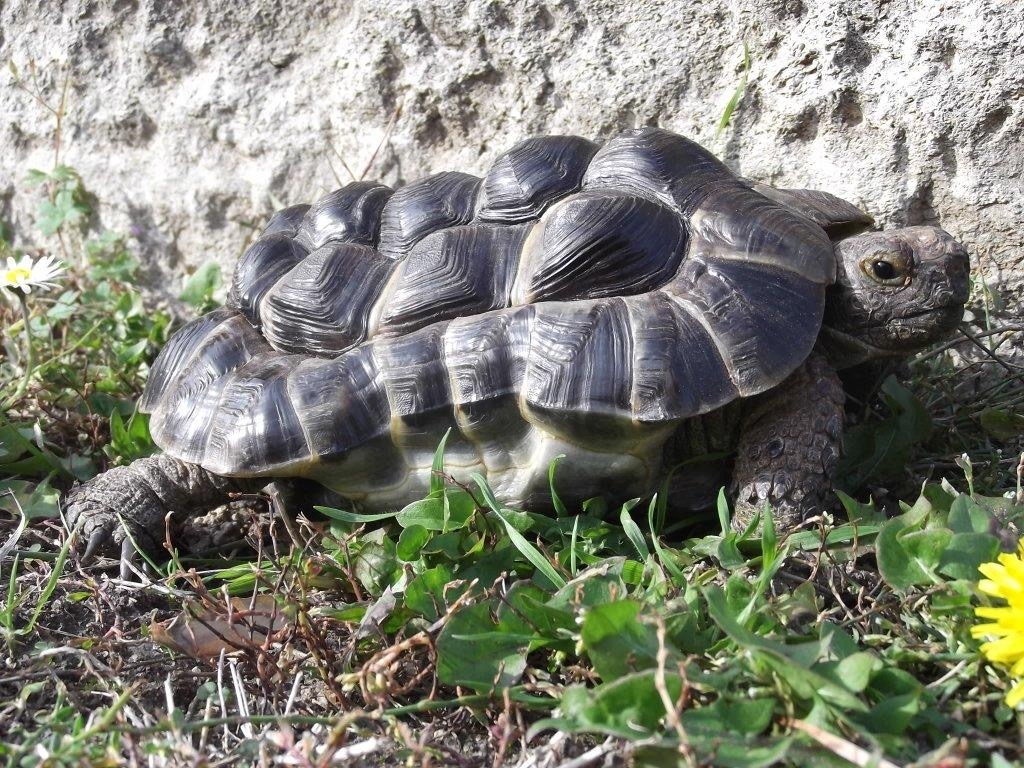
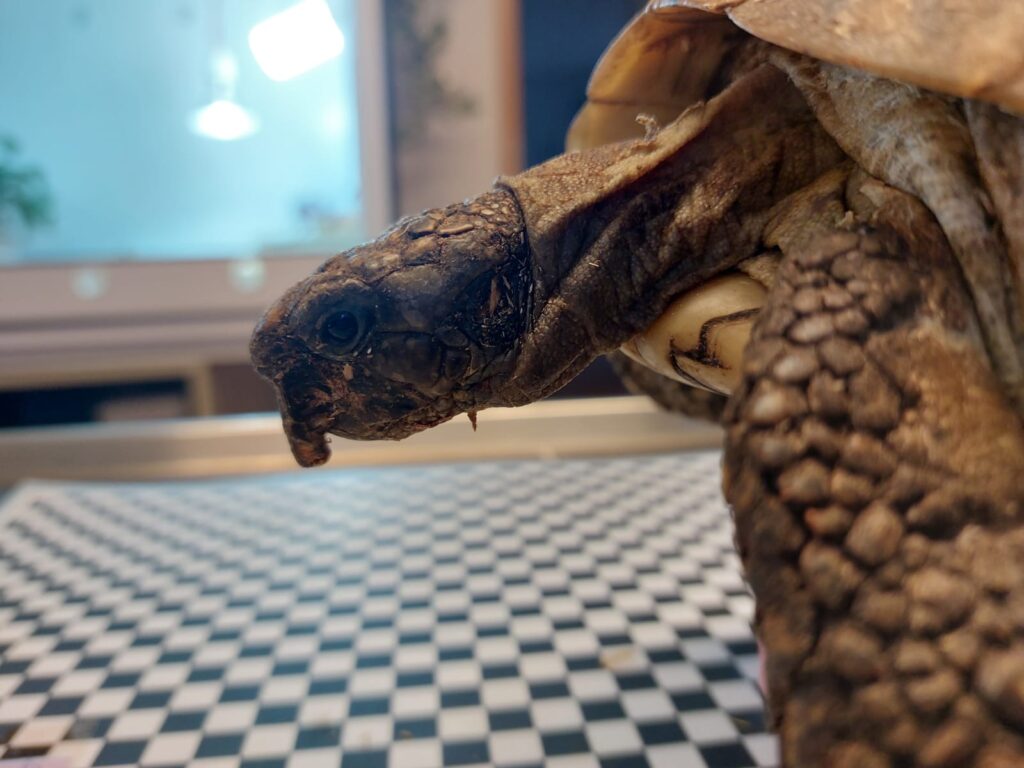
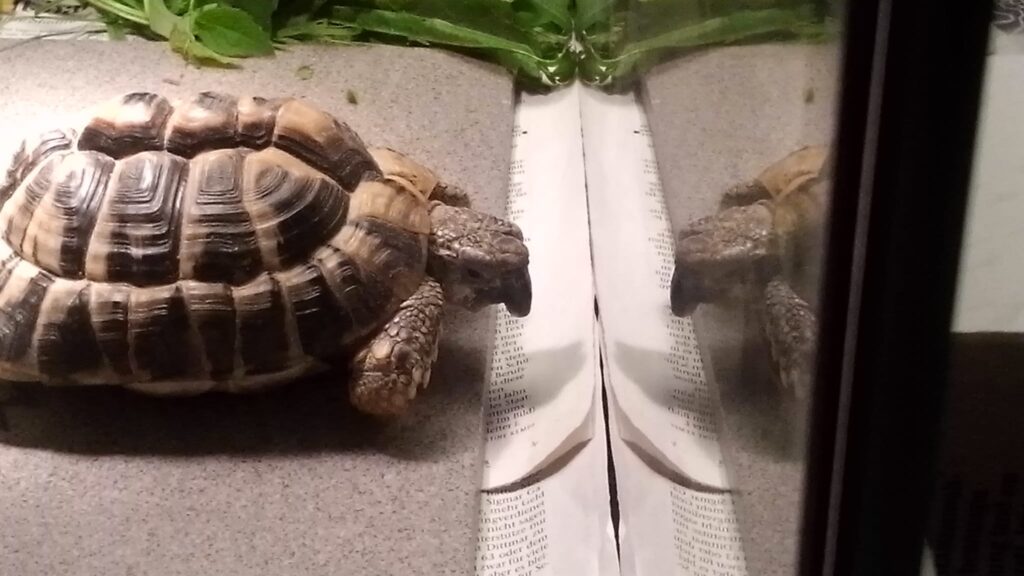
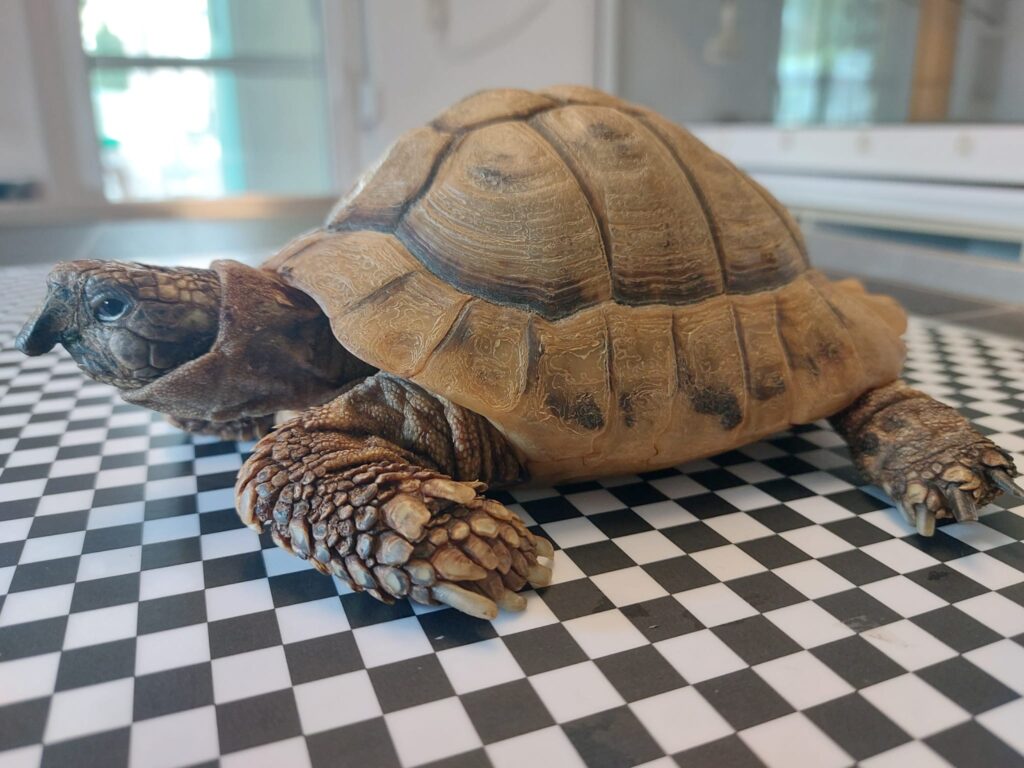
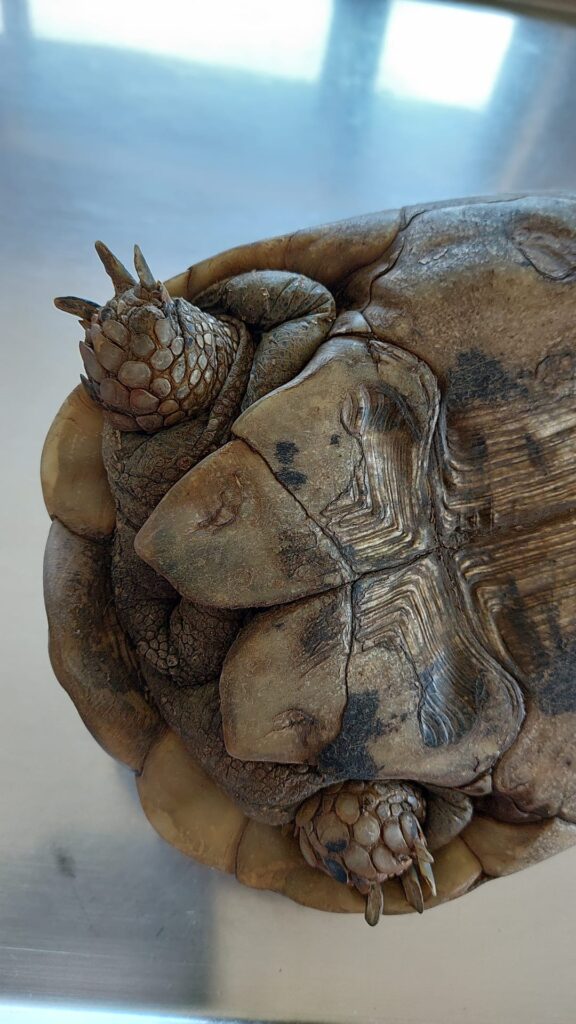
Because the constant warmth without brumation makes them grow much faster than is physiologically intended. These tortoises are usually too heavy for their legs and their entire skeleton, so that their bones and shell collapse into one another (rickets). Their oversized organs, which have grown too quickly, are squeezed inside the shell, and from an early age they tend to develop pyramiding and organ damage. You can read more about vivarium keeping here. The following pictures bear silent witness to vivarium keeping.
Insensitivity to pain
Another disproven theory is that tortoises do not feel pain. Many keepers did not take their tortoises to a vet even when they were seriously injured, because the animals supposedly had no sense of pain. This complete misjudgement is partly based on ignorance and partly on the proverbial tolerance and resilience of these ancient animals, which have to endure a great deal in silence before they finally die. Reptile vets know all about this and repeatedly point out that tortoises do feel pain, even if they cannot make sounds of pain that humans can hear. Far more tortoises would probably be kept correctly if they could.
We now know that tortoises do communicate through vocalisations, but in a low-frequency range that humans cannot perceive.
Like other reptiles, tortoises need comprehensive pain management after accidents, during operations and for painful illnesses.
Freezing
This brings us to euthanasia. It used to be thought that tortoises could be euthanised by putting them in a freezer. This practice, which unfortunately is still occasionally encountered, is today regarded as a breach of animal welfare law, because the tortoises suffer unacceptable, unbearable pain as their nerve cells burst. As vertebrates and, above all, as sentient beings, tortoises must be put to sleep humanely and painlessly by a reptile vet. Euthanising ectothermic animals requires expertise and should therefore, wherever possible, only be carried out by a vet specialising in reptiles.
Keeping tortoises as “house pets”
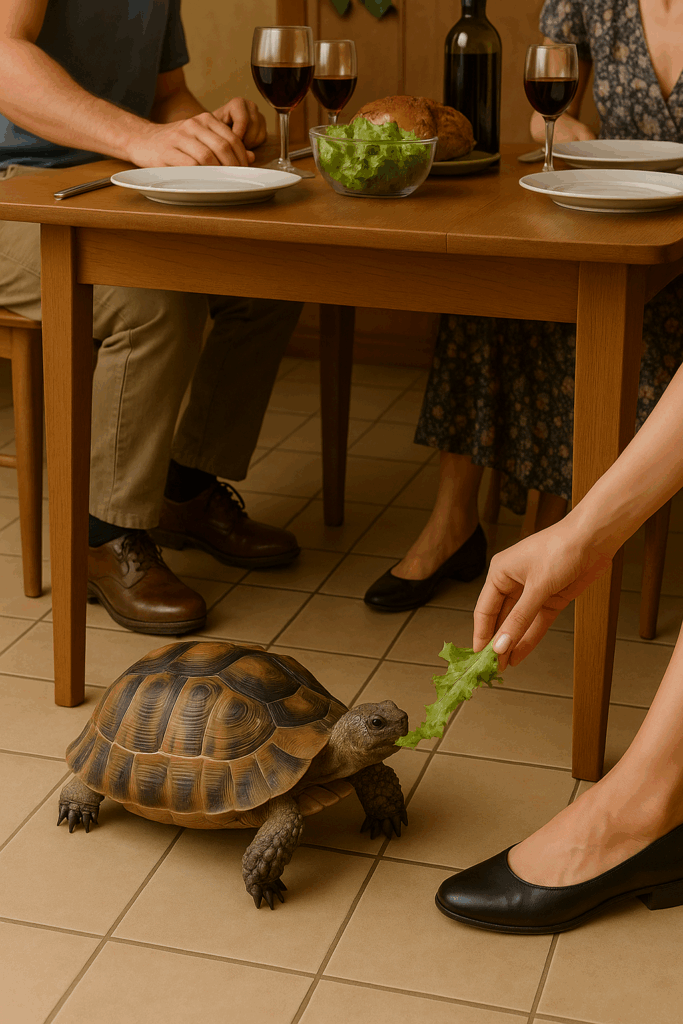
Responsible keepers may find it hard to believe, but there are still people who let their tortoises roam freely around their home like a dog or a cat.
To make matters worse, such tortoises are sometimes even fed on leftovers. They usually know neither brumation nor UV light, or they are brumated with the wrong parameters. Moving these tortoises on to species-appropriate husbandry is a real challenge. Their health is often badly affected, as they have missed out on essential husbandry requirements, sometimes for decades. Their shell is usually as soft as a bread roll because of a lack of UV and calcium. Their bones are often wafer-thin and cannot carry their weight, so the tortoises “push” themselves forwards. In many cases, their joints are badly damaged from constantly walking on unsuitable, slippery floors. Claws and beak are not worn down. Their liver and kidney values are also often disastrous, because they had neither the necessary preferred temperature nor a diet of wild plants. On top of this, they usually lack access to water.
Incorrect feeding
European tortoises mainly eat high-fibre plant food: wild plants such as chicory, dandelion, nettle, thistle and plantain, supplemented with leaves and flowers.
If they are fed incorrectly, for example with fruit, vegetables or protein-rich food, they face many risks, from massive worm infestations caused by fruit sugar to liver and kidney problems. The wrong food also leads to excessive growth of the beak, which is normally worn down naturally by tough, fibrous wild plants.
See also: Forced Bathing – A Former Husbandry Practice · Why Not a Vivarium? · Warm Husbandry