Preparing for refrigerator brumation
Before our tortoises can be moved into the refrigerator, a few important conditions must be met. What matters most is that the tortoises are already used to the low temperatures and that their bodies are in the brumation phase. How can I be sure that my tortoise is in brumation?
Temperature requirements in the cold frame
It is important that the tortoises have been kept at temperatures below 8 °C in the cold frame for at least one week, preferably two.
The ideal temperature range is 5–6 °C.
As a guide:
- Has the soil temperature where the tortoises are lying stayed below 8 °C, day and night, for at least one week, preferably two?
- Ideally, the temperature where the tortoises are resting should already have been 5–6 °C for some time when they are moved.
The easiest way to check this is without contact, using an infrared thermometer.
Observing behaviour
Before the move, the tortoises’ behaviour should clearly show that brumation has begun:
- Are the tortoises completely inactive, moving only very sluggishly when touched (as if in slow motion)?
- Are their eyes closed, and do they stay in the same place?

Health and weight check
Before the tortoises are placed in the brumation boxes, they are given a short but thorough health check:
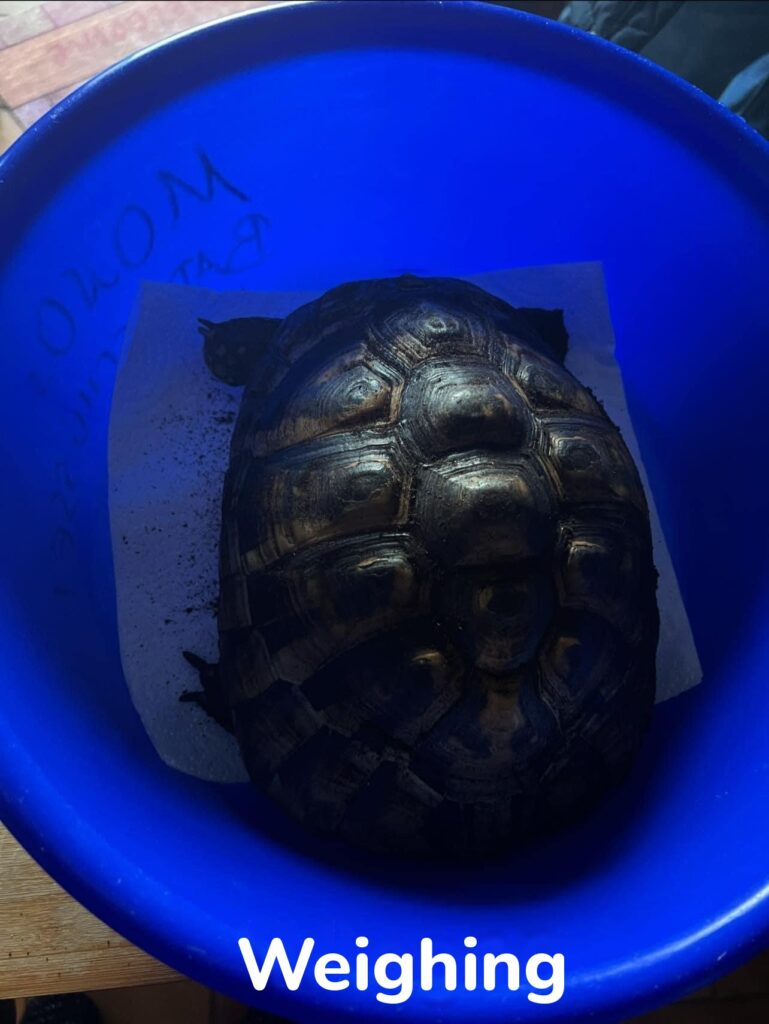
- Weigh the tortoise and record its weight. The starting weight is important for later checks during brumation.
- Physical check:
- Check the shell, nose, beak, eyes and cloaca for redness, mucus or discharge.
- Check the limbs for swelling.
Only healthy tortoises with no abnormal findings may be brumated. If in doubt, consult a reptile vet.
Preparing the refrigerator
Before brumation begins, the refrigerator must be fully prepared and tested:
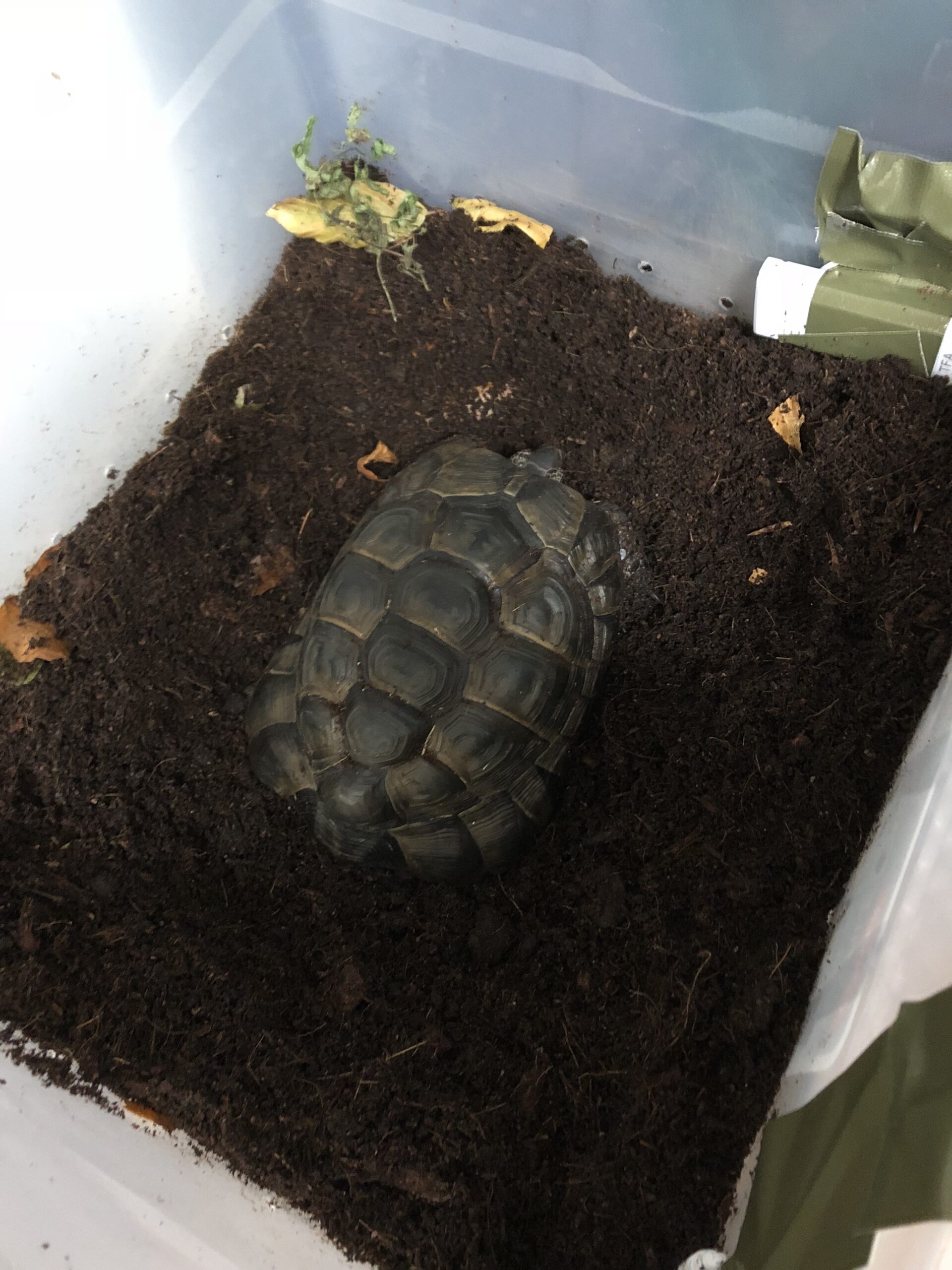
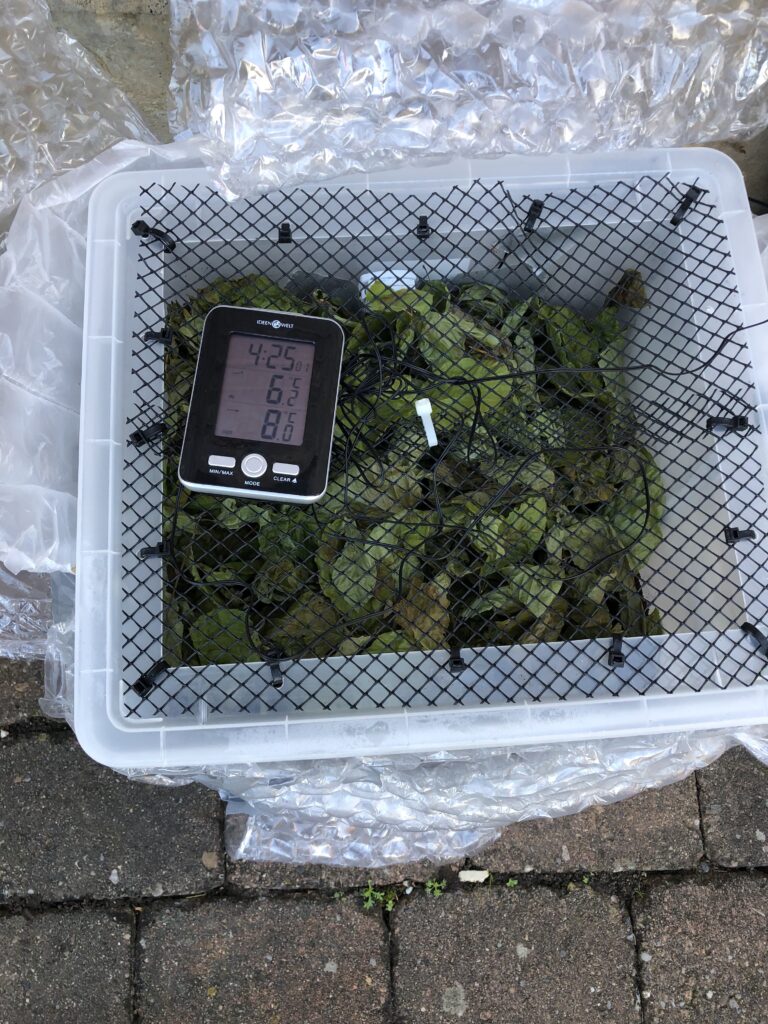
- Has the refrigerator, with the boxes filled with soil and leaves, been run in for at least one week at 4.5–7 °C, checked with probe thermometers?
- Is it protected against temperatures dropping too low by an emergency cut-off thermostat, with its sensor placed at the back of the substrate in the coldest box?
Once all these points are met, nothing stands in the way of safe brumation in the refrigerator.
📋 All the steps of the season to tick off, from the decision in late summer to emergence in March, are summed up in the Refrigerator Brumation Checklist.
📘 All steps, tips and checklists are set out concisely in the Taschendinos Refrigerator Brumation Handbook.